
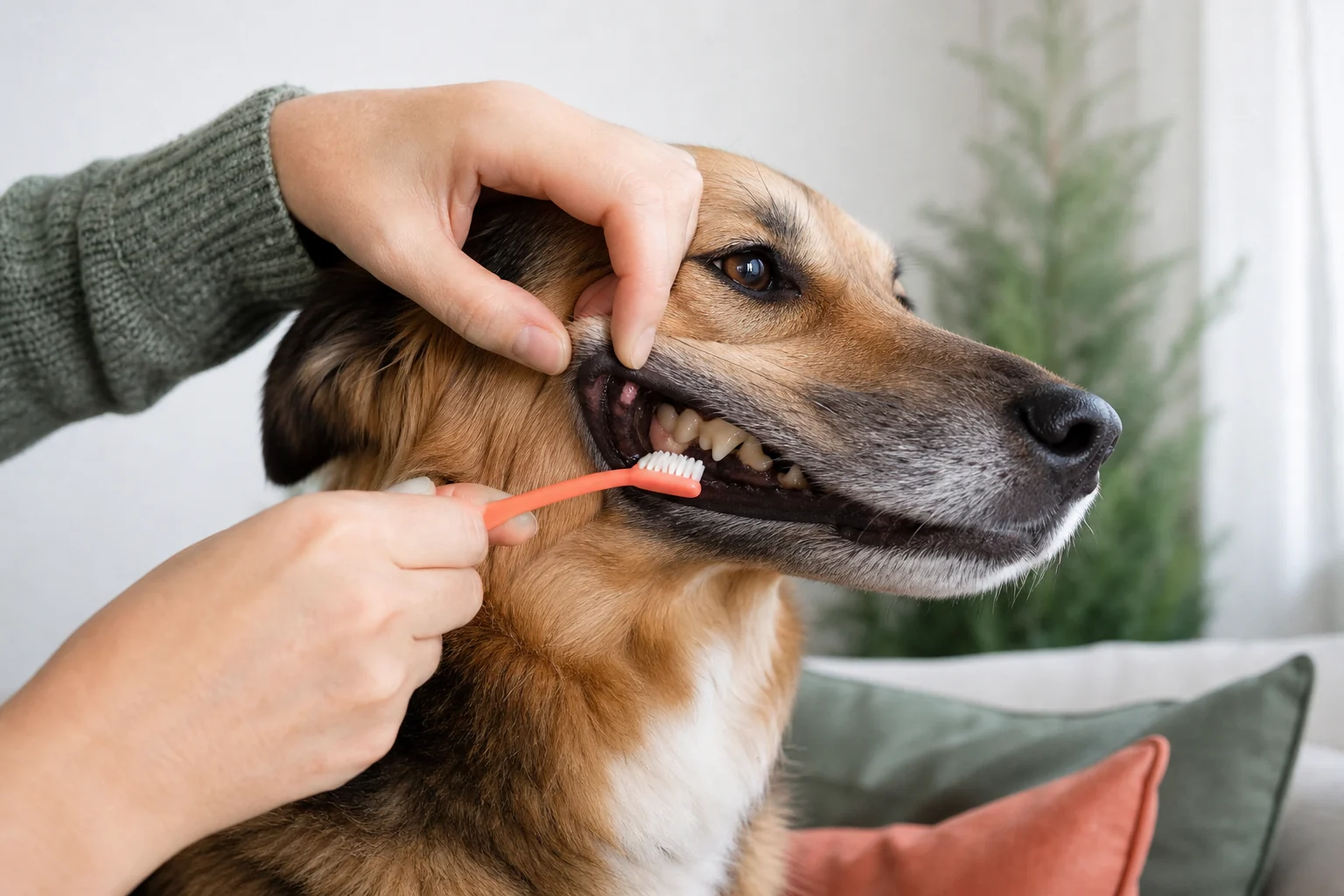
Clinical summary: When asking how often should you brush your dogs teeth, veterinary consensus is clear. Daily toothbrushing is the gold standard for canine oral hygiene. Pet owners should brush their dog teeth at least two to three times a week. This regular dog teeth brushing frequency disrupts soft plaque before it hardens into tartar.
Understanding how often to brush dog teeth protects your pet from painful dental disease. The American Veterinary Medical Association notes that most dogs develop gum disease by age three. According to veterinary oral health standards, poor dental hygiene contributes to bacterial inflammation that damages vital organs.
Brushing clears sticky bacteria from tooth enamel. Left alone, soft plaque hardens into tartar within 24 to 48 hours. Routine brushing works effectively to remove plaque before it mineralizes. Once tartar forms, only professional dental cleanings under general anesthesia can remove it.
Recommended Brushing Frequency by Dog Category:
- Toy and Small Dogs: Daily (7 days a week) due to crowded teeth and rapid calculus buildup.
- Flat-Faced Breeds: Daily (7 days a week) due to compressed jaws and rotated premolars.
- Medium Dogs: 3 to 5 times a week with standard alignment and moderate chewing.
- Large Dogs: 3 to 4 times a week with broad enamel surfaces and heavy bite force.
- Senior Dogs: Daily gentle brushing for receding gumlines and exposed root sensitivity.
Why Brushing Frequency Matters: The 24-to-48-Hour Biological Window
To evaluate how often should you brush your dogs teeth, examine canine mouth chemistry. Each meal leaves tiny food scraps that mix with saliva and mouth bacteria. This mixture quickly forms a sticky coating known as plaque.
Within 24 hours, bacterial colonies multiply rapidly and produce acids that irritate tender gums. The Cornell University Riney Canine Health Center notes that salivary minerals bind to plaque within 24 to 48 hours. At this stage, soft plaque hardens into tartar.
Once hard tartar forms, soft nylon bristles can no longer remove it. Tartar creates a rough surface that catches more bacteria, leading to gingivitis and tooth loss. Committing to regular tooth brushing interrupts this cycle to remove plaque before it can solidify.
The Ideal Frequency: Why Daily Brushing Is the Gold Standard
Veterinary dentists and the VCA Animal Hospitals dental team recommend daily tooth brushing as the ultimate standard for pet care. When owners ask, “How often should I brush my dog for the best oral defense?”, clinicians emphasize that daily care provides optimal protection for canine dental health.
Key clinical benefits of daily brushing include:
- Prevents calculus: Cleans soft plaque before salivary calcium can harden it into stubborn tartar.
- Protects gumlines: Minimizes destructive bacteria from migrating beneath the delicate gumline.
- Stops tooth loss: Preserves alveolar bone support to prevent painful, premature tooth loss.
- Builds calm habits: Dogs accept a predictable routine much faster when practiced every day.
- Enables early detection: Daily checks reveal broken teeth, swollen gums, or early dental disease promptly.
If daily care is hard to maintain, brushing two to three times a week still provides meaningful oral benefits. However, brushing only once a month offers almost no protection against periodontal disease.
How Often Should You Brush Your Dogs Teeth Based on Breed and Age?
Different dogs have distinct dental anatomy and health risks. You should tailor your brushing frequency to your dog’s specific profile.
1. Toy and Small Breed Dogs
Small dogs such as Chihuahuas and Yorkies need strict daily dental care. Small dogs share the same 42 adult teeth as large dogs, but packed into tiny mouths. This tight crowding traps debris and speeds calculus buildup. Using a specialized best dog toothbrush for small dogs reaches narrow cheek pockets safely without gagging.
2. Brachycephalic (Flat-Faced) Breeds
Pugs, French Bulldogs, and Boston Terriers have shortened jaws that rotate premolars sideways. This misalignment stops teeth from cleaning naturally during chewing. Daily brushing prevents food from lodging in tight crevices between overlapping teeth.
3. Puppies and Young Dogs
Start introducing toothbrushing when puppies are 8 to 12 weeks old. Although puppy teeth fall out by six months, early training builds trust. A gentle silicone dog toothbrush vs finger brush helps puppies accept mouth handling calmly.
4. Senior Dogs
Older dogs often suffer from receding gums and root sensitivity. Daily gentle brushing protects these fragile margins from bacterial decay. Apply minimal pressure and consult your vet if your older companion shows mouth pain.
A Realistic 4-Week Plan to Build a Daily Brushing Routine
Introducing toothbrushing abruptly can distress your dog. Pet owners frequently ask how to brush reluctant dogs without causing stress. Follow this 4-week progression to build confidence smoothly.
Week 1: Flavor Acclimation and Lip Lifting
Let your dog lick a small amount of poultry or beef flavored pet toothpaste from your finger. As they lick, gently lift their upper lip for two seconds, offer calm verbal praise, and give a treat. Perform this acclimation exercise once daily for thirty seconds.
Week 2: Finger Pad Gum Desensitization
Slide a soft silicone finger brush over your index finger with a dab of pet toothpaste. Gently massage the outer surfaces of your dog’s upper canine teeth for five seconds. Maintain short, calm, and positive sessions.
Week 3: Introducing Soft Bristles
When you start brushing with soft bristles, introduce a handled toothbrush angled at 45 degrees toward the gumline. Clean upper canines and premolars in small circular strokes. For complete brush technique, read our detailed guide on how to brush dog teeth.
Week 4: Full Outer Surface Brushing
Brush the outer surfaces of the large upper back carnassial teeth. Keep your dog’s mouth gently closed and slide the brush into the cheek pouch. The tongue naturally keeps inside surfaces cleaner. Once you start brushing all outer surfaces, aim for two minutes per session.
What to Do on Days You Cannot Brush
On busy days when brushing is impossible, non-brushing oral care products offer helpful backup support.
Our guide on how to clean dog teeth without brushing highlights dental wipes, water additives, and dental chews. These tools reduce plaque between brushings. Dental chews scrape tooth crowns mechanically, while water additives inhibit mouth bacteria.
These supplementary tools support dental hygiene, but they cannot reach beneath the gumline. Incorporating them into a complete dog dental care routine keeps canine breath fresh and teeth cleaner.
Frequent Brushing Mistakes to Avoid
Many pet owners make avoidable errors that harm oral health. Steer clear of these five common mistakes:
- Using human toothpaste: Never use human toothpaste. Many commercial human toothpastes contain ingredients like artificial foaming agents and toxic xylitol, which can cause severe liver failure and hypoglycemia in dogs.
- Scrubbing too hard: Aggressive scrubbing damages sensitive gum tissue and wears down protective enamel. Always use gentle pressure.
- Forcing jaws open: Prying a dog’s jaws open triggers fear and biting reflexes. Keep the mouth closed and lift the lip from the side.
- Brushing once a month: Soft plaque hardens within 48 hours. Brushing once a month leaves teeth vulnerable to advanced dental disease.
- Using frayed brushes: Replace toothbrushes every two to three months. Bent, frayed bristles lose cleaning ability and can poke delicate gums.
Home Brushing vs Professional Dental Cleanings
Even faithful brushing of teeth at home cannot replace professional dental cleanings. While cleaning teeth at home targets visible crowns, professional dental cleanings conducted under general anesthesia provide comprehensive decontamination.
These cleanings include full intraoral dental X-rays, ultrasonic scaling under gums, and enamel polishing. Over 60 percent of a dog’s tooth anatomy sits hidden below the gumline. Schedule annual veterinary dental checkups alongside home brushing to safeguard total dental health.
Veterinary Warning Signs: When to Pause Home Brushing
Pause home brushing and consult your veterinarian promptly if you observe any of the following clinical signs:
- Red, swollen, or bleeding gums
- Loose, cracked, or discolored teeth
- Dropping food, chewing on one side, or refusing dry kibble
- Sudden foul or sour breath
- Bumps, lumps, or ulcers inside the mouth
- Visible swelling below the eye or along the jaw
Brushing infected or inflamed oral tissue causes intense pain. Let your veterinary team treat active dental disease before resuming regular home brushing.
Frequently Asked Questions
How often should you brush your dog’s teeth if they eat dry kibble?
Dry kibble does not clean teeth effectively. Most dogs swallow kibble whole or shatter it into sticky crumbs that stick to enamel. Pet parents should brush daily or at least two to three times a week regardless of diet.
Can you brush your dog’s teeth too often?
Brushing once a day is ideal. Brushing more than twice daily is unnecessary and may irritate delicate gum tissue over time.
How long should a dog teeth brushing session last?
A full teeth brushing session takes about two minutes—roughly 45 to 60 seconds per side. When conditioning a young or inexperienced dog, limit initial sessions to thirty seconds.
What is the minimum frequency to see real dental benefits?
Brushing three times a week provides the baseline schedule. This frequency reduces gum inflammation and slows tartar formation.