
Clinical summary: You can clean dog teeth without brushing. Effective home tools include VOHC-accepted chews, veterinary wipes, water additives, dental diets, and chew toys.
These non-brushing options reduce soft plaque, freshen breath, and slow plaque and tartar buildup. However, they cannot reach under the gumline or dissolve calcified tartar. The VCA Animal Hospitals home dental guidance confirms daily brushing is best. Brushing mechanically cleans teeth before plaque hardens.
If your dog resists a toothbrush, non-brushing dental care provides a practical bridge. It helps protect oral health without daily stress.
Can You Truly Clean Dog Teeth Without Brushing?
Many pet parents wonder how to clean dog teeth without brushing effectively. Over 80% of dogs over three years old show signs of periodontal disease. To protect your dog’s teeth, you must know how plaque turns into tartar.
The Cornell Canine Health Center periodontal guide notes that mouth bacteria mix with food to form soft film within 24 hours. Within 48 to 72 hours, minerals harden this film into tartar. Once tartar forms, non-brushing tools cannot dissolve it.
Non-brushing methods work through two distinct actions:
- Mechanical friction: Chews and wipes scrub plaque from tooth crowns during chewing or rubbing.
- Chemical action: Ingredients like zinc salts and enzymes freshen breath, curb bacteria, and slow calculus.
These methods provide real help, but cannot clean deep under gums. That is why learning how to clean dog teeth without brushing serves as one part of a complete dog dental care routine.
5 Ways on How to Clean Dog Teeth Without Brushing
If your dog dislikes bristles, several proven alternatives help reduce plaque and tartar. Here are five practical ways on how to clean dog teeth without brushing.
1. Veterinary Dental Wipes and Textured Finger Pads
Dental wipes are textured pads with pet-safe cleansing solutions. Wrap the pad around your finger and rub outer tooth enamel.
- How it works: Wipes use physical friction with zinc to lift soft biofilm.
- Key benefits: Dogs fearing brush handles accept gentle finger contact without stress.
2. VOHC-Accepted Dental Chews
A quality dental chew cleans teeth mechanically as your dog chews.
- VOHC certification: Select products from the Veterinary Oral Health Council accepted products list. The Veterinary Oral Health Council VOHC certifies proven plaque and tartar reduction.
- Proper sizing: Match chew sizes to your dog’s weight. Our guide on dog toothbrush vs dental chews shows why chews clean back molars best.
3. Dental Water Additives and Oral Rinses
Dental water additives pour directly into your dog’s daily water bowl. Oral rinses apply along gums.
- How it works: Safe enzymes and zinc in the water bowl slow bacteria and freshen breath.
- Safety check: Never use human mouthwash with toxic xylitol. Use only pet-safe oral products.
4. Prescription and Proven Dental Diets
Veterinary dental diets feature fibrous kibble nuggets that squeegee tooth crowns as dogs chew.
- Key benefits: Your dog receives daily dental care during regular meals.
- Veterinary advice: Ask your vet whether dental diets fit your pet’s daily calorie goals.
5. Textured Dental Toys and Rubber Ropes
Chew toys made of durable rubber or knotted rope provide safe abrasion during play.
- How it works: Cleaning your dog during play rubs away soft plaque on enamel.
- Safety caution: Avoid hard bones that fracture teeth. Spread dog toothpaste into toy grooves for extra cleaning.
Comparing Non-Brushing Dental Methods
Choosing the best non-brushing routine depends on your dog’s chewing habits and comfort.
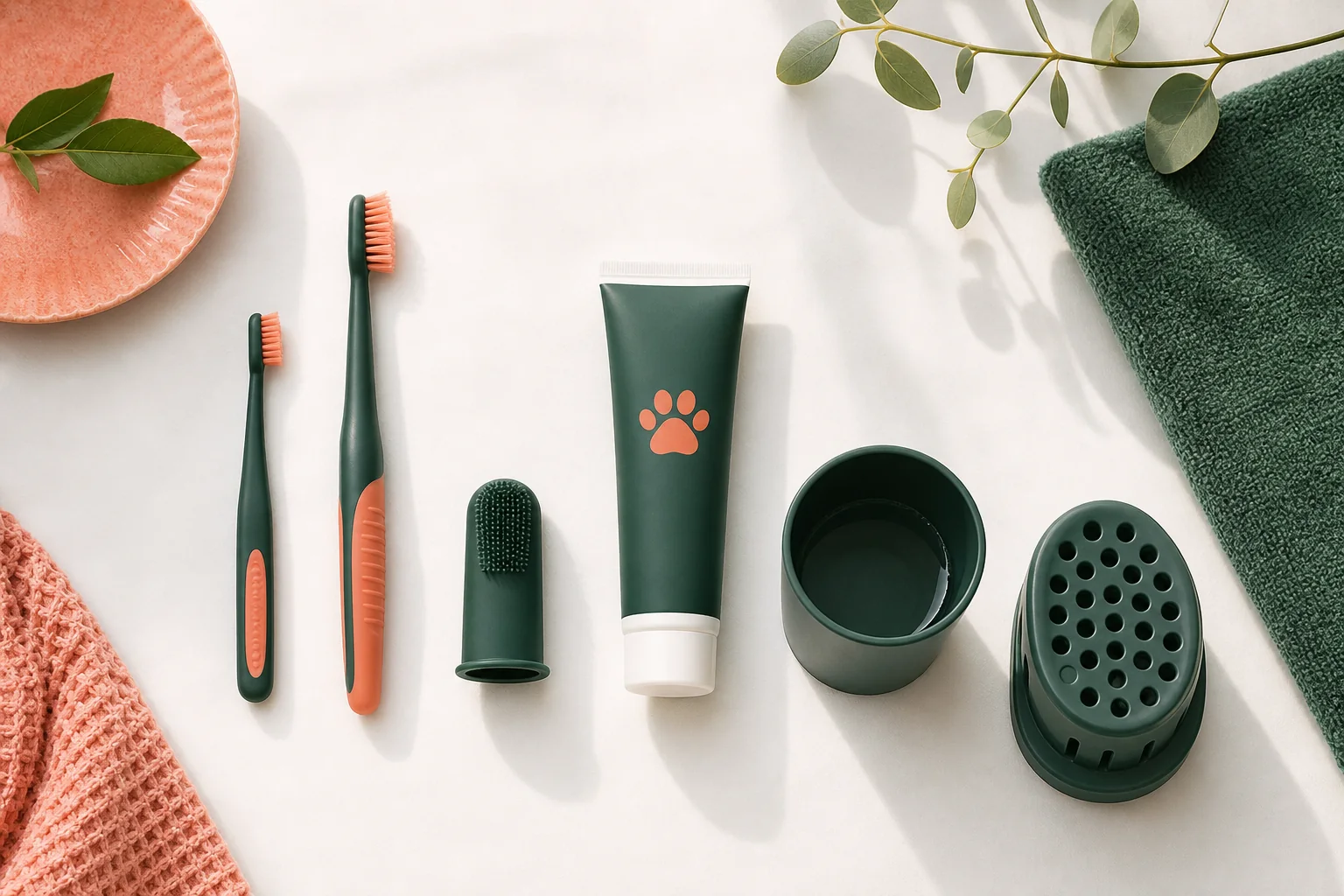
A comparison of pet dental care tools, including handled brushes, finger brushes, and dental hygiene accessories for dogs.
- Dental Wipes: Veterinary dental wipes suit touch-tolerant dogs by lifting plaque from outer enamel.
- Dental Chews: Quality dental chews provide mechanical abrasion on molars and premolars for active chewers.
- Water Additives: Dental water additives offer broad oral germ protection for head-shy dogs without handling.
- Dental Diets: Prescription dental diets scrub teeth during regular feeding schedules.
- Chew Toys: Textured chew toys provide gentle mechanical plaque scraping during daily play.
Pairing two home tools prevents plaque far better than one product alone. For example, use a daily chew along with an additive in the water bowl.
What Non-Brushing Methods Cannot Do
Non-brushing home care helps, but cannot replace clinical veterinary care.
No chew, rinse, or wipe removes hard tartar. As noted in the University of Illinois veterinary dentistry column, calculus requires professional ultrasonic scaling under general anesthesia. Never scrape teeth at home with metal scalers, which scratch enamel and cut gums.
Non-brushing tools also cannot clean below the gumline. Periodontal disease attacks tissues and bone hidden under gums. Bacteria left under gums cause pain and bone loss.
Small breeds need extra vigilance. Crowded teeth make dental disease advance rapidly. For small dogs, progressing toward the best dog toothbrush for small dogs remains an essential goal.
Steps to Transition a Reluctant Dog to Gentle Brushing
If you clean dog teeth without brushing today, introduce brushing in easy steps:
- Touch the muzzle: Touch your dog’s lips gently for two seconds during quiet time, then offer a treat.
- Taste the paste: Place tasty dog toothpaste on your finger. Let your dog lick it to build a positive mood.
- Use a finger brush: Switch from wipes to a silicone finger brush. Our guide on dog toothbrush vs finger brush shows how finger brushes provide soft control.
- Touch outer teeth: Lift the lip gently and wipe one canine tooth. Praise your dog and stop right away.
- Brush more teeth: Clean more cheek teeth over several weeks. Read our guide on how to brush dog teeth for full brushing techniques.
When to Schedule a Veterinary Dental Cleaning
Non-brushing home care helps prevent disease, but regular dental cleanings remain essential. A professional cleaning includes dental X-rays, ultrasonic scaling, and polishing.
Call your vet if your dog shows any of these warning signs:
- Bad breath or red, bleeding gums
- Brown or yellow tartar covering teeth
- Dropping food or chewing on one side
- Pawing at the mouth or drooling
- Loose, cracked, or missing teeth
Frequently Asked Questions About How to Clean Dog Teeth Without Brushing
Can coconut oil clean dog teeth without brushing?
Coconut oil has mild cleansing properties, but it cannot remove plaque or tartar. It does not scrape teeth, and high fat can cause stomach upset or pancreatitis.
How quickly does soft plaque turn into hardened tartar?
Soft plaque hardens into tartar within 48 to 72 hours. Once hard, only veterinary ultrasonic scaling can remove it safely.
Are dental chews enough on their own?
Dental chews clean rear cheek teeth well, but miss front teeth and cannot clean under gums. Combine chews with wipes or additives for balanced care.
Key Takeaways on How to Clean Dog Teeth Without Brushing
- Learning how to clean dog teeth without brushing protects dogs that fear toothbrushes.
- Look for the VOHC seal to ensure proven safety and plaque control.
- Non-brushing tools cannot remove hard tartar or clean beneath gums.
- Combine chews, wipes, and water additives while teaching your pet to accept brushing.
- Book annual vet dental visits to maintain lasting oral health and comfort.