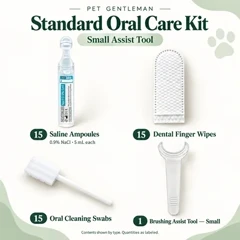
 Standard Oral Care Kit
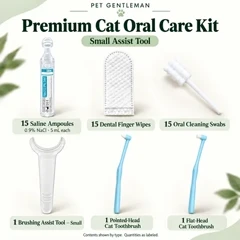 Premium Cat Oral Care Kit
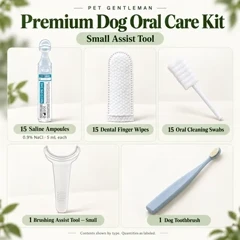 Premium Dog Oral Care Kit
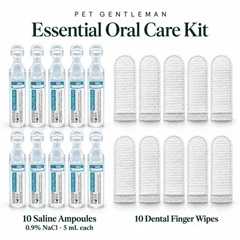 Essential Oral Care Kit
To work out how to clean a cat’s teeth without brushing, consider what your cat will tolerate. Treats may fit easily into one cat’s routine, while a restricted diet makes them difficult for another. Wipes still require contact with the mouth, so a cat that avoids handling may reject them too.
The aim is a routine you can carry out safely. Start by ruling out pain, then choose one option that fits your cat’s food, drinking habits and handling comfort.
What home care can and cannot clean
Plaque is a film that builds up on teeth. When it hardens into tartar, home products cannot simply brush, wipe or dissolve it away. VCA’s guide to alternatives to toothbrushing explains that hardened tartar needs professional removal. Choose home products to help control future buildup; ask your vet about deposits already there.
Cats can also have problems that a dental snack cannot address. Tooth resorption damages the tooth itself; periodontal disease affects the tissues supporting teeth. Your veterinarian decides which examination, dental X-rays and treatment are needed. Cornell’s feline dental disease guide explains these conditions and why an uncomfortable mouth needs assessment.
Pause mouth handling and contact your veterinarian for red or bleeding gums, persistent bad breath, drooling or changes in eating. If your cat stops eating, seek veterinary advice promptly. Sudden resistance from a cat that previously accepted care is a reason to check for pain, rather than hold the cat more firmly.
If bleeding appeared during a brushing attempt, our guide to cat gums that bleed when brushing explains what to stop and which details to record for the veterinary appointment.
Compare options by what your cat accepts
The Veterinary Oral Health Council (VOHC) reviews submitted evidence for plaque or tartar control when a product is used as directed. Its Seal of Acceptance belongs to a specific product and claim. It does not mean every item in that category works equally well or that professional dental care becomes unnecessary.
Use the table to narrow your choice before checking the feline product label and asking your veterinary team about suitability.
| Option | Mouth contact needed? | May fit when… | Check before starting |
|---|---|---|---|
| Cat dental treats | No hand contact with teeth | Your cat eats the treat and its feeding directions fit the diet | Feline label, accepted claim, calories and label amount |
| Dental diet | No hand contact | A food change is appropriate for this cat | Complete nutrition, life stage and fit with any prescribed diet |
| Cat dental water additive | No hand contact | Your cat continues drinking normally with the correctly mixed product | Cat suitability, exact dilution, claim and water-bowl instructions |
| Food-added dental powder | No hand contact | Your vet agrees the ingredients and food addition are suitable | Exact feline product, dose and medical or diet restrictions |
| Dental wipe or topical gel | Usually some mouth contact | Your cat already accepts gentle contact near the teeth | Cat-specific directions, claim and ability to apply without restraint |
There is no need to try every row. If touching the mouth is the difficulty, start your discussion with an option that does not require it. If diet changes are difficult, say so before choosing a food-based aid.
Dental treats: read the claim and feeding amount
Check cat dental treats in the VOHC accepted-products directory, under Products for Cats. The directory lists Feline Greenies Feline Dental Treats for tartar control, while Purina Pro Plan Veterinary Diet Dental Bites are listed for plaque and tartar. These accepted claims describe what each product’s evidence covers. They do not rank which treat is best for your cat.
Follow the package’s age, amount and feeding instructions. Do not borrow directions from a dog chew or assume a larger serving gives better results. If the recommended amount does not fit your cat’s calorie allowance, ask your vet for another option.
Treat calories still count. Cornell’s cat-feeding guidance explains that treats generally do not provide complete, balanced nutrition. Keep the main diet nutritionally appropriate and include dental treats when discussing portions, weight management or food restrictions.
Dental diets: check the whole feeding plan
A dental diet can make care part of a meal, but ordinary dry food should not be assumed to have a tested dental claim. VCA describes specially designed dental diets with a texture intended to help clean tooth surfaces during chewing. Look for evidence for the exact food rather than relying on a crunchy appearance.
For example, VOHC lists Prescription Diet Feline t/d for plaque and tartar control and marks it Veterinary Only. That listing does not establish that it is appropriate for every cat.
Bring the food name and feeding directions to your veterinary team. If your cat already needs a prescribed food, has ingredient restrictions or will not eat the proposed diet, do not replace the existing feeding plan on your own. Ask whether a different dental aid would fit better while keeping the diet suitable and acceptable to your cat.
Water additives and powders: protect normal drinking and eating
A cat dental water additive avoids direct mouth handling. Measure and mix it exactly as its own label directs; do not guess the concentration or use directions from another bottle. Check whether the instructions cover the bowl or fountain you use, including cleaning and replacement of the mixture.
Watch whether your cat drinks as usual. If drinking falls or the cat avoids the treated water, stop the trial and offer plain fresh water while asking your vet what to use instead. Access to drinking water takes priority over getting a dental product into the routine.
Food-added powders also avoid mouth handling. Check the ingredients and directions with your veterinary team before adding one, especially when your cat has a medical condition or restricted diet. A product being easy to sprinkle does not establish that it is suitable.
Choose the exact feline formulation listed for the claim you want. Do not infer acceptance from a dog product, a similar brand name or a seller’s “fresh breath” description. Check the local label too: products and instructions may differ between the US and Europe.
Wipes and gels: only when contact is comfortable
A wipe or topical gel may suit a cat that accepts gentle lip lifting but dislikes a toothbrush. Some feline products appear in the VOHC directory. Follow the chosen product’s application directions; a gel’s instructions cannot be substituted for a wipe’s.
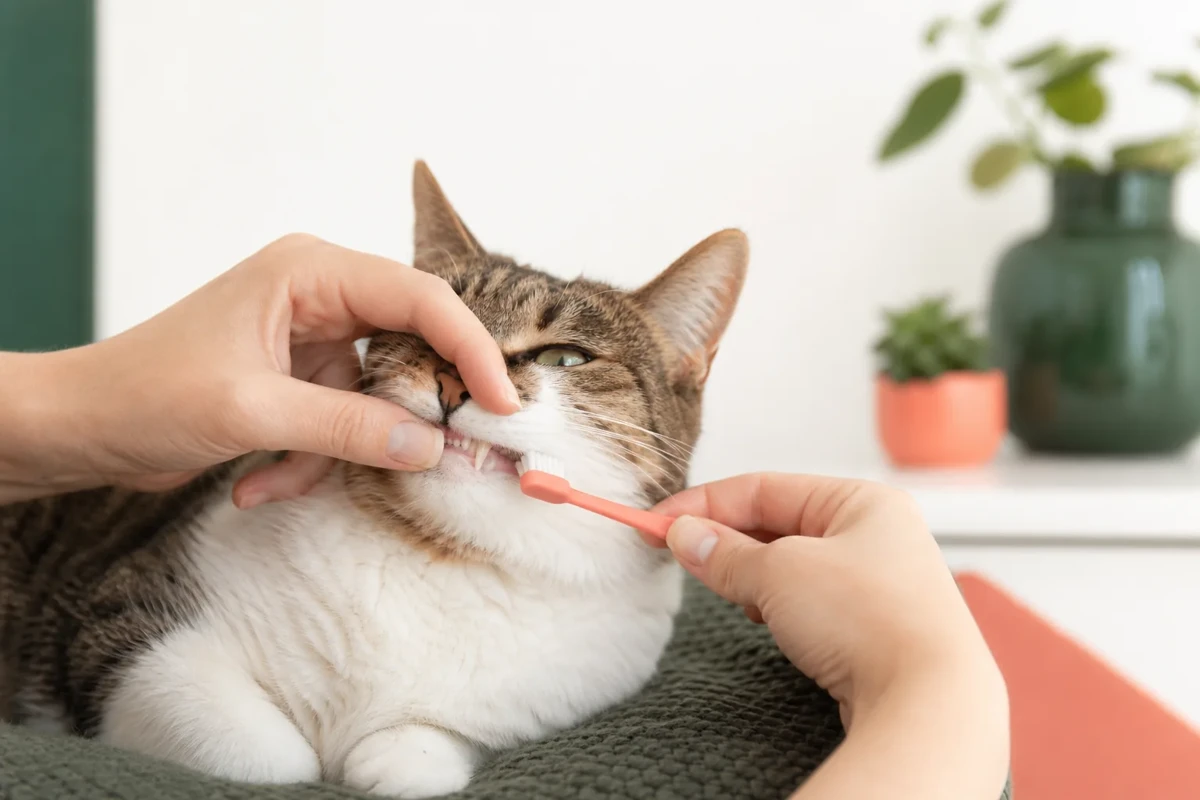
These options still involve the mouth. Stop if your cat pulls away, struggles or tries to bite. Do not chase the cat, pry the jaws open or rub an inflamed area to see whether it improves. If even light contact is difficult, discuss an option from the table that needs no hand contact with teeth.
Start a manageable routine for cat dental care at home
- Check for discomfort. Arrange an oral examination if symptoms or a sudden change in tolerance are present. Follow any recovery instructions after dental treatment before starting a new aid.
- Choose one suitable product. Match its contact and feeding requirements to your cat. Confirm the exact feline listing, claim and directions with your veterinary team.
- Keep the directions beside the product. Record the serving, mixing or application instructions you actually need. Do not combine several new products at once; it becomes harder to tell which one your cat accepts.
- Watch the everyday response. Note eating, drinking and handling comfort. Stop a product that disrupts these and ask for advice. Fresher breath alone is not proof that the teeth and gums are healthy.
- Review the plan with your vet. Ask when the mouth should be checked again and whether professional cleaning is needed. A product’s accepted claim does not replace that assessment.
If your cat becomes comfortable with gentle handling, brushing can remain a future option. Our step-by-step cat brushing guide breaks contact and brush introduction into small steps with clear reasons to pause. There is no fixed deadline to reach a full brushing session.
Your next step is to open the VOHC cat directory, shortlist one option your cat can accept, and check its suitability with your veterinarian. If pain or eating changes are present, contact the veterinary team before trying another home-care product.