
Quick answer: To learn how to brush cat teeth, start with calm cheek touches, introduce cat toothpaste separately, and then brush a few outer tooth surfaces with a small, soft brush. Keep each session short, reward cooperation, and stop if your cat shows pain or escalating fear.
Updated: July 25, 2026 · By: Pet Gentleman Editorial Team
Editorial note: This guide uses a gradual, behavior-first approach. Home cat dental care supports plaque control, but it cannot diagnose pain, remove hardened calculus, or replace veterinary dental examinations and treatment.
Key Takeaways
- Use only toothpaste labeled for cats or pets; human toothpaste is not safe for cats.
- Lift the lip rather than forcing the jaws open, and focus on the outer tooth surfaces near the gum line.
- Begin with one or two teeth for only a few seconds and build up slowly.
- Stop home brushing and call a veterinarian for pain, bleeding, swelling, loose teeth, drooling, appetite changes, or one-sided chewing.
Check Your Cat’s Mouth Before Brushing
Begin only when your cat seems comfortable. Gently lift one side of the lip without prying the mouth open. Look for red or swollen gums, active bleeding, a broken or loose tooth, heavy deposits, facial swelling, drooling, strong new bad breath, or a pain response. A cat that drops food, refuses food, or turns the head while chewing also needs veterinary attention.
Do not brush a painful mouth. Cornell notes that severe gingivitis can make tooth brushing painful, while tooth resorption and periodontal disease may require an examination and dental X-rays. Ask your veterinarian whether the mouth is healthy enough for brushing before beginning if you see any warning sign.
Choose a Cat Toothbrush and Cat-Safe Toothpaste
Gather a small soft-bristle cat toothbrush, a micro-head brush, or clean gauze, plus cat-safe toothpaste and a familiar reward. A compact brush head is easier to position along a cat’s cheek teeth. A finger brush may feel approachable, but it places your finger close to the teeth; use it only with a calm cat that does not bite.
Never use human toothpaste, baking soda, hydrogen peroxide, salt, or human mouthwash. Cats swallow toothpaste instead of rinsing and spitting. Use the amount and frequency on the pet-product label, and ask your veterinarian if a product is suitable for your cat’s age or health.
How to Brush Cat Teeth in 8 Gentle Steps
1. Pick a quiet, predictable time
Choose a calm place and sit beside or slightly behind your cat. Avoid starting during play, conflict, hiding, or high alert. Keep the brush, toothpaste, and reward within reach so the session does not drag on.
2. Practice cheek and lip touches
Touch the cheek for one second, release, and reward. When that feels routine, lift the lip briefly. Repeat this stage over several sessions. Freezing, flattened ears, tail lashing, growling, hard swatting, or trying to flee means the step is too difficult.
3. Introduce the toothpaste by itself
Let your cat smell a small, label-directed amount of cat toothpaste on a clean finger or spoon. Do not push it into the mouth. Reward a calm investigation. If the flavor causes avoidance, ask your veterinarian about another pet-safe option.
4. Make the brush familiar
Place the cat toothbrush nearby during a relaxed moment. Let your cat inspect it, then put it away. Next, offer toothpaste from the brush without trying to clean any teeth. This separates a new object from the sensation of brushing.
5. Touch one outer tooth
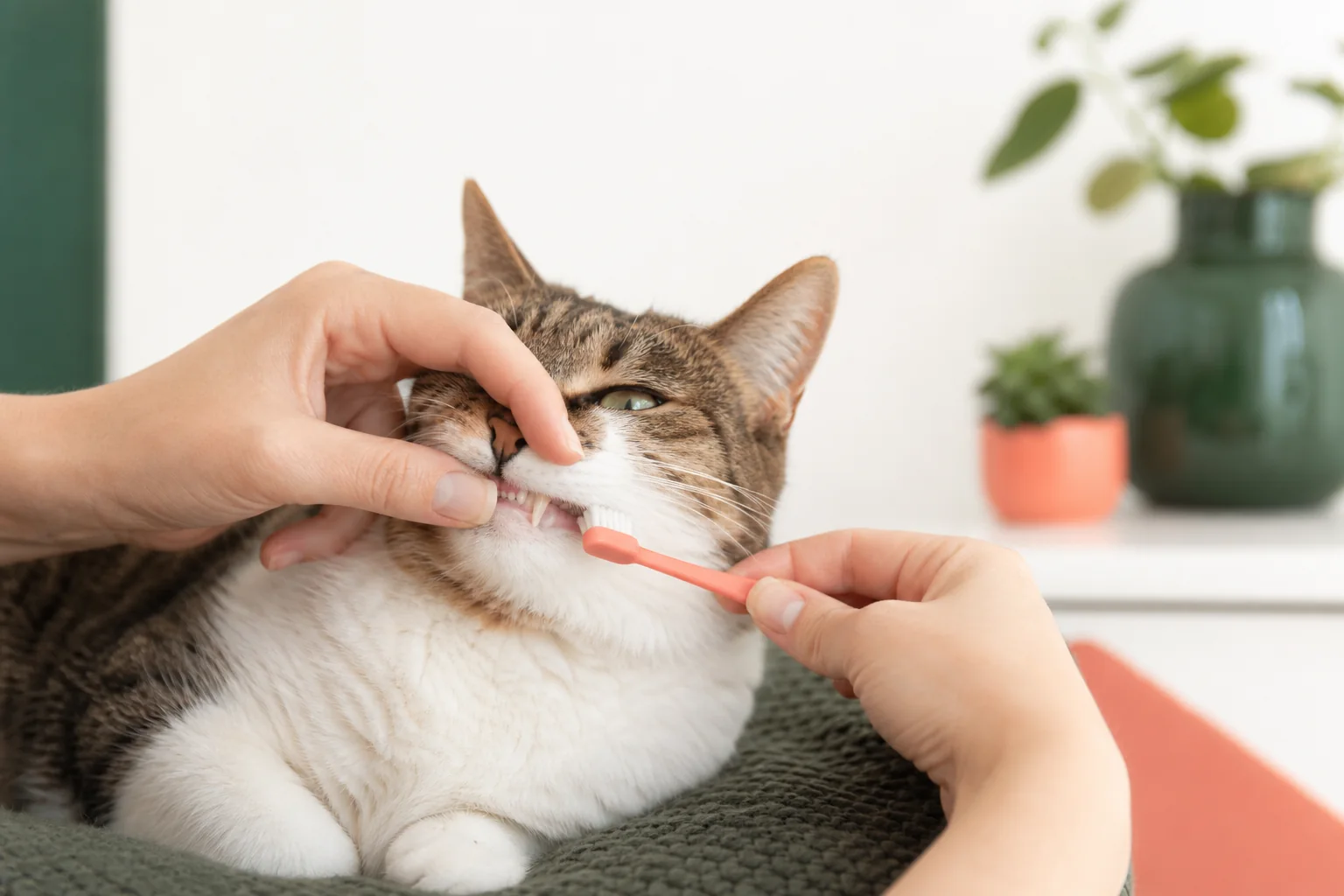
Lift the lip, touch the bristles to one comfortable outer tooth, release, and reward. The first successful cat tooth brushing session may last only a few seconds. Ending while your cat is calm is more useful than reaching every tooth through restraint.
6. Add a few gentle strokes
Angle the bristles about 45 degrees toward the gum line and use light, small circles. Brush only the outside surfaces at first; Cornell’s feline guidance notes that these are the surfaces owners need to reach. Do not scrub the gums or try to chip off tartar.
7. Increase coverage gradually
Add one or two teeth only after the earlier amount feels easy. Work toward the outer surfaces on both sides, especially the cheek teeth where plaque accumulates. If your cat resists, return to the last comfortable step at the next session.
8. Finish, reward, and clean the brush
Stop before frustration rises. Give the planned reward, rinse the toothbrush, and let it air-dry. Store it where other pets cannot use it, and replace it when the bristles become bent or worn.
How Often Should You Brush Your Cat’s Teeth?
Daily brushing is a common goal because frequent plaque removal helps protect the teeth and gums. The MSD Veterinary Manual recommends daily brushing and says that, when a cat will not accept a toothbrush, wiping the teeth with gauze every two to three days may be an alternative to discuss with a veterinarian.
Build frequency only after your cat accepts the handling. One calm, brief session is better than an occasional forced cleaning. A toothbrush removes soft plaque; it does not remove hardened calculus or treat dental disease below the gum line.
What If Your Cat Refuses Tooth Brushing?
- Return to cheek touches and a one-second lip lift.
- Offer toothpaste without the brush for several sessions.
- Try a smaller brush head or clean gauze after veterinary guidance.
- Change the time or location, but keep the routine predictable.
- Stop before hissing, biting, hard swatting, or panic.
If brushing remains unsafe, do not force it. Ask your veterinarian about dental diets, wipes, gels, water additives, or treats. The Veterinary Oral Health Council lists products for cats that have met its plaque-control or tartar-control standards. These products can support a plan, but they do not replace an oral examination or professional cleaning when one is needed.
When to Stop and Call a Veterinarian
Stop brushing and seek veterinary advice for persistent bad breath, red or bleeding gums, swelling, drooling, a broken or loose tooth, visible pain, dropping food, one-sided chewing, reduced appetite, or a sudden change in tolerance. These signs can occur with gingivitis, periodontal disease, tooth resorption, injury, or another health problem.
Professional dental care can include an examination under anesthesia, dental X-rays, cleaning above and below the gum line, and treatment of painful teeth. Home care should resume only when your veterinarian says it is comfortable and appropriate.
Frequently Asked Questions
Do I need to open my cat’s mouth wide?
No. Gently lift the lip and brush the outer surfaces. Forcing the jaws open increases stress and is usually unnecessary for routine home brushing.
Can I remove tartar with a toothbrush?
No. A toothbrush helps remove soft plaque before it hardens. Do not scrape deposits at home; a veterinarian should assess visible calculus and decide whether professional dental cleaning is needed.
What is a realistic first goal?
A calm lip lift and one gentle brush touch are enough for an early session. Increase time and coverage only after your cat repeatedly stays relaxed.
Continue Your Cat Dental Care Routine
- Choose a soft-bristle toothbrush for a cat
- Build a realistic cat tooth brushing schedule
- Use a slower cat desensitization plan
Sources
- Cornell University College of Veterinary Medicine: Feline Dental Disease
- MSD Veterinary Manual: Dental Disorders of Cats
- Veterinary Oral Health Council: Accepted Products
Veterinary disclaimer: This article is educational and does not diagnose or treat dental disease. Stop home brushing and contact a veterinarian if your cat shows pain, bleeding, swelling, tooth damage, appetite changes, or difficulty eating.