
Quick answer: In a cat finger brush vs long handle toothbrush comparison, choose the tool you can control with light pressure while your cat remains calm. A finger brush offers close tactile feedback but places your hand near the teeth. A long-handle cat toothbrush provides more reach and distance, but small wrist movements can move the brush head farther.
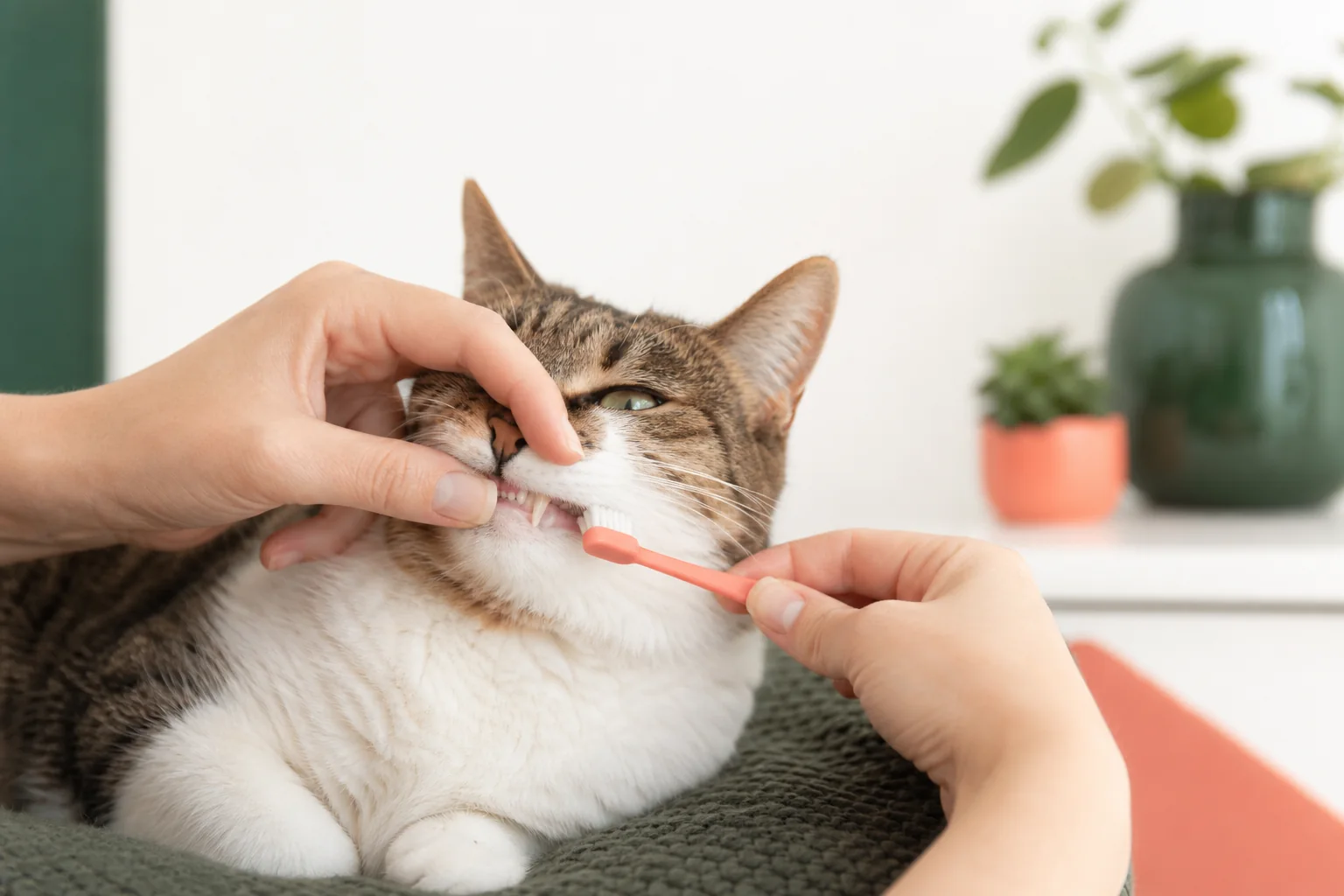
Finger brush and long-handle brush compared
| Feature | Cat finger brush | Long-handle toothbrush |
|---|---|---|
| Reach | Best for easy front and side surfaces | Usually reaches farther with less hand contact |
| Feedback | Close feel for contact and pressure | Feedback comes through the handle |
| Head size | May feel broad in a small mouth | Available with compact heads |
| Handler safety | Finger stays close to the teeth | Provides more distance from the mouth |
| Fit risk | Sleeve can loosen or twist | Handle can magnify unstable movement |
Neither style is automatically better. Product fit, soft intact bristles, the cat’s behavior and the caregiver’s control matter more than the label.
When a cat finger brush may help
A securely fitting silicone finger brush may suit a cat that accepts close hand contact. It can make the direction of each stroke easy to feel and can work well on accessible outer tooth surfaces.
Before use, check that the sleeve does not rotate, slide or pinch. The textured area should not scrape the gum line or force the cheek outward. Stop using a finger brush if the cat bites, grabs the hand or becomes tense. The two-finger cat toothbrush is one format to compare, not a universal solution.
When a long-handle toothbrush may help
A handled brush can provide more reach while keeping fingers away from the mouth. A compact head may be easier to position along the outer surfaces of the teeth, especially when a finger brush feels too broad.
The tradeoff is leverage. A small wrist movement can move the head quickly, so hold the handle close to the head and use short strokes. The long-handle cat toothbrush should still be checked for head size, bristle condition and comfortable access.
How to test fit without forcing the mouth
- Let the cat inspect the clean, dry tool away from the mouth.
- Touch the cheek briefly, then reward and pause.
- Lift the lip from the side without opening the jaw.
- Place the brush against one easy outer tooth for a second.
- Stop if the cat turns away, stiffens, swats or tries to bite.
The tool should enter and leave without scraping gum tissue or requiring restraint. Follow the gradual steps in our cat tooth brushing guide.
Use the same gentle technique with either tool
Apply toothpaste made for cats and follow its directions. Human toothpaste is not appropriate because cats swallow rather than rinse and spit. Approach from the side and use light strokes where the tooth meets the gum line. Focus on comfortable, reachable outer surfaces; you do not need to force the mouth open.
Regular brushing can help remove plaque before it hardens, but more pressure is not more effective. Stop for bleeding, pain, swelling, drooling, bad breath, loose teeth or eating changes and arrange veterinary care.
Can you alternate brush styles?
You may use different tools for different areas if each is introduced separately and both remain predictable. For example, a finger brush may work for a calm front-tooth lesson while a small handled brush provides safer reach later. Avoid switching tools in the middle of a difficult session.
Clean and air-dry each brush after use, store it separately and replace damaged bristles. Do not share a brush between pets because fit, wear and hygiene needs differ.
Use a simple tool-selection checklist
- The head fits beside the cheek without stretching the mouth.
- The bristles or cleaning texture are soft, smooth and intact.
- The finger sleeve stays secure or the handle remains easy to stabilize.
- The caregiver can see the area being touched and stop immediately.
- The cat can move away without being chased, pinned or tightly wrapped.
If several tools fit, begin with the one that allows the briefest calm contact. Pet owners do not need to complete the whole mouth during one lesson. A successful first session may be a cheek touch, a lip lift and one gentle stroke.
Track comfort before increasing access
Record the tool used, the area reached and whether the cat stayed relaxed. Increase the number of strokes only after several comfortable repetitions. If tolerance suddenly decreases, inspect the brush and arrange an oral examination rather than assuming the cat is being difficult.
After a dental cleaning, extraction or other dental treatment, ask when brushing may resume and whether the tool should change. Written recovery instructions take priority over a general schedule.
What brushing cannot replace
Home teeth cleaning supports dental hygiene, but it cannot diagnose dental disease, clean below the gums or replace professional cleaning when treatment is needed. Gum disease, tooth loss and other painful conditions require veterinary assessment. Water additives and other products may complement a plan only when they suit the individual cat.
The American Veterinary Medical Association pet dental care resource explains warning signs and the role of veterinary examinations. The Veterinary Oral Health Council directory lists products that earned its Seal for a specific plaque or tartar claim.
Frequently asked questions
Is a silicone finger brush always softer?
No. Material alone does not determine comfort. Texture, width, fit, pressure and the cat’s response all matter.
Which tool reaches back teeth better?
A compact handled brush usually provides more reach, provided the caregiver can control it without forcing the cheek or jaw.
What if my cat bites the finger brush?
Stop using it. Return to handling practice or ask the veterinary team whether a handled option provides safer distance.
Sources
This comparison uses linked guidance from the American Veterinary Medical Association and the Veterinary Oral Health Council. Individual veterinary instructions take priority.