
Quick answer: Choose a cat toothbrush size that can reach the outer teeth without stretching the cheek or touching several sensitive areas at once. A compact head with soft bristles is a practical starting point, but the best fit also depends on handle control and your cat’s comfort.
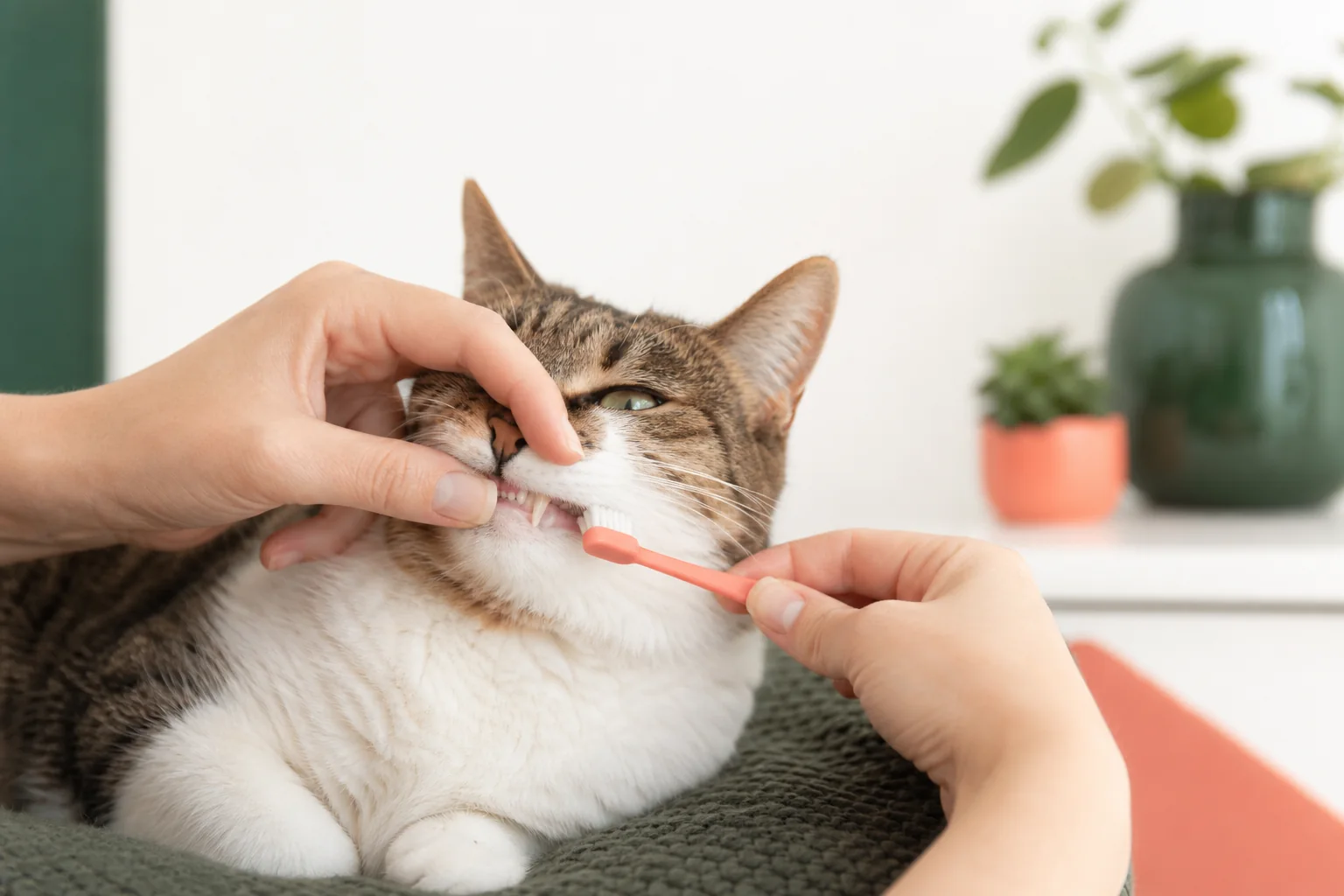
What cat toothbrush size should you choose?
Start with a head that looks small compared with the space beside your cat’s cheek teeth. It should enter and leave the side of the mouth easily during a relaxed lip lift. Package labels such as kitten, adult, or small pet can help you compare products, but they do not guarantee a good fit.
The head should let you guide light strokes along reachable outer surfaces. If it pushes the cheek outward, covers too much gum tissue, or makes accurate movement difficult, try a smaller brush. Never force the jaw open to test a tool.
Compare brush head shapes
A compact oval head can cover a few teeth efficiently. A narrow or single-tuft head offers focused access around small spaces. Either shape may work when the edges are smooth, the bristles remain soft and intact, and you can see where the head touches.
Large dual-ended pet brushes may include one head that is too wide for a cat. Use only the end that fits comfortably. Replace a brush if the head cracks or the bristles spread, stiffen, or develop sharp bends.
Check fit without forcing the mouth
Assess tool fit when your cat is calm. Lift the lip briefly and compare the head with the cheek space; do not pry the mouth open. Begin with contact at the front outer teeth, then move farther back only if the body stays loose and the mouth appears comfortable.
- The brush slides in and out without scraping tissue.
- You can control the angle with one hand.
- The cheek does not need to be pulled tight.
- Your cat can pause, turn away, or leave.
- Light contact does not cause repeated bleeding or pain.
Choose soft bristles and a stable handle
Size is only one part of safe tooth brushing. Choose soft bristles and use light pressure on accessible outer surfaces. A small head is not useful if its handle twists, slips, or forces your wrist into an awkward angle.
A longer handle can keep fingers outside the mouth and improve visibility. A very long or flexible handle can magnify small movements, so practice the angle away from your cat before the first session.
Finger brush or handled cat toothbrush?
A finger brush can provide direct tactile feedback, but the sleeve may be wider than a compact handled head. It also places your finger close to the teeth. Use one only if it fits your finger securely and your cat accepts close handling without biting.
A handled cat toothbrush usually offers more distance and a narrower approach. Compare both styles by actual head width and control rather than the product name. Our cat brush style comparison explains the tradeoffs.
Use the brush as part of a dental health routine
Introduce the dry brush before adding pet toothpaste. Let your cat investigate it, touch the cheek or lip briefly, and reward calm behavior. Build toward one gentle outer-surface stroke. Short, predictable practice is better than holding the cat down to finish a full-mouth session.
Regular brushing helps disrupt soft plaque, but it does not remove hardened tartar or treat gum disease. Products accepted by the Veterinary Oral Health Council (VOHC) earned its Seal for a specific plaque or tartar claim. Water additives, dental chews, and other products do not make an oversized or poorly controlled brush safe.
Recheck the size over time
Review the fit when a kitten grows, the bristles wear, or brushing tolerance changes. Dental disease, a damaged tooth, oral surgery, or recent professional cleaning can change which areas a pet owner should touch. After dental treatment, follow the veterinary team’s timing and site-specific directions.
Frequently asked questions
Is a kitten toothbrush always right for an adult cat?
No. A kitten label suggests a smaller tool, but head fit, soft bristles, handle stability, and your cat’s response matter more than the age label.
Can I use a human baby toothbrush?
Ask your veterinarian to confirm an appropriate tool. Pet toothbrushes make species and intended use clearer, while human brushes vary in head size and bristle firmness.
When to call a veterinarian
Stop home brushing and arrange an exam for pain, swelling, loose or broken teeth, repeated bleeding, strong ongoing odor, difficulty eating, or a sudden behavior change. The AAHA dental care guidelines explain why home care and professional dental cleaning have different roles.
Sources
This educational guide uses linked guidance from AAHA and the Veterinary Oral Health Council. The American Veterinary Medical Association pet dental care resource provides additional background. This article does not replace individual veterinary advice.