
Quick answer: The best soft bristle toothbrush for cats features a micro brush head under 15 mm. It has gentle soft bristles that reach tight spaces along the gumline without hurting tender tissue. A dedicated cat toothbrush makes home dental care calm, safe, and stress-free.
Starting early with cat dental care protects your pet from mouth pain, tooth loss, and bad breath. Daily brushing keeps teeth clean and supports whole-body oral health. A gentle pet toothbrush helps your cat accept touch while gums stay pink and healthy.
Updated September 11, 2026 by the Pet Gentleman Care Team. This guide offers home pet care tips and does not replace vet exams.
Key Takeaways
- Pick an ultra-compact brush head: A cat s mouth needs a head under 15 mm to slide along back molars easily.
- Choose ultra-soft bristles: Delicate feline gums need fine bristles that bend easily without poking.
- Use a dedicated pet toothbrush: A long handle gives good leverage and keeps fingers safe from accidental bites.
- Mechanical brushing clears plaque: Daily brushing cleans every tooth surface and helps remove plaque before it hardens.
- Reward short steps: A calm 30-second routine with treats helps cats accept mouth care happily.
Why Cats Need a Dedicated Soft-Bristle Brush
Cats have much smaller mouths and tighter cheeks than dogs. A standard human toothbrush or large dog brush crowds the cat s mouth. This pressure causes gagging and head shaking.
The Veterinary Oral Health Council confirms that mechanical tooth brushing physically clears plaque from tooth surfaces. Soft bristles bend gently against enamel curves. They clear sticky food film along the gumline without hurting tender gums.
Good dental health habits protect major internal organs. When bacteria grow in untreated plaque, they enter the bloodstream and strain kidneys and heart valves. Consistent oral hygiene stops bacterial colonies before gum infections take hold.
Key Features to Compare in a Cat Toothbrush
When selecting a brush for feline dental care, look for four key design features:
- Micro Brush Head (Under 15 mm): A tiny head slides into tight cheek pockets easily. It lets you reach upper back teeth without opening the jaw wide.
- Ultra-Fine Soft Bristles: Look for polished nylon bristles. Soft bristles bend under light finger touch to guard feline gums.
- Ergonomic Long Handle: A slender long handle gives you steady grip and clear sightlines.
- Smooth Rounded Contours: The back of the head should be smooth. This prevents rubbing against inner cheek walls.
Choosing an ergonomic soft-bristle cat toothbrush combines these features for calm cleaning.
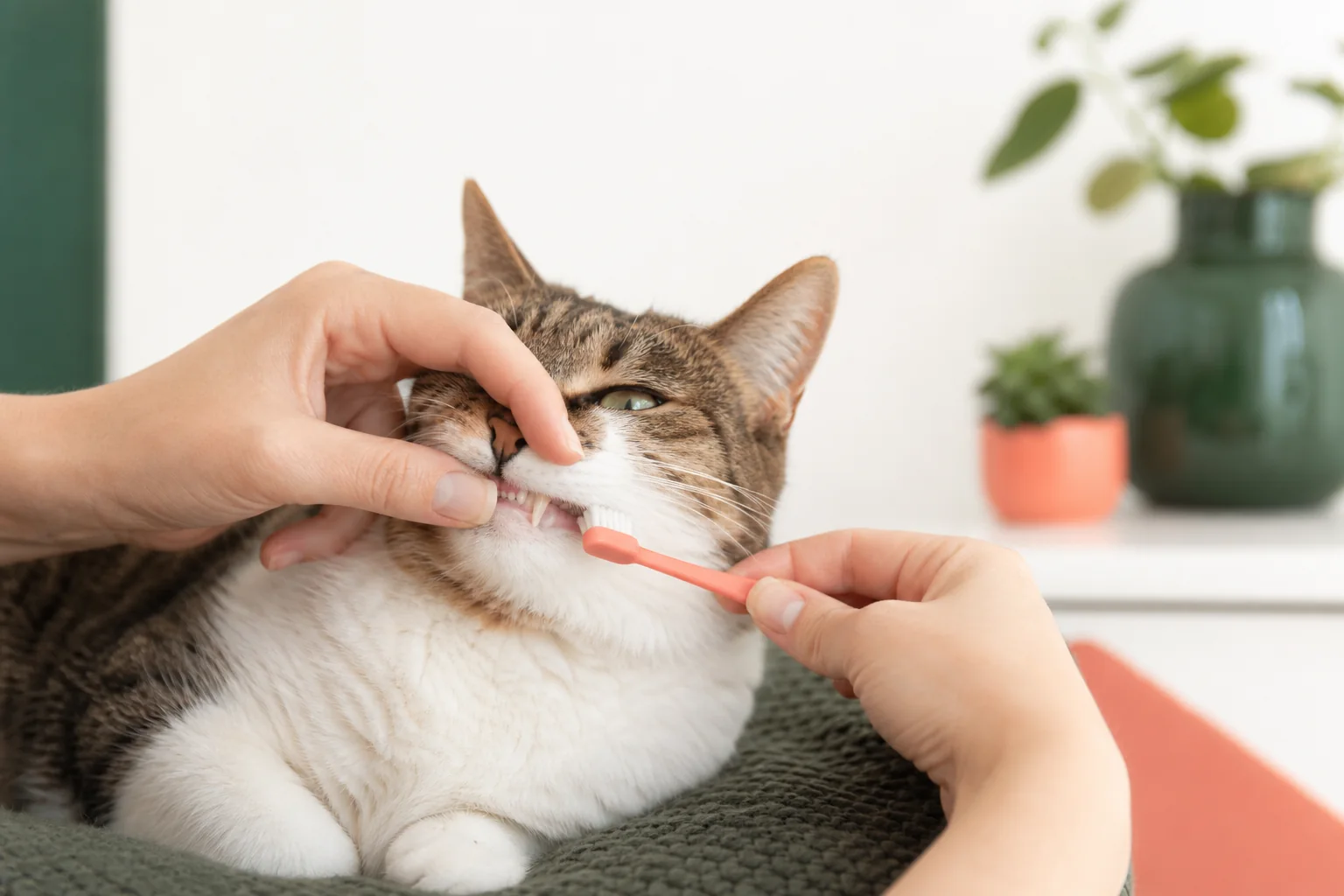
A small head and light pressure make early cat tooth brushing easy to control.
Comparing Handle Brushes and Finger Brushes
Pet owners often compare handled brushes with silicone finger caps:
- Handled Cat Toothbrushes: Best for daily cleaning and reaching back premolars. A long handle keeps fingers safe from accidental bites and gives great reach.
- Silicone Finger Brushes: Helpful for young kittens learning initial lip touches. However, thick silicone nubs cannot reach narrow spaces between molars.
For routine care, a handled brush with fine bristles gives superior reach along the gumline.
Five-Step Low-Stress Mouth Introduction
Most cats dislike sudden head restraint. Introducing tools slowly builds trust. Follow this five-step training plan:
- Step 1: Taste Test: Put a drop of poultry-flavored cat toothpaste on your finger. Let your cat lick the tasty paste freely. Never use human dental formulas. The U.S. Food and Drug Administration warns that human dental formulas often include xylitol. This sweetener triggers rapid drops in blood sugar and causes severe liver damage in pets. Read our full guide on can cats use toothpaste to learn more.
- Step 2: Gentle Lip Lift: While your cat rests, lift the upper lip for two seconds. Touch the front canine tooth, release, and offer a treat.
- Step 3: Brush Intro: Add paste to your pet toothbrush. Let your cat lick the soft bristles while you hold the handle steady.
- Step 4: First Light Strokes: Lift the lip and brush one tooth for five seconds at a 45-degree angle.
- Step 5: Expanding Coverage: Move toward back molars. Brush the outer tooth surface where plaque gathers fastest. Keep sessions under 60 seconds.
For full handling steps and body language tips, read our guide on how to brush cat teeth.
Brushing Frequency and Toothbrush Hygiene
How often should cats brush their teeth? VCA Animal Hospitals clinical guidance explains that daily brushing is the gold standard for pet dental care.
Soft plaque hardens into tartar within 24 to 48 hours. Once tartar forms, home brushing cannot remove it. Aim for daily care, or brush three times weekly. See our guide on how often should I brush my cat’s teeth for tips.
Pair regular brushing with VOHC-accepted dental treats to give gentle chewing action. After brushing, rinse the brush well and dry it upright. Replace worn brushes every two to three months. Learn more in our guide on how often should you replace your pet toothbrush.
When to Consult Your Veterinarian
Home brushing slows plaque buildup, but it cannot cure deep mouth infections. The American Veterinary Medical Association reports that most pets show signs of periodontal disease by three years of age.
The Cornell Feline Health Center notes that tooth resorption and inflammatory dental disease require regular veterinary oral examinations. Call your vet right away if you see red swollen gums, drooling, or poor appetite.
Frequently Asked Questions
Can I use a human baby toothbrush for my cat?
Baby toothbrushes have soft bristles, but their heads are often too wide for feline cheeks. Dedicated cat brushes offer slimmer profiles that fit with ease.
What should I do if my cat dislikes the brush?
Go back to finger touches with pet toothpaste for a few days. Reintroduce the brush slowly with positive rewards and short sessions.
Can brushing remove hardened yellow tartar?
No. Brushing removes soft plaque. Once plaque hardens into tartar, only a vet can remove it safely under anesthesia.
Clinical References
- American Veterinary Medical Association (AVMA) Pet Dental Care Guidelines
- Cornell Feline Health Center Dental Disease Information
- U.S. Food and Drug Administration (FDA) Pet Safety Alerts
- Veterinary Oral Health Council (VOHC) Accepted Products Directory
- VCA Animal Hospitals Preventive Dental Care Resources
This guide provides educational pet wellness advice. Always consult your veterinarian for medical diagnosis and individualized treatment plans. Read our veterinary disclaimer for details.