
Quick answer: When asking how often should I brush my cats teeth, vets advise daily care as the ideal routine. If daily care is tough, brush at least three days a week. Consistent brushing cat teeth stops plaque from hardening into tartar. This simple habit keeps your feline companion comfortable and free from pain.
Starting early with home dental care prevents bad breath, sore gums, and tooth loss. A calm routine helps cats accept mouth touch while keeping cats teeth clean and strong.
Updated September 11, 2026 by the Pet Gentleman Care Team. This guide offers home pet care tips and does not replace vet exams.
Key Takeaways
- Daily brushing is the gold standard: Daily care clears soft film before it turns into hard tartar.
- Tartar forms in 24 to 48 hours: Soft food film hardens quickly, so frequent cleaning is vital.
- Three days weekly is the practical minimum: Brushing every other day guards gums if daily sessions feel tough.
- Short sessions work best: Clean outer tooth surfaces for 30 to 60 seconds with tasty rewards.
- Professional care remains essential: Home care preserves health but does not replace vet dental cleanings under anesthesia.
Why Brushing Frequency Matters: The 24 to 48 Hour Window
Every day, bacteria and saliva mix on your cat s teeth to create a soft film called plaque. The Veterinary Oral Health Council (VOHC) confirms that mechanical tooth brushing physically clears plaque from tooth surfaces. Following guidelines from the Veterinary Oral Health Council VOHC prevents painful dental issues before infections spread.
When plaque sits undisturbed on tooth enamel, it hardens into tartar within 24 to 48 hours. Once tartar forms, home brushing cannot remove it. If you let plaque and tartar accumulate, bacteria slip below the gumline. This chronic infection causes gingivitis, harms bone, and can lead to tooth loss.
VCA Animal Hospitals clinical guidance explains that daily brushing is the gold standard for pet dental care. Daily care sweeps away soft film every day, keeping tartar from gaining a foothold.
Recommended Brushing Cadences
Depending on your cat s mood and your schedule, pick one of three practical routines:
1. The Gold Standard: Once Daily
Brushing once each day gives the best guard against periodontal disease. Daily care takes just 60 seconds once your cat accepts the routine. It creates a calm habit that feels normal and easy.
2. The Maintenance Standard: 3 to 4 Times Weekly
If your cat resists daily touch, aim to get their teeth brushed every other day. Brushing three to four times each week stops bacterial growth and slows tartar buildup.
3. The Habit-Building Phase: Daily 10-Second Touches
For wary felines, do not force a full cleaning right away. Start with 10-second lip touches each evening. Short positive steps build trust for regular tooth brushing later on.
Five-Step Low-Stress Introduction Plan
Cats dislike forced restraint. Introducing tools slowly makes brushing your cat a stress-free experience:
- Step 1: Taste Recognition: Place a small amount of pet toothpaste on your fingertip for your cat to lick. Never use human dental products. The U.S. Food and Drug Administration warns that human toothpaste often contains xylitol, which causes acute hypoglycemia and severe liver damage in pets. Learn more in our guide on can cats use toothpaste.
- Step 2: Gentle Lip Lifting: While your pet rests, gently lift the upper lip for three seconds. Praise your cat and offer tasty cat treats right away.
- Step 3: Gumline Touch: Rub your bare finger along the upper canine tooth for five seconds. Follow with praise or a treat.
- Step 4: Introducing the Brush: Introduce an ultra-compact soft-bristle cat toothbrush specifically designed for cats. Let your feline lick paste from the soft bristles while you hold the handle still.
- Step 5: Gentle Circular Motion: Angle bristles at 45 degrees along the gumline. Brush outer tooth surfaces for 30 to 45 seconds. The feline tongue cleans inner teeth, so focus on cheek-facing enamel.
Read our full walkthrough on how to brush cat teeth for complete handling tips.
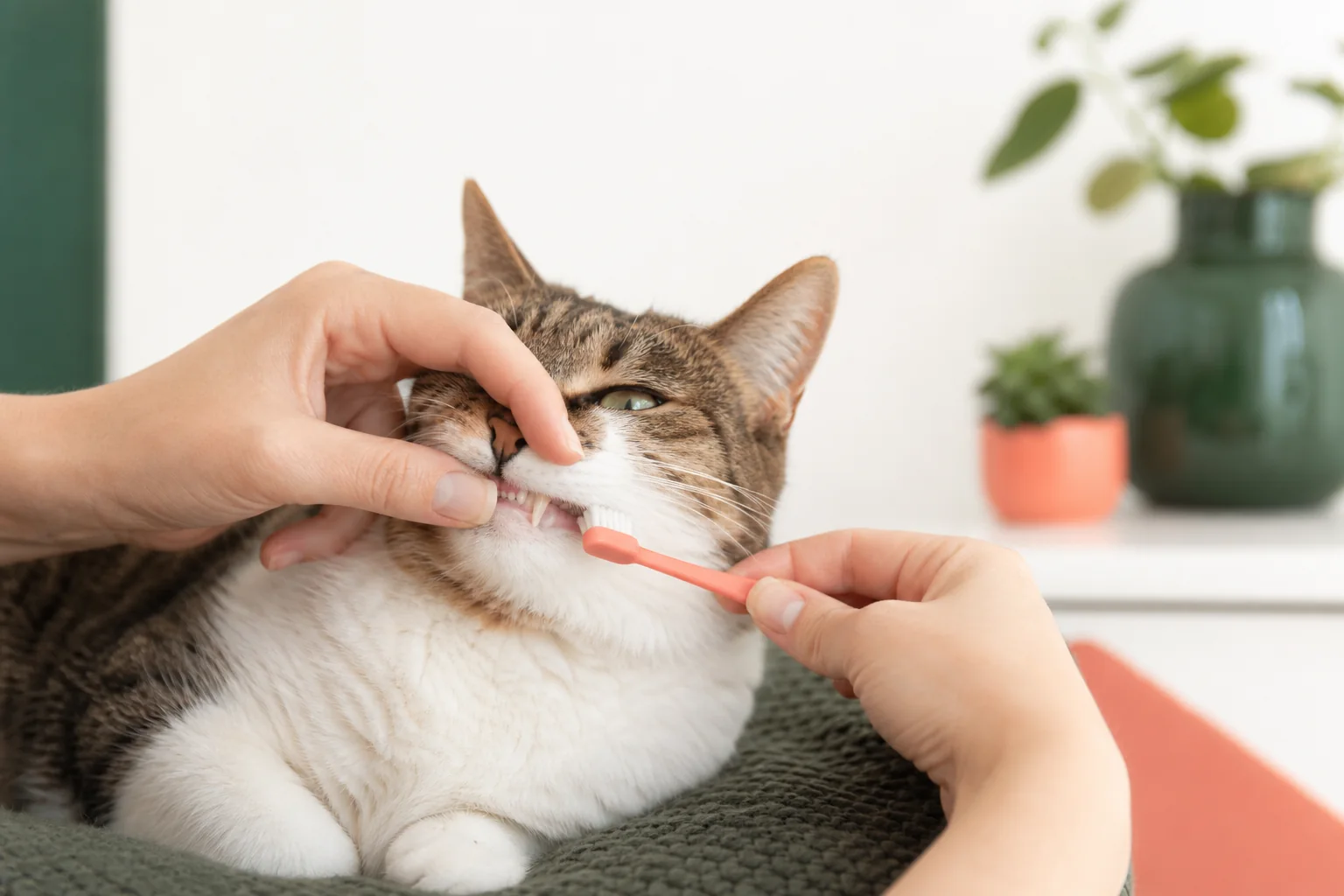
Short sessions with a gentle soft-bristle brush help cats accept routine mouth care.
Complementary Home Dental Care Strategies
If your pet refuses brushing on some days, support oral health with helpful tools:
- VOHC-Accepted Dental Chews: Quality dental treats rub against tooth edges to help remove plaque.
- Veterinary Water Additives: Adding approved water additives to drinking water curbs oral bacteria between brushings.
- Enzymatic Oral Gels: Placing a dab of gel on gums provides gentle antibacterial action.
- Dedicated Cat Toothbrushes: Using a specialized soft-bristle toothbrush for cats ensures bristles flex without poking delicate gums.
While these tools help, regular brushing remains the most effective way to clear sticky plaque.
When to Schedule a Veterinary Dental Cleaning
Home care prevents new plaque buildup, but it cannot cure deep mouth infections. The American Veterinary Medical Association reports that most pets show signs of periodontal disease by three years of age.
Furthermore, The Cornell Feline Health Center notes that tooth resorption and inflammatory dental diseases require regular veterinary oral examinations. A professional veterinary dental cleaning under anesthesia lets your vet scale beneath gums, polish enamel, take dental x-rays, and treat painful teeth.
Call your vet promptly if you notice these warning signs:
- Persistent foul breath that does not improve with home care
- Red, swollen, or bleeding gums
- Drooling or pawing at the mouth
- Dropping kibble or chewing on one side
- Loose teeth or crying out during meals
Inspect your brushing tools often and replace worn bristles. See our guide on how often should you replace your pet toothbrush to keep brushes fresh and clean.
Frequently Asked Questions
Can I brush my cat’s teeth once a week?
Brushing once a week is better than nothing, but plaque hardens into tartar between sessions. Aim for three days weekly for clear dental health benefits.
Is human toothpaste safe for brushing cat teeth?
No. Never use human formulas. Human dental products contain foaming agents, high fluoride, and toxic sweeteners like xylitol.
What should I do if my cat bites the toothbrush?
Never pull the brush abruptly. Hold the handle still, wait for your cat to release, reward calm posture, and shorten your brushing time.
Can water additives replace regular brushing?
Water additives lower bacteria in saliva, but they cannot replace friction. Brushing sweeps away sticky plaque from enamel curves.
Clinical References
- American Veterinary Medical Association (AVMA) Pet Dental Care Guidelines
- Cornell Feline Health Center Dental Disease Information
- U.S. Food and Drug Administration (FDA) Animal Safety Advisories
- Veterinary Oral Health Council (VOHC) Accepted Products Protocols
- VCA Animal Hospitals Preventive Dental Care Resources
This guide provides educational pet wellness advice. Always consult your veterinarian for medical diagnosis and individualized treatment plans. Read our veterinary disclaimer for details.