
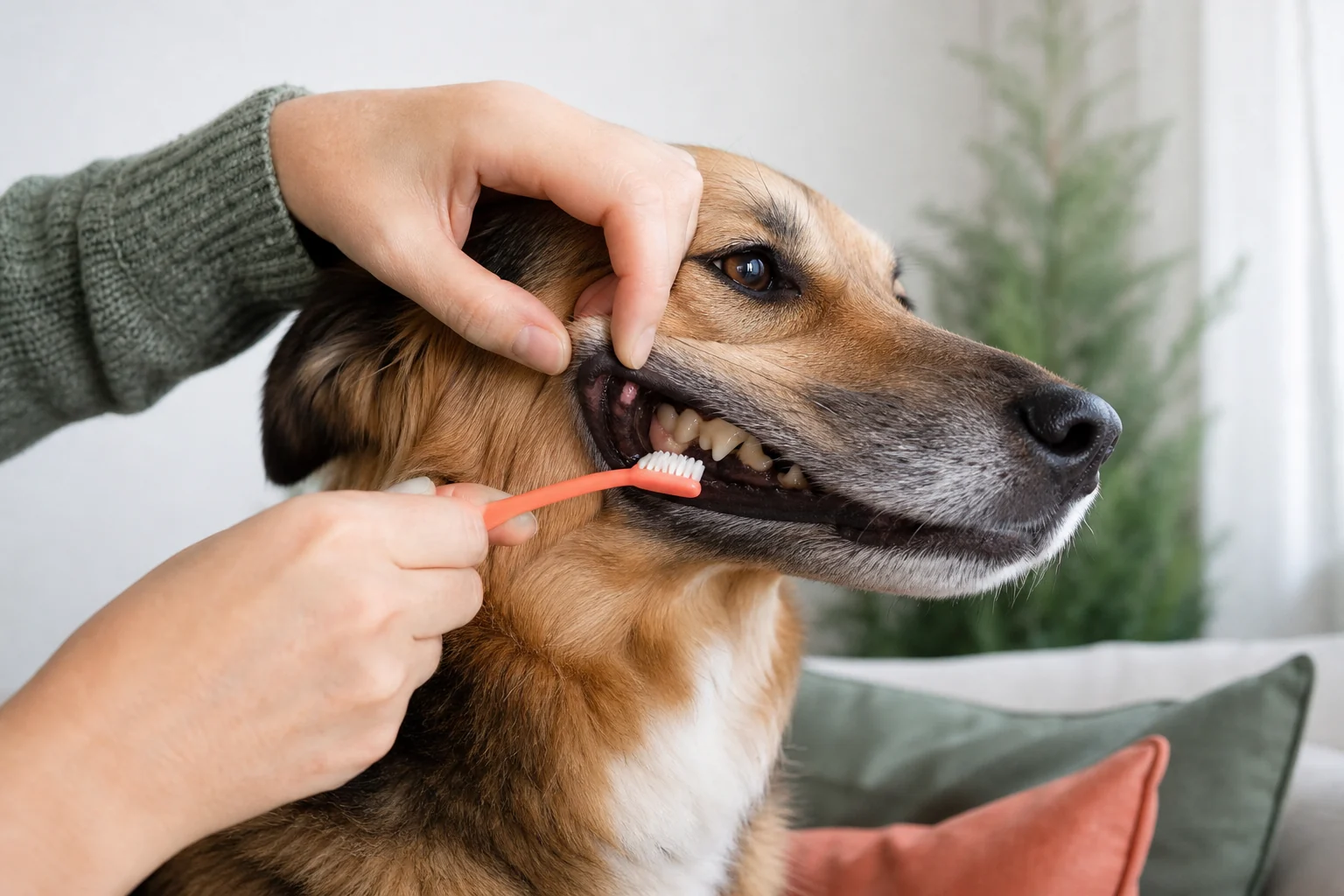
Learning how to brush dog teeth starts with calm handling, not with forcing a full-mouth session. Use a soft-bristle brush and pet toothpaste labeled for dogs. Introduce each step separately, focus on the outer tooth surfaces, and stop if your dog shows pain or serious distress.
What You Need
- A soft-bristle dog toothbrush with a head that fits the mouth
- Pet toothpaste clearly labeled for dogs
- A quiet location, good light, and a stable non-slip position
- A small reward your dog can have
Never use human toothpaste. Dogs swallow the residue, and human products are not made or labeled for that use. Follow the dog toothpaste directions for amount, frequency, age, and storage. If the label is unclear, ask your veterinarian before using it.
Check the Mouth Before You Begin
Do not brush through pain. Contact a veterinarian first if you notice bleeding, swelling, loose or broken teeth, persistent bad breath, facial sensitivity, pawing at the mouth, difficulty eating, or a sudden appetite change. Home brushing supports oral health but cannot diagnose dental disease or remove hardened tartar.
How to Brush Dog Teeth in 7 Gentle Steps
- Practice calm positioning. Sit beside your dog in a quiet place. Touch the cheek briefly, reward calm behavior, and stop.
- Add a short lip lift. Lift the lip just enough to see one outside tooth. The jaw should remain in a natural, unforced position.
- Offer toothpaste separately. Let your dog investigate a label-directed taste before combining the flavor with a brush.
- Introduce the toothbrush. Allow sniffing, then touch the clean brush to the lip for one second.
- Brush one accessible tooth. Add the directed amount of toothpaste and use a light stroke on an outer tooth surface.
- Increase coverage gradually. Add a few gentle strokes near the gumline. Stop before your dog becomes restless.
- Establish a consistent routine. Repeat the easiest successful step and increase coverage over days or weeks.
The Cornell canine tooth-brushing guide also recommends a gradual introduction. A calm ten-second session is more useful than restraining a struggling dog to finish every tooth.
Brush the Outer Surfaces
Lift the lip and guide the soft bristles along the outside surfaces near the gumline. Use light, controlled motion and avoid pushing toward the throat. You do not need to hold the mouth wide open. Stop if your dog chews the brush, pulls away repeatedly, freezes, growls, or shows pain.
A handled toothbrush can improve reach and keep fingers away from the teeth. A secure finger brush offers close control only when a dog is comfortable with a hand near the mouth. Compare the two in the dog toothbrush vs finger brush guide.
How Often Should You Brush?
Daily brushing is a common goal because plaque reforms quickly, but progress should match the dog’s current oral health and tolerance. Begin with brief training sessions and follow your veterinarian’s advice. The AVMA pet dental-care guidance explains that home care works alongside regular veterinary examinations, not instead of them.
Inspect the toothbrush before every use. Replace it when bristles spread, silicone tears, or the head loosens. Keep a separate brush for each pet and clean and store it according to its directions.
If Your Dog Refuses Brushing
Return to the last step your dog accepted. Shorten the session, try a better-fitting soft brush, and introduce the toothpaste flavor separately. Do not hold the mouth shut, pin the dog down, or add unlabeled food or flavoring to the toothpaste.
If fear, guarding, or attempted biting continues, stop and ask your veterinarian about a safe plan. The veterinarian may also suggest a product from the Veterinary Oral Health Council accepted list for a specific plaque or tartar claim. Dental chews, water additives, and other products do not automatically replace brushing.
Common Questions
Can I use water while my dog learns?
A clean, damp dog toothbrush can help a healthy dog learn the physical steps if your veterinarian has not advised otherwise. Introduce dog toothpaste separately.
What if the gums bleed?
Stop brushing and contact a veterinarian. Do not assume bleeding is a normal part of training.
Can brushing replace a dental cleaning?
No. Brushing helps disrupt plaque at home but cannot remove hardened tartar or treat painful dental disease. Professional assessment and treatment are different parts of dental care.
Educational content reviewed for source accuracy July 26, 2026. Stop home brushing and contact a veterinarian for pain, swelling, persistent bleeding, loose teeth, appetite change, or difficulty eating.