
Quick answer: The best dog toothbrush for small dogs has a compact head that fits behind the canine teeth, soft bristles, and a handle you can control without stretching the lips. Choose by your dog’s mouth size and comfort level, not by breed name alone.
Small dogs often have crowded teeth packed into narrow jaws. A standard-sized pet toothbrush can pinch cheeks, miss the back molars, and turn brushing into a struggle. The right tool makes the difference between a calm routine and a stressful one.
Updated September 15, 2026 by the Pet Gentleman Care Team. This guide is educational and does not replace a veterinary oral examination or professional dental treatment.
Key Takeaways
| Key Point | Insight |
|---|---|
| Head size is the priority | A compact head should cover only one or two teeth at a time without scraping the inner cheek. |
| Soft bristles protect thin gums | Small dog gum tissue is delicate. Soft or extra-soft bristles prevent irritation. |
| Daily brushing is the ideal goal | Plaque reforms quickly, so consistent daily sessions give the best protection. |
| Never use human toothpaste | Human formulas may contain xylitol and foaming agents that are dangerous for dogs. |
| Short and calm beats long and forced | A relaxed 30-second session is more useful than a stressful attempt to brush every tooth. |
Why Small Dogs Face Greater Dental Risk
Breeds like Chihuahuas, Yorkies, and Shih Tzus have compact skulls with crowded jaws. The American Veterinary Medical Association notes that most dogs show some evidence of periodontal disease by age three, and crowded teeth make small breeds especially vulnerable.
When an oversized brush is forced into a tight mouth, three problems follow. The wide head pinches the inner cheek against the teeth. Stiff bristles scrape the gumline, teaching the dog to fear the brush. And the bulky head cannot turn the narrow corner to reach the upper rear molars, where tartar tends to build fastest.
A properly sized brush solves these problems with gentle, targeted reach.
Compare Brush Styles for Small Dogs
| Brush Style | Best For | Watch For |
|---|---|---|
| Compact handled brush | Daily cleaning of front and cheek teeth; slender neck keeps fingers clear | A head that is too wide or a slippery handle |
| Single-tuft micro brush | Crowded incisors and tight corners in toy breeds | Pressing the tiny tuft too firmly into the gums |
| Silicone finger brush | Early training with a calm dog that accepts fingers near the mouth | A loose fit, chewing, or placing fingers too close to the bite |
| Dual-ended brush | Trying two head sizes with one handle | Assuming the smaller end automatically fits every small dog |
A finger brush offers close control, but it is not automatically safer or more effective. Stop using one if it slides, your dog chews at it, or you cannot reach the back teeth. For a detailed comparison, see our dog toothbrush versus finger brush guide.
Use a Four-Point Fit Check
Before using a new toothbrush on your dog, run this quick test:
- Head clearance. Lift the upper lip. The brush head should rest flat on an outer tooth without poking into the cheek.
- Molar reach. Slide the brush toward the rear molars while the jaws stay relaxed. The handle should reach without forcing the mouth open.
- Grip stability. Wet your fingers and grip the handle. If it rotates or slips, choose a more textured grip.
- Comfort. Touch the bristles to one front tooth for two seconds, then reward. A calm response matters more than finishing the whole mouth on day one.
Replace the brush when bristles splay, feel rough, or no longer spring back. Never share a brush between pets, and store each one separately. For replacement timing, see how often to replace a pet toothbrush.
Brush a Small Dog’s Teeth Safely
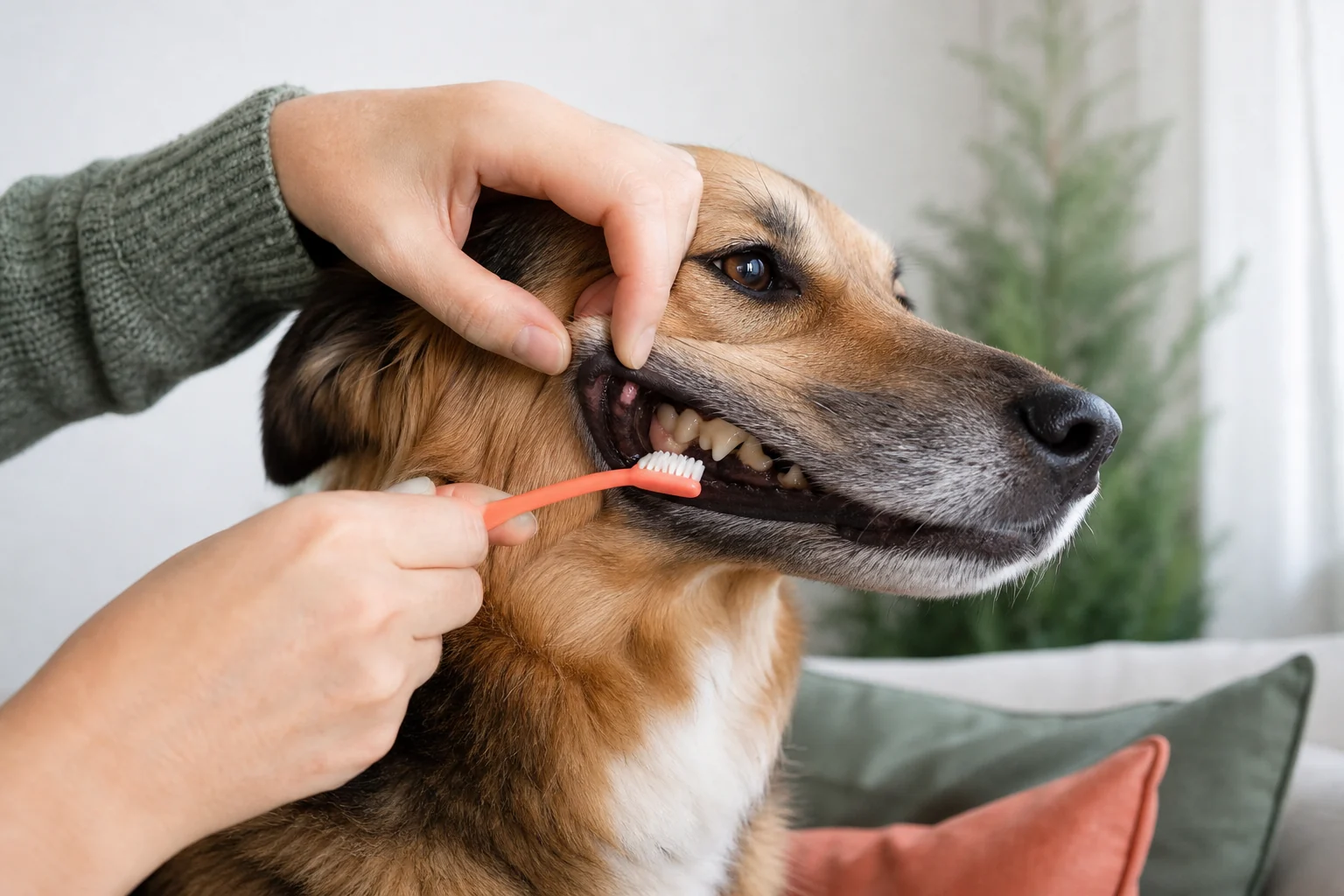
You do not need to pry the jaw open. VCA Animal Hospitals recommends focusing on the outer tooth surfaces, since a dog’s rough tongue naturally cleans the inner side.
- Sit your dog on your lap or a secure surface with a non-slip towel.
- Place a small amount of pet toothpaste on the bristles. Never use human toothpaste.
- Use your thumb to lift the upper lip at the corner of the mouth.
- Angle the bristles toward the gumline and use light, small circles across two or three teeth.
- Keep the session short. End with praise or a brief game.
If your dog freezes, pulls away, growls, or paws at the face, stop and return to an easier step later. Our step-by-step dog tooth brushing guide covers a slower introduction plan.
Choose Dog-Safe Toothpaste
Use only toothpaste labeled for dogs and follow the directions on the package. The FDA warns that xylitol can poison dogs, causing a rapid drop in blood sugar and potential liver damage. Contact a veterinarian or animal poison control immediately after suspected exposure.
Dental chews, gels, or water additives may support oral care between brushings, but they do not replace the mechanical contact of a brush. The Veterinary Oral Health Council accepted-products list identifies products that met its plaque or tartar-control standards.
How Often Should You Brush?
Daily brushing is the best goal. Cornell University describes tooth brushing as the most effective home dental-care method. Build toward daily frequency gradually. One calm area is more useful than a forced full-mouth session.
If daily brushing is not yet realistic, aim for three to four times a week. For scheduling guidance, see how often to brush your dog’s teeth.
Home brushing cannot diagnose disease or replace professional dental care. Stop and contact a veterinarian for pain, persistent bleeding, red or swollen gums, facial swelling, a broken or loose tooth, sudden bad breath, drooling, dropping food, or reduced appetite.
Common Misconceptions
“The smallest brush on the shelf is always the best choice.”
Not necessarily. The head must be compact enough to fit, but the handle also needs to provide reach and control. A brush that is too tiny may be hard to guide steadily along the cheek teeth.
“Finger brushes are safer than handled brushes.”
A finger brush can work well for training, but it puts your fingers inside the mouth. For dogs that chew or move suddenly, a slim handled brush may actually be safer and easier to control.
“If there’s tartar, I should scrub harder.”
A toothbrush removes soft plaque, not hardened calculus. Scrubbing harder damages gums and causes pain. Existing tartar requires a veterinary dental cleaning.
Frequently Asked Questions
Is the smallest toothbrush always best for a small dog?
No. The head must be compact enough to fit, but the handle also needs to provide reach and control. Choose the smallest head you can guide steadily.
Can a finger brush reach a small dog’s back teeth?
Sometimes, but a slim handled brush or single-tuft brush often provides better reach while keeping your fingers away from the bite.
What if my small dog already has tartar?
Do not scrape it at home. Ask a veterinarian to examine the mouth and recommend professional dental care before you resume brushing.
Can I use a human baby toothbrush instead?
A baby toothbrush has soft bristles, but the head is usually too wide and square for a dog’s narrow mouth. A pet-specific brush with a tapered, angled head fits canine dental arches better.
What should I do if my dog’s gums bleed during brushing?
Light bleeding can occur with mild gingivitis. Use gentle pressure and soft bristles. If bleeding continues for more than a few days, stop brushing and visit your veterinarian for an oral exam.
Sources and Further Reading
- AVMA Pet Dental Care
- Cornell: Brushing Your Dog’s Teeth
- FDA: Paws Off Xylitol
- VOHC Accepted Products
- VCA: How to Brush Your Pet’s Teeth
- Choose the right dog toothbrush size
- Dog toothbrush versus finger brush
- Step-by-step dog brushing guide
This guide provides pet owner education. It does not replace professional veterinary dental diagnosis or treatment. Consult a licensed veterinarian regarding your dog’s individual dental health. Read our full veterinary disclaimer.