
What size toothbrush does my dog need? Pick a head that slips smoothly between your dog’s cheek and back molars. Bristles must reach the gumline without forcing the jaw open.
Body weight is a misleading guide for dog toothbrush size. A 25-pound French Bulldog needs a far smaller brush head than a 25-pound Beagle. Skull shape, cheek space, and handle reach decide the right toothbrush for dogs.
Consistent dental care protects your dog from pain and costly vet bills. An oversized brush is the top reason dogs fight home teeth cleaning. Bulky brush heads bump the jaw and trigger a gag reflex. This guide helps you pick the right dog toothbrush for daily home care.
Dog Toothbrush Sizing at a Glance
Prioritize head width and bristle softness over body weight labels:
- Ultra-Compact (Toy Breeds): Head 10–12 mm long, 6–8 mm wide for tiny teeth under 5 mm.
- Compact / Small (Small Dogs): Head 12–16 mm long, 8–10 mm wide for crowded teeth. Use a slim small dog toothbrush.
- Medium (Mid-Sized Breeds): Head 18–22 mm long, 10–12 mm wide for balanced dental arches.
- Large (Large Breeds): Head 24–28 mm long, 12–15 mm wide for broad molars. Use a long-handled large dog brush.
- Single-Tuft (Crowded Teeth): Pointed 5–7 mm bristle tip for tight corners and crowded incisors.
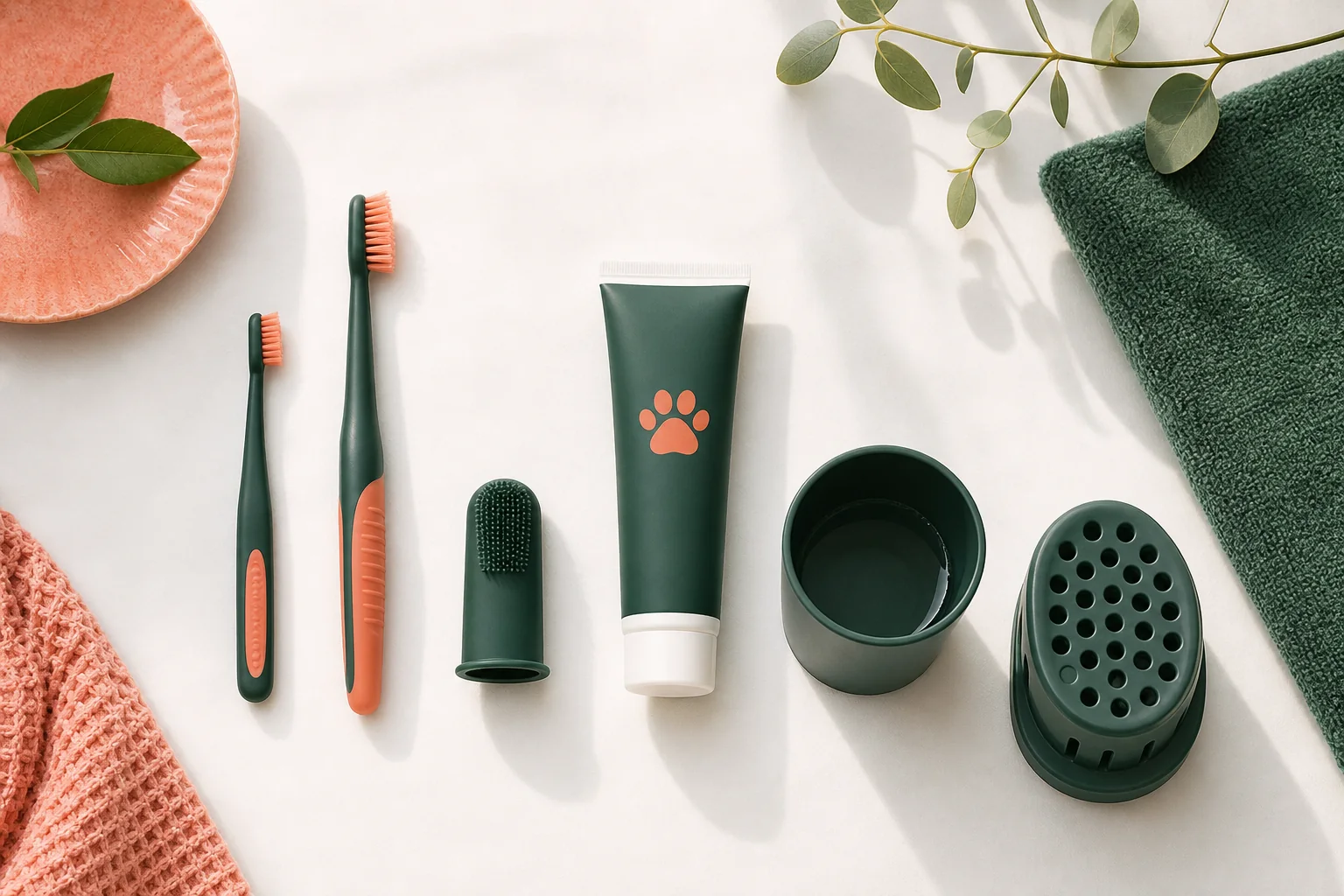
Compare brush heads, handle reach, and bristle softness before selecting a tool for your pet.
Why Weight Alone Is Misleading: Skull Anatomy
Canine skull shapes vary widely within the same weight class. A brush made for an Australian Shepherd feels painful in the mouth of an English Bulldog of equal weight.
The American Veterinary Medical Association reports that periodontal disease affects most dogs by age three. An oversized brush head rubs hard plastic against cheeks before bristles touch teeth. This causes pain, and dogs pull away.
The key metric is the buccal vestibule—the pocket between cheek tissue and teeth. If the brush head cannot slide freely into this space while the mouth stays closed, the brush is too large.
Skull Shapes: Matching the Brush to Your Breed
Canine heads fall into three cranial shapes. Matching your brush to skull anatomy ensures gentle cleaning:
1. Brachycephalic Breeds (Short Muzzles)
French Bulldogs, Pugs, and Boston Terriers have short jaws with 42 crowded teeth. Guidance from VCA Animal Hospitals shows flat-faced breeds trap food in cheek pockets. Pick a brush head one to two sizes smaller than weight suggests. A nimble small dog toothbrush cleans crowded premolars safely.
2. Mesocephalic Breeds (Medium Muzzles)
Beagles, Labradors, and Golden Retrievers have balanced jaws. Standard headed toothbrushes cover broad tooth surfaces quickly and keep steady contact along gums.
3. Dolichocephalic Breeds (Long Muzzles)
Greyhounds and Collies have long jaws. Back teeth sit deep inside the dog mouth. Pick a long handle with a slim neck. This reaches rear molars without jamming fingers into the pet s mouth.
4. Toy and Teacup Breeds
Chihuahuas and Yorkies have tiny jaws and teeth under 5 mm wide. Pet store brushes are far too wide for a toy or small dog. Choose an ultra-soft micro-brush made for tiny mouths.
The 3-Second “Cheek-Slip” Fit Test
Check brush clearance before applying paste:
- Keep the Mouth Closed: Let your dog relax with jaws shut. Routine cleaning targets outer tooth surfaces.
- Lift the Side Lip: Lift the lip to see the side premolars.
- Slide the Dry Brush In: Slip the brush head flat between teeth and cheek.
- Assess Head Clearance:
- Proper Fit: The head glides to back molars without stretching the cheek.
- Oversized Fit: The plastic scrapes the cheek, causing your dog to pull away.
- Undersized Fit: The head is too tiny and gets lost in cheek folds.
If the brush passes this test, your dog will accept cleaning calmly. Read our guide on how to brush dog teeth.
The Carnassial Challenge: Accessing Back Molars
Check clearance around upper fourth premolars. These large shearing teeth sit far back under the cheekbones near salivary glands.
The Cornell Riney Canine Health Center notes that soft plaque turns into tartar within 24 to 48 hours. Getting your dog’s teeth brushed daily is vital.
A bulky brush jams against the cheekbone. A slim head turns tight corners with ease, ensuring a thorough dental cleaning along the gumline before plaque hardens.
Choosing the Head Style: Handled, Double-Headed, or Finger Brushes
Select the head style that best fits your dog’s mouth:
- Compact Single-Head Brushes: Slim oval heads with soft bristles for daily care.
- Double-Head Brushes: Opposing bristle rows hug teeth on both sides, halving brushing time.
- Angled Single-Tuft Brushes: Pointed micro-bristles clean crowded teeth and molar grooves with high accuracy.
- Silicone Finger Toothbrushes: Flexible finger brushes and finger toothbrushes slip over your finger. They help with puppy training, but cannot sweep under gums and pose a bite risk. Read our guide on dog toothbrush vs finger brush.
Handle Length, Reach, and Bite Prevention
Handle design controls grip and handler safety:
- Long Handles (7–9 Inches): Medium and large dogs need long handles to reach back teeth while keeping fingers safe from bites.
- Short Handles (5–6 Inches): Short handles give steady control for small dogs, protecting delicate tooth roots.
- Angled Necks: A 15-degree bend helps bristles reach gums without pressing plastic against lips.
The AAHA Dental Care Guidelines state that home brushing targets plaque along the gumline. An ergonomic handle provides the control needed for gentle cleaning.
Safe Pet Toothpaste and Gentle Daily Habits
Pair your sized brush with safe daily habits:
- Never Use Human Toothpaste: Human paste often has xylitol. The U.S. Food and Drug Administration warns that xylitol causes liver failure in dogs. Always use pet-safe enzymatic dog toothpaste.
- Choose Soft Bristles: Soft bristles sweep gently under gums, protecting both teeth and gums.
- Clean Outer Surfaces: A dog’s rough tongue cleans inner enamel. Brushing outer surfaces covers over 90 percent of plaque buildup.
- Brush Daily: Daily sessions are essential when brushing your dog s teeth. Daily cleaning stops bacteria before they cause serious gum disease.
The Veterinary Oral Health Council names tooth brushing the gold standard for plaque control. Between brushings, a VOHC-accepted dental chew provides abrasive scraping to support brushing your pet. For an easy start, try our dog toothbrush and toothpaste starter kit. It has matched tools for calm daily care.
When Resistance Means Dental Disease, Not Bad Sizing
If your brush fits well and handling is gentle, but your dog pulls away, mouth disease may be the cause. Stop brushing and check for these signs:
- Bad breath that smells sour or metallic.
- Red, swollen, or bleeding gums.
- Heavy yellow or brown tartar on teeth.
- Dropping food or chewing on only one side.
- Loose or broken teeth.
When these signs appear, pause home brushing and consult a veterinarian. Infection under the gumline needs professional treatment.
Frequently Asked Questions
Can I use a human baby toothbrush for my small dog?
Human baby brushes have small heads, but blunt bristles irritate gums. The chunky handle also makes reaching back molars hard. A dedicated small dog toothbrush with an angled neck reaches back teeth safely.
Does a large dog ever need a small toothbrush head?
Yes. Large dogs with tight lips or crowded teeth benefit from a smaller head. A nimble brush head guided with care cleans better than a bulky brush that bumps cheeks.
How often should I replace my dog’s toothbrush?
Replace your dog’s toothbrush every two to three months, or sooner if bristles fray. Worn bristles lose cleaning power and can scratch gums. Give each pet their own brush to stop bacterial spread.
Medical & Veterinary Disclaimer
This guide provides educational pet care tips and does not replace veterinary care. If your dog shows mouth pain, bleeding gums, or heavy tartar, consult a veterinarian.