
Quick answer: In the dog toothbrush vs dental chews comparison, brushing is the more controlled way to disrupt plaque on reachable tooth surfaces. A well-chosen dental chew may support home dental care, but it cannot inspect the mouth, clean every gum line or replace a veterinary examination.
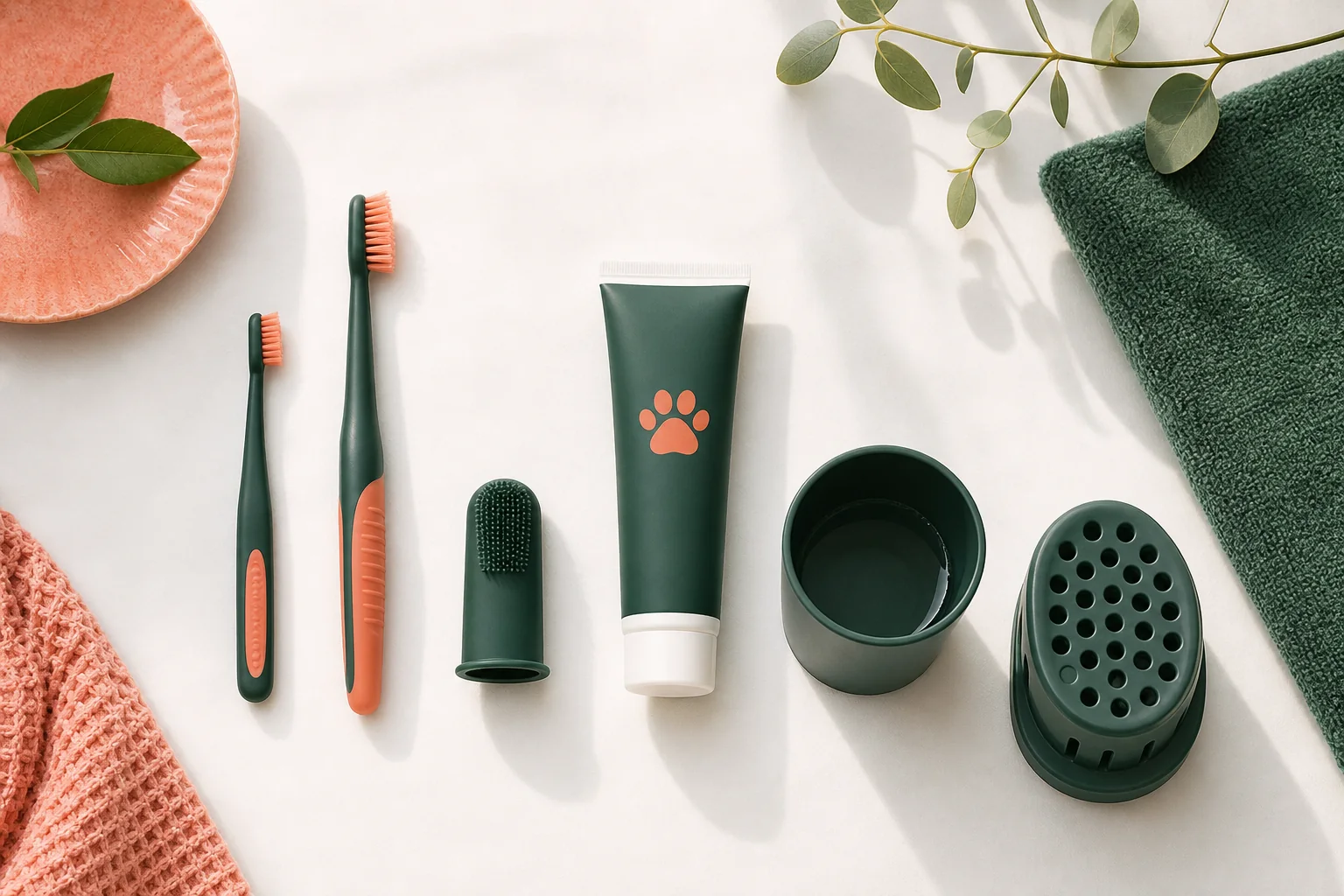
Dog toothbrush vs dental chews at a glance
- Tooth brushing: lets you guide soft bristles along the outer surfaces of the teeth and observe the teeth and gums.
- Dental chews: provide chewing contact and may help reduce plaque or tartar when the product has evidence for that claim.
- Best plan: use brushing as the foundation when the mouth is comfortable and add a suitable chew only if your veterinarian agrees.
How tooth brushing removes plaque
A dog toothbrush gives pet owners direct control over placement, pressure and session length. With pet toothpaste and a soft brush, you can work gently where the tooth meets the gum line. This repeated mechanical action helps remove plaque before it contributes to plaque and tartar buildup.
Brushing also creates a regular chance to notice bad breath, bleeding, swelling, tooth loss or a sudden change in tolerance. It does not remove hardened tartar below the gum line or treat periodontal disease. Follow a calm dog teeth brushing routine, and stop if the dog shows pain.
What dental chews can do
Dental chews may provide helpful chewing action on some tooth surfaces. Results depend on product design, size, chewing pattern and frequency. A package labeled “dental” is not proof that the chew will reduce plaque and tartar.
The Veterinary Oral Health Council accepted-products directory lists products that earned its Seal for a specific plaque or tartar claim. Check the exact product in a category, the species and the claim; the Seal does not mean every chew is appropriate for every dog.
Which option is better?
For most dogs who can safely tolerate it, regular brushing offers more precise contact than a chew. Dental chews are better viewed as a supplement. They can be useful when they suit the dog, but they do not reach every surface and cannot replace professional cleanings when dental disease is present.
A dog that refuses brushing needs a slower training plan or a veterinary check, not a harder chew. Pain, inflamed gums or a broken tooth can make both brushing and chewing uncomfortable.
Choose dental chews safely
- Select the correct species, weight range and size on the label.
- Supervise the dog and remove pieces small enough to swallow whole.
- Avoid products that are too hard for the individual dog or have caused tooth damage before.
- Consider calories, allergies, digestive disease and other health problems with the veterinary team.
- Use the product only at the frequency stated on its directions.
Stop and seek veterinary advice after choking, repeated vomiting, oral bleeding, a fractured tooth, facial swelling or a sudden refusal to eat.
Build a combined home dental care plan
Start with a brush that fits the mouth and intact soft bristles. Use toothpaste made for dogs; human toothpaste is not appropriate because dogs swallow rather than rinse and spit. Brush only comfortable, reachable outer surfaces with light pressure.
If a veterinarian approves a dental chew, give it separately and supervise. Keep a simple record of brushing tolerance, chew use and any change in the mouth. Water additives or other dog dental products should also be selected for their evidence and fit, not treated as automatic replacements for brushing.
When professional dental care is needed
Home care supports dental hygiene, but it cannot diagnose hidden disease or clean below the gum line. The American Veterinary Medical Association pet dental care guide advises regular veterinary evaluation and explains common warning signs.
A veterinarian may recommend dental X-rays, treatment or dental cleanings under anesthesia. Our home brushing and professional cleaning comparison explains why the two approaches have different jobs.
Frequently asked questions
Can dental chews replace brushing on busy days?
Do not assume equal effect. Use the schedule recommended for your dog and resume brushing calmly at the next suitable session.
Are harder chews more effective?
Not necessarily. Excessively hard products may damage teeth. Ask the veterinary team which texture and size are suitable.
Can puppies use dental chews?
Only use a product labeled for the puppy’s age and weight, and supervise it closely. Ask a veterinarian if you are unsure.
Sources
This educational comparison uses linked guidance from the American Veterinary Medical Association and the Veterinary Oral Health Council. Individual veterinary instructions take priority.