 Standard Oral Care Kit
 Premium Cat Oral Care Kit
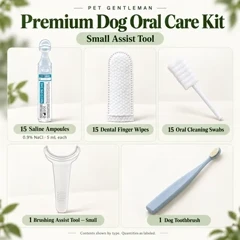 Premium Dog Oral Care Kit
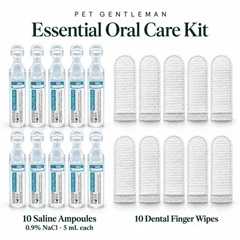 Essential Oral Care Kit
Quick answer: Yes. You can brush your dog’s teeth without toothpaste by using a soft dog toothbrush dampened with plain water. The brushing itself is what removes soft plaque; dog toothpaste mainly adds a flavor that helps many dogs accept the routine, and some formulas add active ingredients. What you must not use instead is human toothpaste or baking soda. This guide lists what you can use in place of toothpaste, how to brush with water, and when to switch to a dog toothpaste.
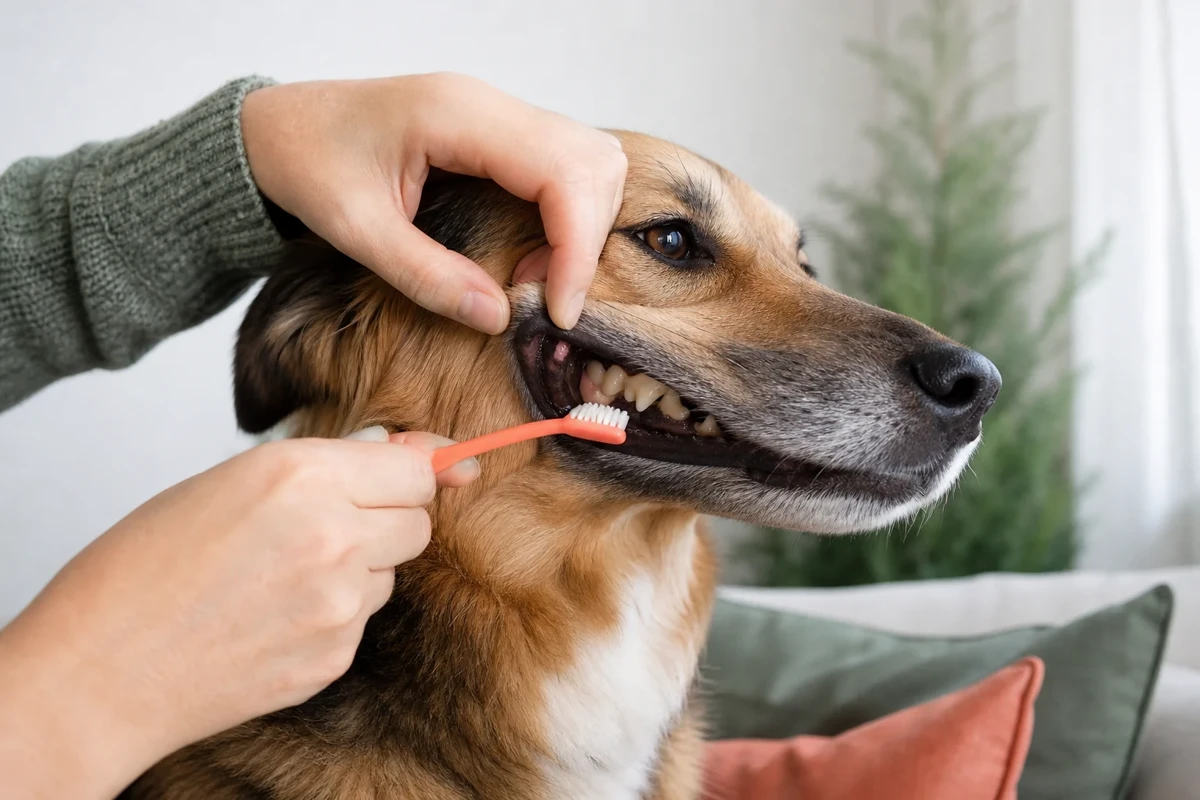
What can you brush your dog’s teeth with instead of toothpaste?
| Option | Use it? | Why |
|---|---|---|
| Plain water on a soft dog toothbrush | Yes | The bristles do the plaque removal. Water simply keeps the brush moving smoothly. |
| Damp gauze or a soft cloth over your finger | Only for calm dogs | VCA describes rubbing the teeth with a cloth as an early step. It reaches less than a brush and puts your finger near the teeth. |
| Toothpaste labeled for dogs | Yes, when you have it | Safe to swallow when used as labeled, and flavors such as poultry, beef, malt and mint help many dogs cooperate. |
| Human toothpaste | No | Not formulated to be swallowed. Some contain xylitol, which is toxic for dogs, or high levels of sodium. |
| Baking soda | No | Highly alkaline; if swallowed it can upset the acid balance in the stomach and gut, and dogs dislike the taste. |
| Broth, peanut butter or other foods on the brush | Not needed | They add ingredients, allergens and calories without helping the brush clean. Use a dog toothpaste if you want flavor. |
The human toothpaste and baking soda rows follow VCA Animal Hospitals’ guide to brushing your dog’s teeth. Cornell’s Riney Canine Health Center also advises against human paste because it contains detergents and fluoride.
Why brushing still works without toothpaste
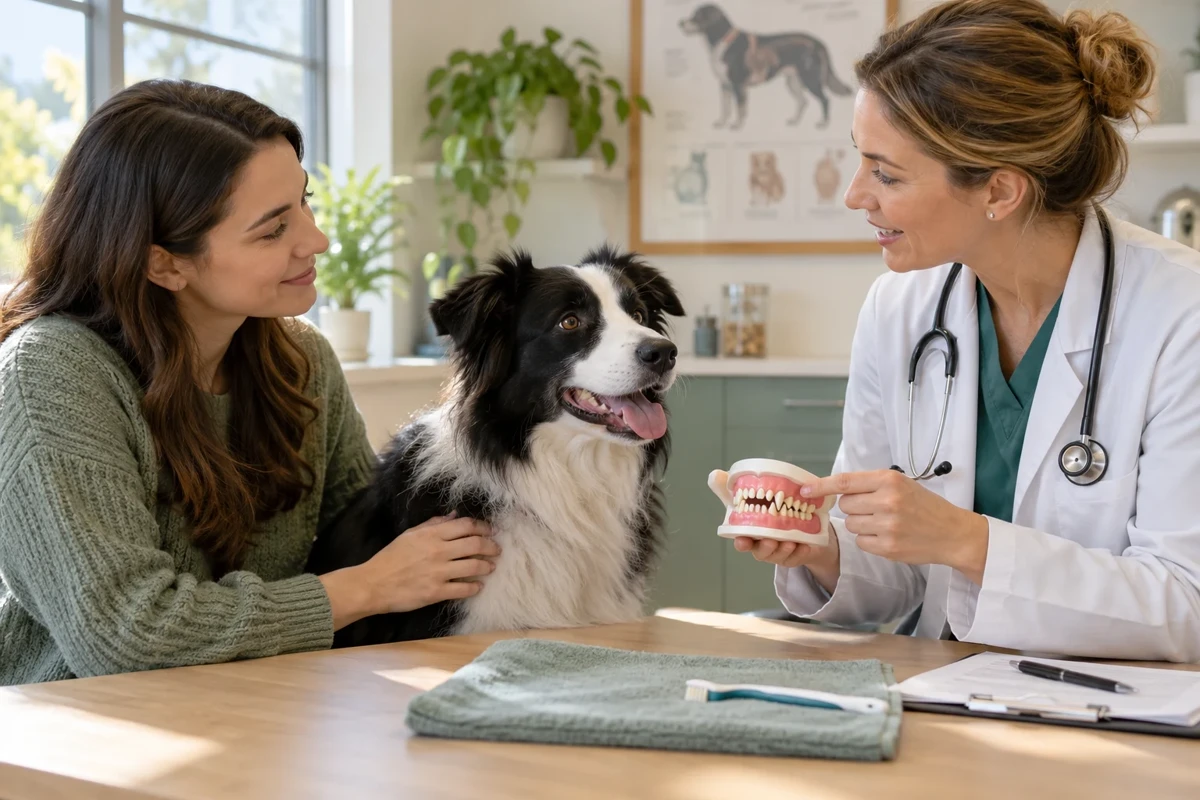
Plaque is a soft film that builds up on the teeth every day. A toothbrush disturbs it mechanically. As the American Kennel Club puts it, nothing replaces the mechanical removal of plaque with a toothbrush. That is why a soft dog toothbrush and water are a reasonable routine while you are out of paste, or for a dog that has not yet accepted the taste of one.
Timing matters more than the paste. Cornell notes that minerals in saliva can begin to harden plaque into tartar within as little as 24 hours. The AAHA dental care guidelines add that brushing removes plaque but not hardened tartar, and that it needs to be done daily to be of benefit. A short daily session with water beats an occasional session with paste.
Brushing cannot remove tartar that has already hardened. If you see a brown or yellow crust along the gumline, read how to remove plaque from dog teeth without scraping and talk to your veterinarian about a professional cleaning.
How to brush your dog’s teeth with water
- Wet a soft brush. Rinse a clean, soft dog toothbrush under lukewarm water and shake off the excess.
- Lift the lip from the side. Sit beside your dog with its mouth closed and lift the upper lip gently to show the outer teeth.
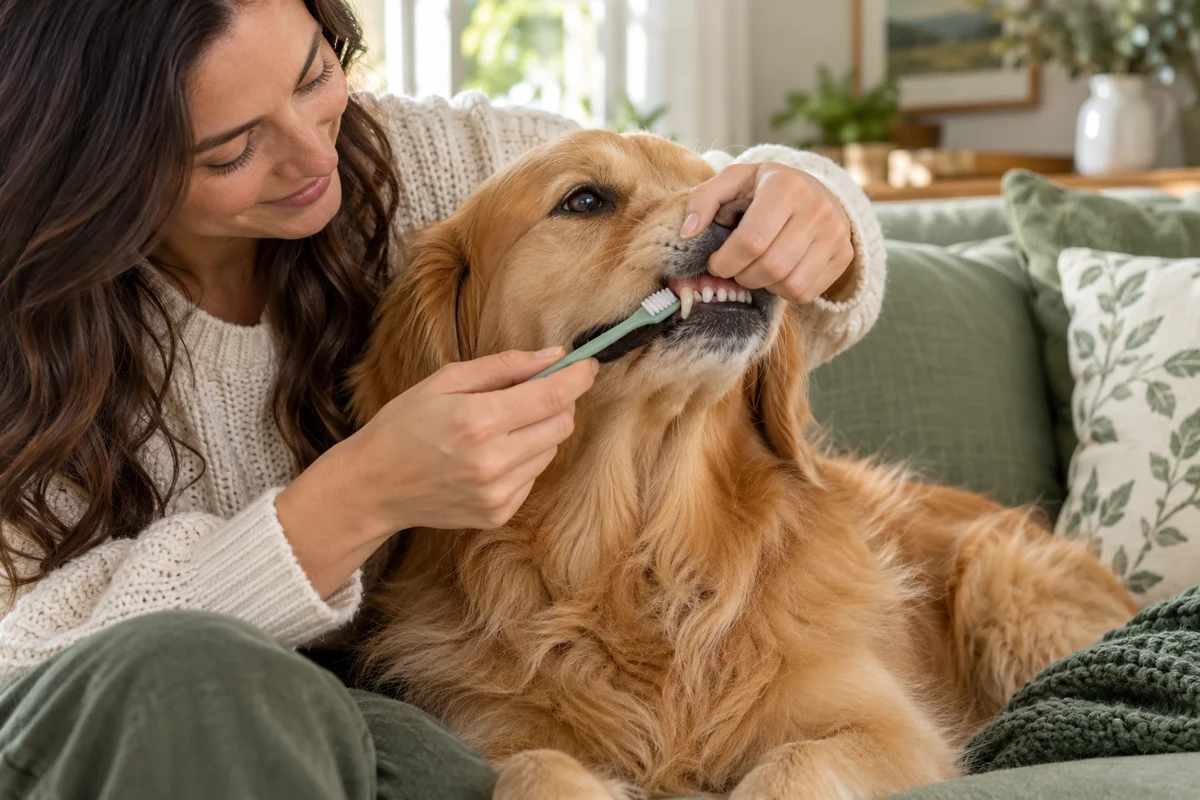
- Brush the outer surfaces. VCA advises staying on the outside surfaces of the teeth to avoid being accidentally bitten. Use small, gentle strokes where each tooth meets the gum.
- Keep it short and end on a good note. Start with a few teeth and a few seconds, then praise or reward your dog. Add teeth over the following days.
Rinse the brush afterward and let it air-dry upright. Our step-by-step guide to how to brush dog teeth covers handling, stop signals and building the routine.
Choosing a brush for water-only brushing
Without paste, the brush is doing all of the work, so fit and softness matter. Choose a head small enough to sit beside the cheek without stretching it, with soft bristles and a handle you can steady. Our guide to what size toothbrush your dog needs explains how to check.
- Small dogs and puppies: the Angled Single-Tuft Toothbrush for Small Dogs and Puppies reaches one area at a time, and the Soft-Bristle Pet Toothbrush with Flat Handle has soft PBT bristles on a small oval head.
- Medium and large dogs: the Slim Soft-Bristle Toothbrush for Medium and Large Dogs has soft bristles on a single head with a narrow neck.
- Calm dogs that accept fingers near the teeth: the silicone finger toothbrush for dogs gives direct control. Do not use it with a dog that mouths or bites.
If you are unsure which shape fits, the brush finder asks a few questions about your dog. Wondering about a toothbrush made for people? Our guide on using a baby toothbrush on a dog explains when one can work.
When to add dog toothpaste
Dog toothpaste is worth adding once your dog is comfortable with the brush, mainly because a flavor your dog likes makes the routine easier to keep up. VCA suggests letting your dog taste a little pet toothpaste from your finger first, then applying a small amount to the brush.
- Pick a toothpaste labeled for dogs and follow the amount on the label. Our guide to how much pet toothpaste to use explains how to read the directions.
- Try one flavor at a time. Our guide to dog toothpaste flavors includes a simple taste trial.
- If you want a product with a specific plaque or tartar claim, check whether that exact product is listed by the Veterinary Oral Health Council.
If your dog swallowed human toothpaste
Check the ingredient list for xylitol. If it contains xylitol, or you cannot tell, call your veterinarian, an emergency clinic or an animal poison-control service right away rather than waiting for symptoms. Our guide on why human toothpaste is unsafe for pets explains the other ingredients to watch for.
Signs your dog needs a veterinarian, not more brushing
Home brushing, with or without paste, cannot treat established dental disease. Stop brushing and book an exam if you notice:
- A thick brown or yellow crust along the gumline
- Red, swollen or bleeding gums
- Persistent bad breath
- Pawing at the mouth, drooling or chewing on one side
- Dropping food, eating more slowly or reluctance to chew toys
- Loose, broken or discolored teeth
Cornell lists pawing at the mouth, drooling, mouth odor, bleeding from the mouth, changes in eating and reluctance to chew among the signs of periodontal disease.
Frequently asked questions
Can I brush my dog’s teeth with just water every day?
Yes. Daily brushing with a soft brush and water still removes soft plaque. Many owners add a dog toothpaste later because the flavor makes brushing easier to keep up.
Can I use a tiny amount of human toothpaste in a pinch?
No. Human toothpaste is not made to be swallowed, and some contain xylitol, which is toxic for dogs. Brush with water until you have a toothpaste labeled for dogs.
Is brushing without toothpaste less effective?
The brushing does the plaque removal, so a soft brush and water are a sound routine. Some dog toothpastes add active ingredients; if you want one with a specific plaque or tartar claim, check the product’s evidence and whether it is VOHC-listed.
Sources
- VCA Animal Hospitals: Brushing Your Dog’s Teeth
- Cornell Riney Canine Health Center: Dental Disease and Home Dental Care
- Cornell Riney Canine Health Center: Periodontal Disease
- AAHA 2019 Dental Care Guidelines for Dogs and Cats
- American Kennel Club: Are Non-Anesthetic Dental Cleanings Safe for Dogs?
This guide is educational and does not replace a veterinary exam. If your dog shows signs of oral pain, bleeding or swelling, contact a veterinarian. Read our full veterinary disclaimer.