
Quick answer: Do not brush a dog or cat’s teeth with human toothpaste. Human toothpaste is made for people who rinse and spit; pets swallow most of what enters their mouths. Use toothpaste labeled for your pet’s species.
Updated: July 10, 2026 · By: Pet Gentleman Editorial Team
Editorial note: This safety guide uses current FDA, AVMA, and veterinary-college information. It does not replace poison-control or veterinary advice for a specific exposure.
Key Takeaways
- Human toothpaste is not designed for pets to swallow.
- Xylitol can cause a veterinary emergency in dogs.
- Risk depends on the product, ingredient list, amount, species, and pet size.
- Keep the package and contact your veterinarian after a concerning exposure.
In This Guide
- Why swallowing changes the safety calculation
- What xylitol does in dogs
- Why cats still need cat toothpaste
- What to do after accidental ingestion
Can Dogs Use Human Toothpaste?
No. Dogs cannot reliably spit out toothpaste, and the FDA specifically advises using pet toothpaste for pets rather than human toothpaste. A tube that lacks xylitol is not automatically suitable: its full formula and directions were still written for people. For routine dental care, select dog toothpaste with species-specific directions and use only the labeled amount.
Before brushing your dog, check three things:
- The label says the toothpaste is intended for dogs.
- The package gives a clear amount and use direction.
- The dog toothbrush or finger brush fits securely and allows gentle control.
If the product identity or ingredient list is uncertain, pause brushing and ask the veterinary team. Do not test a human product by giving a small amount.
Pets Do Not Rinse and Spit
A person normally uses toothpaste briefly, spits it out, and rinses. Dogs and cats usually swallow toothpaste during brushing. That difference means a human product’s flavorings, detergents, sweeteners, and active ingredients may be consumed rather than removed. Even when a particular tube does not contain xylitol, it was not labeled or dosed for routine swallowing by a pet.
Xylitol Is a Specific Emergency Risk for Dogs
The FDA warns that xylitol, also called birch sugar or wood sugar, can be found in toothpaste and other human products. In dogs, ingestion can trigger a rapid insulin release and a dangerous decrease in blood sugar. Reported signs include vomiting, weakness, loss of coordination, collapse, and seizures. Effects may begin quickly, so waiting for symptoms is not a safe plan.
If a dog may have swallowed xylitol, call a veterinarian, emergency clinic, or animal poison control service immediately. Bring or photograph the label. Do not estimate safety from the toothpaste flavor, package size, or the fact that the dog initially looks normal.
What About Cats?
FDA information notes that cats do not appear to share the same documented xylitol sensitivity as dogs. That does not make human toothpaste appropriate for cats. Evidence is more limited, cats still swallow the product, and human formulas vary. A toothpaste clearly labeled for cats remains the safer routine choice.
What to Do After Accidental Exposure
- Remove the tube and prevent further licking or chewing.
- Keep the package and ingredient list.
- Record the pet’s species, weight, estimated amount, and time of exposure.
- Call your veterinarian or an emergency veterinary service for product-specific advice.
- Do not induce vomiting or give a home remedy unless a veterinary professional directs you.
Seek urgent help for weakness, shaking, vomiting, collapse, seizures, breathing difficulty, facial swelling, or unusual behavior.
A Safer Brushing Setup
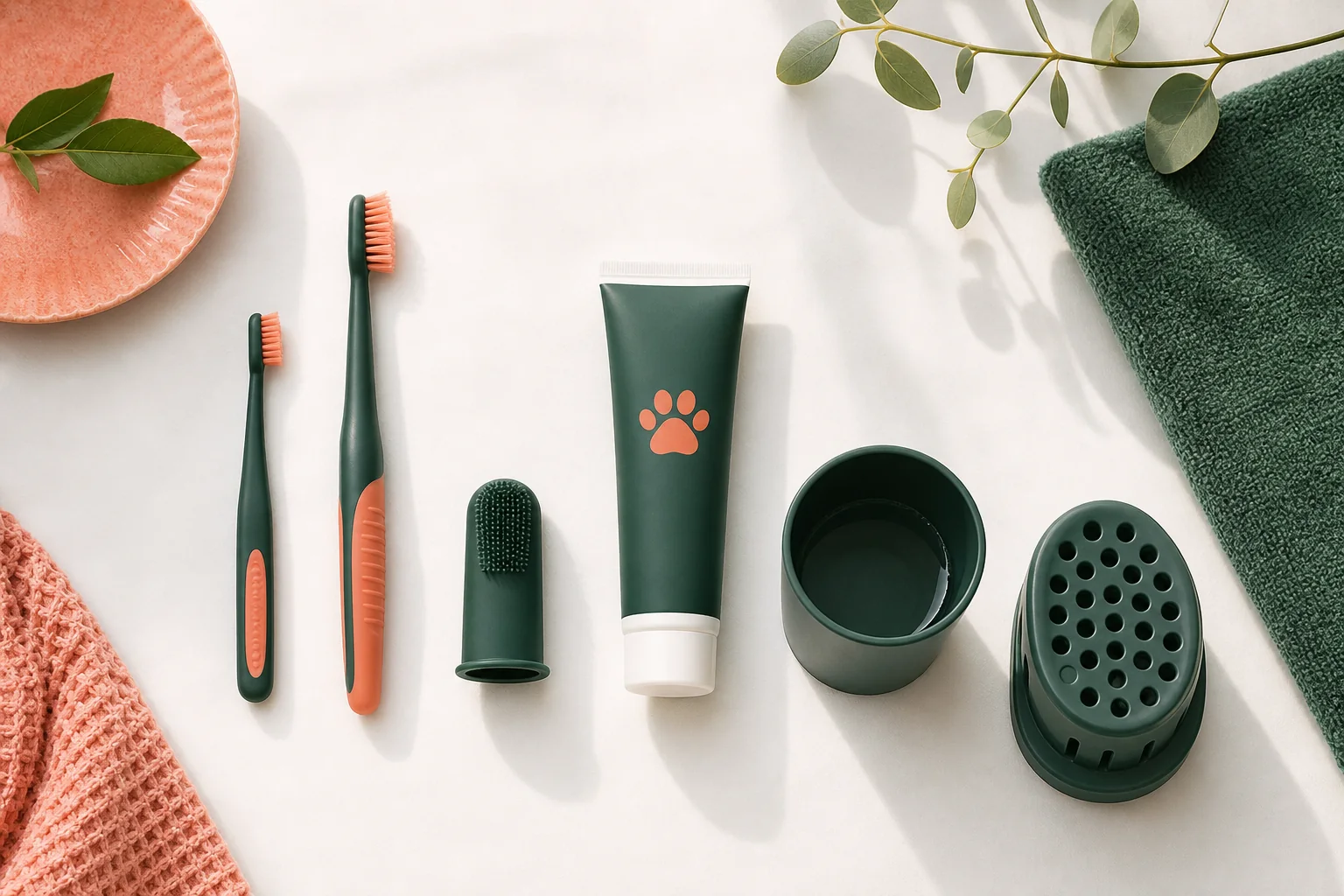
Use a soft, right-sized pet toothbrush and toothpaste labeled for the species. Start with the labeled amount and short sessions. Focus on reachable outer tooth surfaces with light pressure. Regular tooth brushing supports oral health and removes plaque, but home dental care does not replace veterinary examinations or needed treatment. Stop and request veterinary guidance if the mouth is painful, bleeding, or swollen.
How to Build a Safe Dental-Care Routine
Introduce the brush gradually instead of forcing a full cleaning on the first day. Let the pet investigate the dog toothpaste or cat toothpaste, then practice briefly touching the lips and outer teeth. Reward calm behavior and stop before the pet becomes distressed. Rinse the toothbrush after use, let it air-dry, and store it away from household toothpaste.
Ask a veterinarian how often to brush and when professional dental care is needed. Persistent bad breath, loose or broken teeth, reduced appetite, facial swelling, or bleeding gums can accompany oral-health problems such as periodontal disease. Tooth brushing may limit plaque and tartar, but it cannot repair an already painful tooth. Do not substitute baking soda or another homemade mixture unless the veterinary team has approved the exact recipe for that pet.
Sources
- FDA: Paws Off Xylitol
- FDA: Potentially Dangerous Items for Pets
- AVMA: Pet Dental Care
- Cornell University College of Veterinary Medicine: Brushing Your Dog’s Teeth
Veterinary disclaimer: This article is educational. For an actual ingestion, contact a veterinarian or animal poison-control service rather than relying on general web guidance.