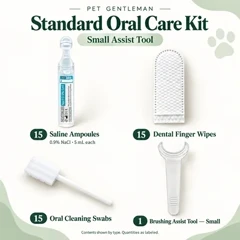
 Standard Oral Care Kit
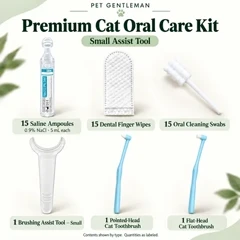 Premium Cat Oral Care Kit
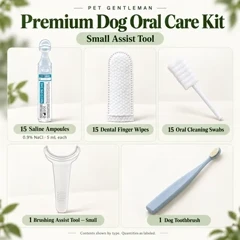 Premium Dog Oral Care Kit
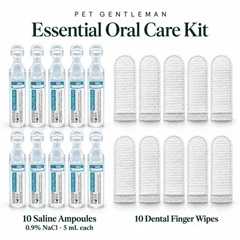 Essential Oral Care Kit

Dog dental cleaning aftercare starts with the instructions your veterinary team sends home. Before brushing again, confirm whether your dog had cleaning alone, tooth extractions, or other gum treatment. After oral surgery, wait for your veterinarian to confirm that the treated gums have healed enough for brushing. A dog who seems lively may still need a break from mouth care.
Keep the discharge sheet handy when you settle your dog at home. It should tell you what to expect, what care to provide, and who to call with concerns. Your dog’s procedure and medical needs determine the plan.
Before leaving the clinic, get these answers
Your dog’s dental appointment may include more than cleaning. Cornell explains that the examination under anesthesia includes dental X-rays and may identify teeth that need removal or other treatment. Ask the team to show you what was done. Cornell’s dental care overview describes this process.
Use this dog dental cleaning aftercare checklist at pickup:
- Were any teeth extracted, gums treated, or stitches placed? Which areas need protection?
- When should I offer food and water, what food should I use, and when may normal feeding resume?
- What is each medicine for? When is the next dose, and what should I do if my dog refuses it or vomits?
- When can brushing restart? Are wipes, gels, dental chews, or chew toys allowed before then?
- When is the recheck, and does the team need to examine the mouth before clearing brushing?
- Which changes should prompt a call, and who should I contact after hours?
Record the answers or ask for written instructions. If several people care for your dog, share the same plan so nobody gives an extra dose or offers a forbidden chew.
Cleaning alone and extractions need different plans
Use the procedure report to find the question you need to ask your vet. The restart date depends on the treatment and how the mouth heals.
- After cleaning without extractions or gum surgery, confirm the restart instructions for your dog’s mouth, including any tenderness or inflammation.
- After tooth extraction or other oral surgery, ask whether treated gums have healed enough, which areas to avoid, and whether a recheck is needed first.
- If you are unsure what was done, call the clinic for clarification before putting a brush, wipe, or finger in the mouth.
The AAHA dental guidelines advise withholding brushing until surgically treated gums have healed. They also recommend a recheck in 10–14 days, even after a preventive cleaning. That appointment window is not automatic permission to brush on day 10. Follow the appointment and restart plan your own veterinary team provides.
For the roles of home brushing and professional cleaning over the long term, see our guide to home brushing and professional dental cleaning.
Dog teeth cleaning recovery: rest and observation
Recovery from anesthesia and healing inside the mouth are separate things. Your dog may be drowsy after coming home. VCA’s postoperative guidance describes this and recommends a quiet, comfortable resting area. Ask your team what behavior to expect after the drugs used for your dog.
Set up a clean bed in a calm room and follow the activity restrictions on the discharge sheet. Keep other pets from starting play, and help your dog avoid jumping if the team has restricted it. Arrange supervision for the evening, even if your dog seems ready to sleep.
Keep children from crowding or handling a recovering dog. Washington State University’s anesthesia guidance warns that behavior can change after anesthesia, including in dogs who are normally trustworthy around children.
Make brief notes about alertness, eating, drinking, and discomfort. Record what changed and when. If behavior falls outside the clinic’s expected recovery pattern, call; you do not need to wait for a general online recovery deadline.
Food, water, and things your dog can chew
Ask whether your dog needs soft food after dog dental cleaning and how long that instruction applies. If the clinic recommends canned food or softened kibble, confirm that it fits your dog’s usual or prescribed diet. Do not replace a medical diet with a homemade meal without asking.
Follow the discharge instructions for the first meal and water. Some dogs feel nauseous after anesthesia; VCA notes that smaller meal portions may help. If your dog will not eat or seems unable to drink comfortably, contact the team for advice instead of forcing food into the mouth.
After extractions, ask specifically about hard kibble, treats, dental chews, tug games, and chew toys. A product sold for dental health may still be unsuitable while the mouth heals. Have a vet-approved alternative ready if chewing is normally how your dog settles down.
Keep bones, antlers, and similarly hard objects out of the ongoing dental routine too. Cornell cautions that hard chewing objects can wear or fracture teeth. Softer food during recovery does not remove the need for an approved home care plan once healing is complete.
Give only the medicines prescribed for this dog
Record any prescribed pain medications and other medicines: name, scheduled time, dose given, and any problem. Check each dose against the prescription label, including medicines used for another pet or an earlier procedure.
If you cannot give a dose, or your dog vomits after it, contact the clinic for instructions. Do not guess whether to repeat it. Ask about administration before hiding a tablet in a hard treat that may conflict with the feeding plan.
Avoid giving a human pain medicine or leftover medication unless your veterinarian specifically directs you to do so. The FDA’s animal drug guidance explains that pain relievers safe for people can cause toxic effects in dogs.
Changes that should prompt a call
Seek emergency veterinary care immediately for trouble breathing or collapse. Cornell’s emergency service lists both as emergencies.
Contact the treating clinic promptly about vomiting or retching, unusual lethargy, a worsening cough, or pain that persists despite prescribed medicine. These are among the concerns in VCA’s anesthesia and home care guide, which also advises calling about medication questions.
Report new or increasing facial swelling, bleeding from the mouth, difficulty eating, or unusual drooling. Cornell identifies these as oral health warning signs. The veterinary team can tell you whether an observation fits your dog’s procedure or needs examination.
Describe what you see rather than deciding that it is “just anesthesia” or “just sore gums.” Note the last medication, meal, or drink and when the symptom began. Do not open the mouth forcefully to investigate a painful area or disturb stitches for a photograph.
Brushing after dog tooth extraction: restart with clearance
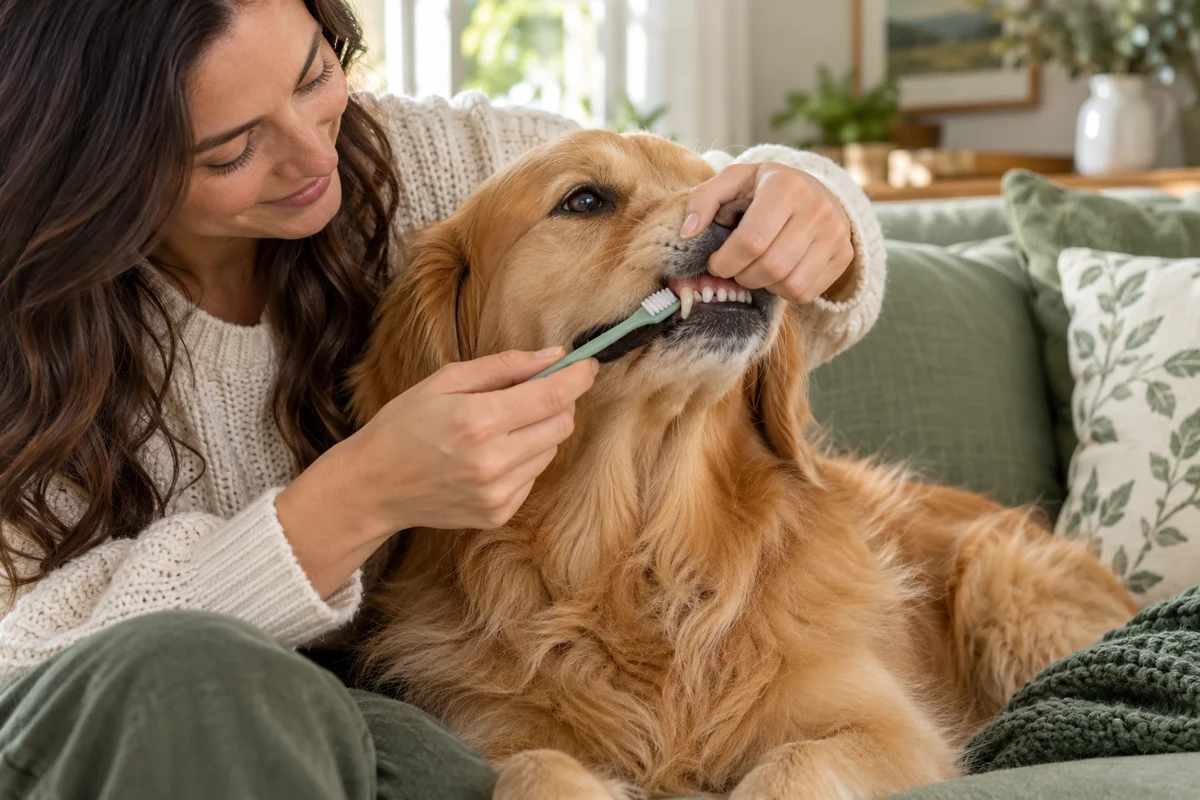
Once your veterinarian has cleared brushing, ask them to demonstrate where and how to clean. If only some areas are cleared, follow those limits. A familiar brush and an eager dog do not override instructions about a healing site.
Start with a small task your dog tolerates comfortably. UC Davis’s dental home care instructions recommend gradual introduction, a soft-bristled brush and pet toothpaste, without forcing the mouth open.
- Choose a calm moment and let your dog investigate the brush.
- Gently lift the lip only if that handling is comfortable and allowed.
- Brush a few accessible outer tooth surfaces in the areas your vet has cleared.
- Stop before your dog struggles, praise them, and build up gradually.
If handling causes pain, bleeding, or a sudden refusal, stop and contact the clinic. Do not push through to finish a session. For a dog who needs to rebuild confidence after receiving clearance, use our gradual teeth-brushing guide and stay within the veterinary team’s restrictions.
Keep the recheck and build the next routine
Bring your observations and unresolved questions to the follow-up visit. Ask whether normal food, chewing, and brushing can resume; these do not necessarily share one restart date.
After recovery, work toward daily brushing and the professional checks your vet recommends. UC Davis recommends removing plaque every day with brushing. If your dog cannot tolerate brushing, ask your vet to help you choose an alternative.
Your vet may suggest an appropriate product from the Veterinary Oral Health Council’s accepted list. Check whether its acceptance is for plaque, tartar, or both. That listing does not give clearance to use a chew or other product immediately after surgery.
Keep your dog dental cleaning aftercare notes with the discharge sheet: what was done, feeding restrictions, medicines given, changes noticed, recheck details, and brushing clearance.