
Quick answer: A useful dog dental care routine combines frequent gentle brushing, a weekly check for changes, clean well-fitting tools and regular veterinary care. Home tooth brushing can reduce fresh plaque on reachable surfaces, but it cannot remove hardened tartar or diagnose dental disease.
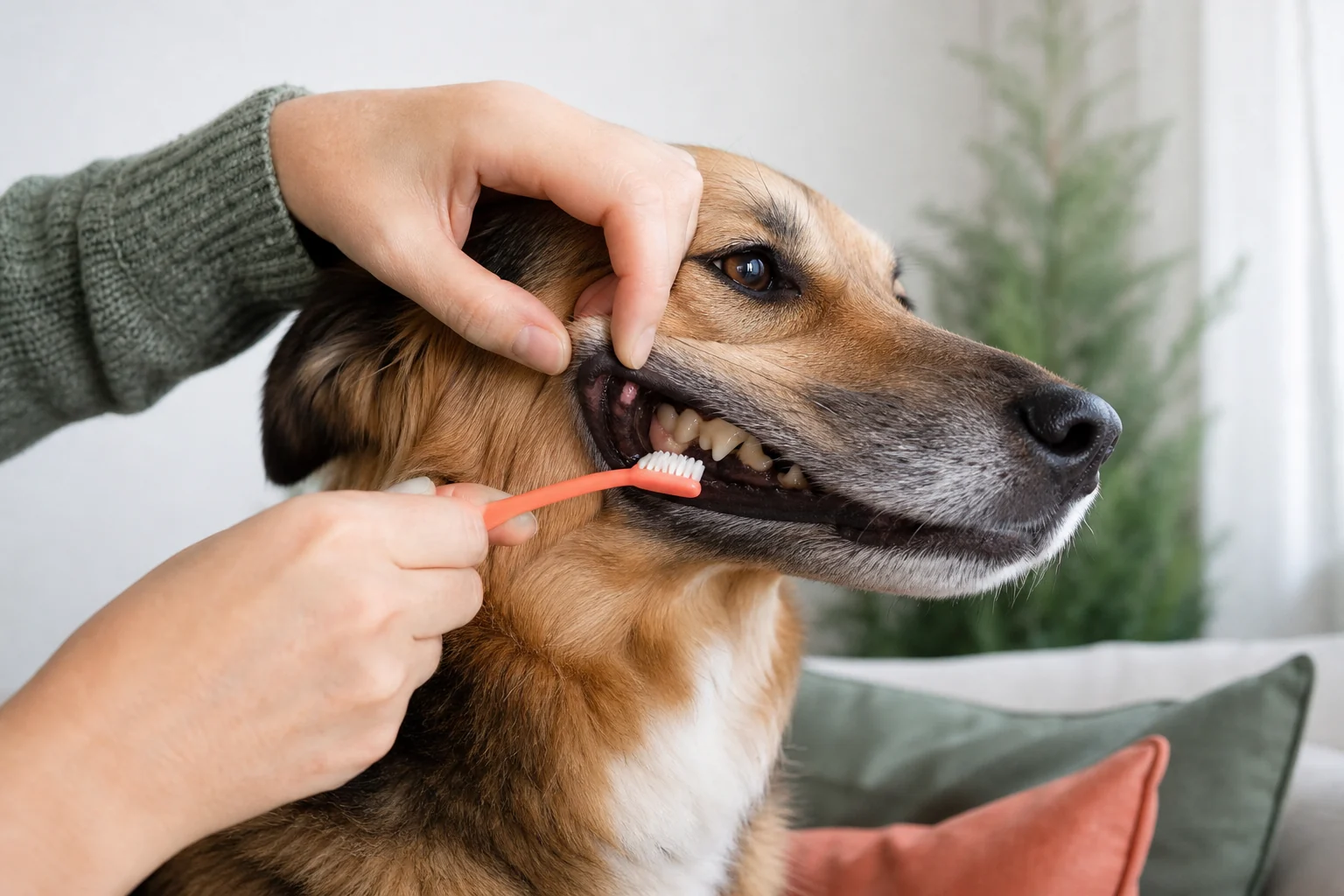
Start with a comfortable mouth
Pause home care and contact a veterinarian for persistent bleeding, swelling, a loose or broken tooth, difficulty eating, facial changes, strong bad breath or sudden resistance. Gum disease, tooth decay and periodontal disease can cause pain that training cannot solve.
Ask the veterinary team whether brushing is appropriate after a dental procedure. Professional dental care may include an examination, dental X-rays, cleaning and treatment that routine home care cannot provide.
Choose the right toothbrush and toothpaste
- Use a soft-bristle dog toothbrush with a head that fits beside the cheek.
- Choose toothpaste labeled for dogs; do not use human fluoride toothpaste.
- Prepare a small reward before each session.
- Replace the brush when bristles bend, split or feel rough.
A finger brush may suit a dog that accepts close hand contact. A handled brush offers more distance and may improve control. Product directions and individual veterinary advice take priority.
Daily brushing routine
- Let the dog approach the prepared brush.
- Lift the lip briefly from the side; keep the mouth closed.
- Place the bristles where a tooth meets the gum line.
- Use light, short strokes on reachable outer surfaces of the teeth.
- Stop before the dog struggles, then reward calmly.
Daily brushing is an ideal goal for many dogs. A calm routine several times per week is a better starting point than forcing a full-mouth session. Follow the detailed dog tooth brushing guide when the foundation steps feel easy.
Weekly teeth and gums check
Once a week, notice whether the dog eats, chews or accepts handling differently. Lift each lip only as far as the dog allows. Look for new redness, swelling, bleeding, a fractured tooth or plaque buildup. Do not probe the gums or scrape deposits.
Home observation supports oral hygiene but does not replace an examination. Take a photo only if it can be done without distress and use it to explain a change to the veterinary team.
Clean and store the brush
Rinse the brush after use, remove visible debris and let it air-dry in a ventilated place. Store each pet’s brush separately and outside the dog’s reach. Do not seal a wet brush in a closed container.
Inspect the handle and bristles before every use. Replace a damaged tool instead of trying to continue with less pressure.
Use optional dental products carefully
Dental chews, diets or water additives may complement brushing when they suit the individual dog. They do not copy the contact and observation provided by brushing. Check the exact plaque or tartar claim rather than assuming every dental product has the same evidence.
The Veterinary Oral Health Council accepted-products directory lists products that earned its Seal for a specific claim. A seal does not mean the product fits every dog or replaces veterinary dental care.
Keep a simple routine record
Record the date, area reached, tool and comfort level as relaxed, uncertain or stop. Also note bad breath, bleeding, eating changes or resistance on one side. A short record helps identify a worn brush, rushed technique or gradual health change.
Progress means the same useful action becomes easier. It does not mean every session must become longer.
Adjust the routine when needs change
Recheck the brush size, handling position and session goal as the dog ages or after a health change. Small or crowded mouths may need a compact head, while limited handler mobility may make grip and lighting more important. Restart at an easier step after a long break.
A new reaction should not be dismissed as stubbornness. Stop and investigate sudden avoidance, chewing on one side or a change in appetite. The right routine adapts to comfort and medical guidance rather than following the same schedule at any cost.
Schedule professional dental care
Regular examinations remain part of the routine even when the mouth looks clean. Ask how often your individual dog should be examined and when a professional dental cleaning is appropriate. The American Veterinary Medical Association pet dental care resource explains warning signs and why home care does not replace treatment.
Do not attempt to remove hardened tartar at home. Brushing is intended to disturb soft plaque on accessible surfaces, not treat established disease.
Frequently asked questions
How often should I brush my dog?
Daily is the ideal goal for many dogs. If the dog is not ready, begin with short successful sessions and build gradually.
Should I hold my dog’s mouth open?
No. Lift the lip from the side and brush reachable outer surfaces while the mouth stays closed.
Can brushing remove hardened tartar?
No. Hardened deposits and dental disease need veterinary assessment and may require professional cleaning.
Sources
This routine uses linked dental-care guidance from the AVMA and Veterinary Oral Health Council. It is educational and does not replace individual veterinary instructions.