
Quick answer: Pets should not share a toothbrush. Give every dog and cat a separate, labeled brush that fits the individual mouth. This simple rule limits saliva transfer, keeps worn bristles in one mouth, and makes cleaning and replacement easier to track.
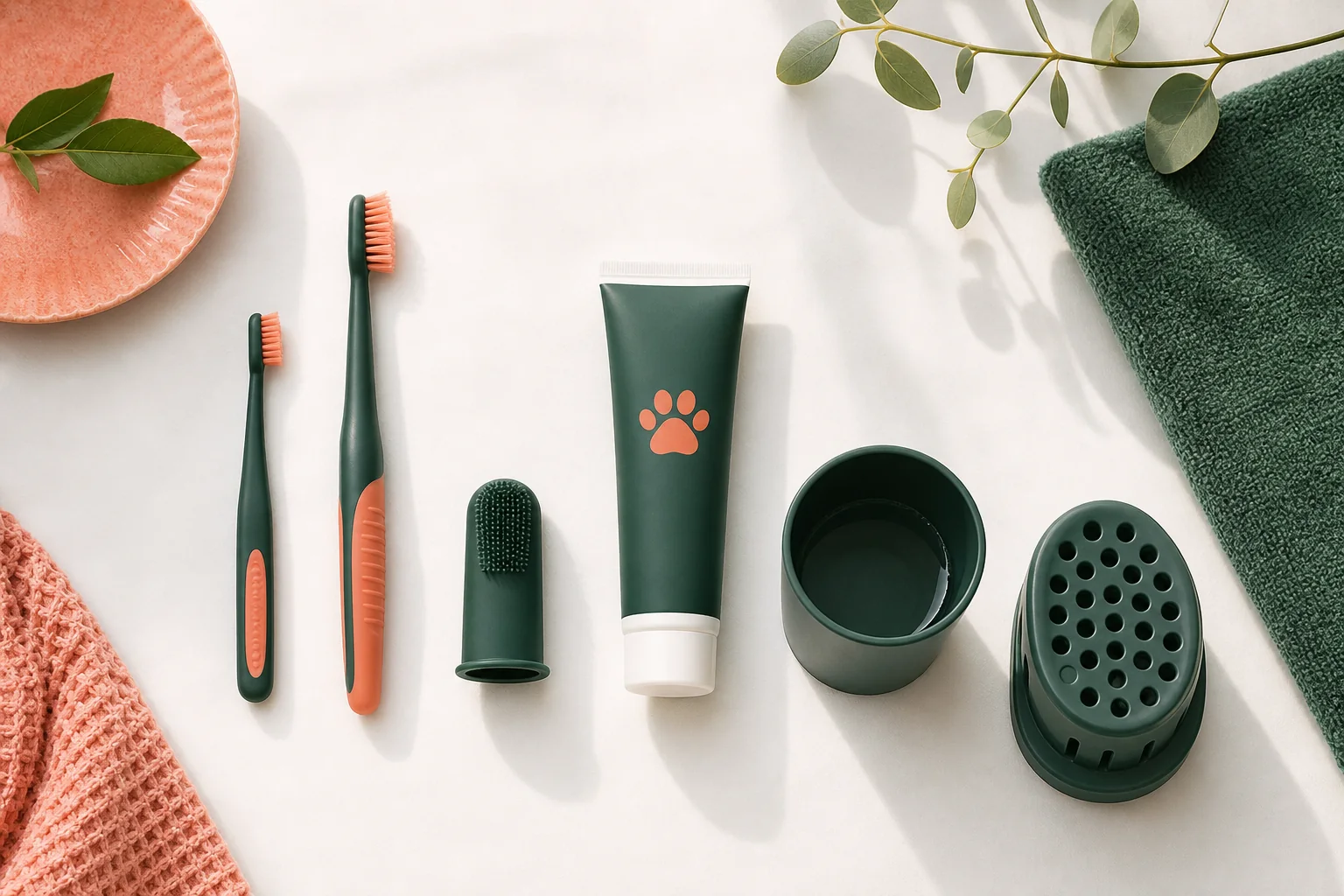
Why each pet needs a separate toothbrush
A brush contacts saliva, toothpaste, food debris, teeth and gums. Rinsing removes visible residue, but it does not make routine sharing useful. A chewed, frayed, or contaminated brush should not move from one pet to another.
Separate tools also improve recordkeeping. A pet owner can see which brush head is wearing out, when it was replaced, and whether one animal stopped accepting tooth brushing. That information can help during a dental health discussion with a veterinarian.
- Assign one brush to each pet.
- Label the handle with a waterproof name or color.
- Keep brush heads apart while they dry.
- Replace a damaged brush instead of passing it to another animal.
Choose the right brush for every dog and cat
A large dog, small dog, and cat may need different head sizes and handle styles. The brush should let you reach the outer tooth surfaces with light pressure. It should not crowd the cheek, scrape the gum line, or force the mouth open.
Use a soft pet toothbrush or another tool recommended for that animal. Finger brushes fit caregivers differently and may offer less reach or control in some mouths. See our guide to pet toothbrush bristle types when comparing options.
Set up a clean multi-pet dental station
Store each brush upright or in a holder that allows airflow. Keep heads from touching and place the station where pets cannot chew the tools. After every session, rinse the bristles thoroughly, shake off extra water, and let the brush air-dry. Our cleaning and storage guide explains the routine in more detail.
Write the first-use or replacement date on a small label. Inspect the handle, bristles, and seams before brushing. Replace a brush that is frayed, cracked, heavily chewed, or difficult to clean. Do not try to disinfect a damaged tool for use in another mouth.
Handle pet toothpaste without sharing residue
Pets can use the same product only when its label is appropriate for each species and your veterinarian has not given different instructions. Do not touch a used brush to the toothpaste tube opening. Dispense a small amount onto a clean surface or directly onto each clean brush without contact.
Never use human fluoride toothpaste for a pet. Some human products contain ingredients that are unsafe when swallowed, and xylitol is dangerous to dogs. The FDA xylitol safety guidance explains the risk.
After illness, oral surgery, or dental treatment
Ask the veterinary team whether to replace a toothbrush after infection, oral surgery, or a professional dental cleaning. Keep the old tool away from other pets. Follow the written timeline for restarting home care, especially when gum tissue or an extraction site is healing.
Home dental hygiene helps disrupt soft plaque on reachable surfaces. It cannot remove hardened calculus, diagnose dental disease, or replace a dental procedure when one is recommended. Products listed by the Veterinary Oral Health Council may support a routine, but use only the product and claim shown for the correct species.
A simple separate-brush routine
- Check that the mouth appears comfortable enough for brushing.
- Select the labeled brush that fits that pet.
- Dispense pet toothpaste without touching the tube to used bristles.
- Brush only the accessible outer surfaces with light pressure.
- Stop if the pet shows pain or increasing distress.
- Rinse the brush, air-dry it separately, and store it out of reach.
- Record unusual odor, bleeding, eating changes, or one-sided resistance.
Work with one pet at a time in a calm area. A brief, predictable session is more useful than a long struggle. For replacement timing, see when to replace a pet toothbrush.
Frequently asked questions
Can pets in the same household share one brush?
No. Separate brushes are clearer for hygiene, fit, wear tracking, and individual routines.
Can I sanitize one toothbrush between pets?
Routine sharing offers no benefit. Use separate affordable tools rather than relying on home sanitizing methods.
What if one pet grabs another pet’s brush?
Remove the brush, inspect it for damage, and replace it if it was heavily chewed or cannot be cleaned. Store future brushes outside the pets’ reach.
When to stop and call a veterinarian
Pause brushing and arrange a dental exam if a pet has pain, swelling, persistent bleeding, a loose or broken tooth, strong ongoing bad breath, or difficulty eating. Ask about brush replacement after contagious illness or treatment. The AAHA dental care guidelines describe why home care and professional assessment serve different purposes.
Sources
This educational guide uses the linked guidance from AAHA, the Veterinary Oral Health Council, and the FDA. It does not replace care from your veterinarian.