
Quick answer: To clean a dog toothbrush, rinse the head under running water after every session, work out visible toothpaste and debris, shake off excess water, and let the brush air-dry upright in an open area. Store it away from other pets’ brushes and replace it when the bristles or handle are damaged.
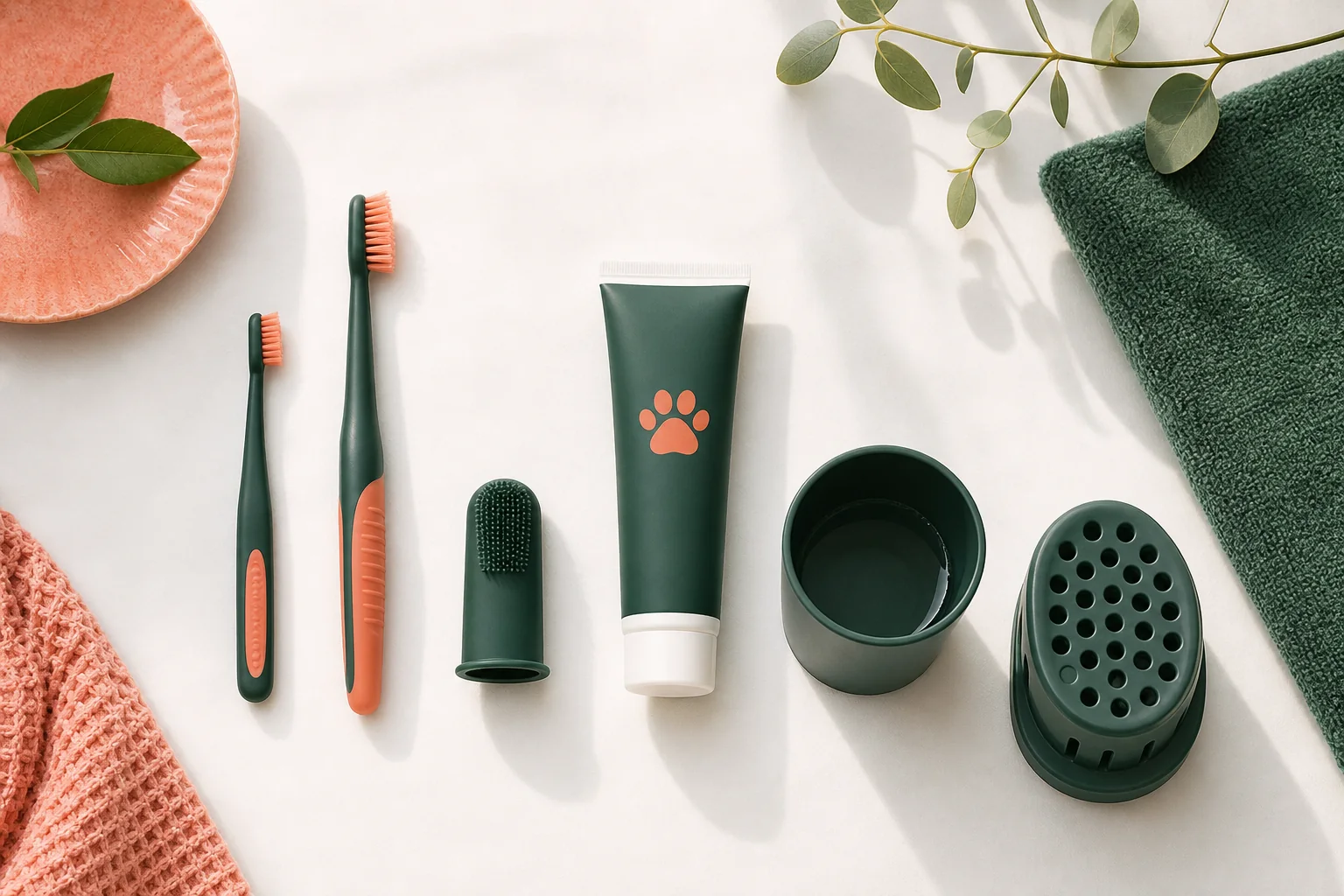
How to clean a dog toothbrush after each use
Start as soon as the brushing session ends. Hold the brush head under running water and rotate it so water reaches both sides of the bristles. Use clean fingers to separate the bristle rows gently if toothpaste or food debris remains. Continue rinsing until the water looks clear and the head no longer feels coated.
- Rinse the brush head from several angles.
- Remove visible debris without pulling the bristles.
- Rinse the handle and finger sleeve if the product directions allow it.
- Shake off excess water over the sink.
- Inspect the head before setting it out to dry.
Follow the manufacturer’s product label when the brush has removable parts or special materials. A powered pet toothbrush may have cleaning instructions that differ from a simple manual brush.
Do not leave a wet brush in a closed container
A wet brush needs airflow. Stand it upright with the head exposed and prevent the bristles from touching a wall, towel, counter, or another toothbrush. Choose a clean area away from splashing sinks, toilets, food preparation and a dog’s reach.
Do not place a travel cap on a damp head unless the manufacturer specifically designed it for ventilation. A cover can protect a dry brush during travel, but it should not trap moisture between sessions.
Store each dog’s toothbrush separately
Give every dog or cat a separate, labeled brush. Individual storage reduces cross-contact and makes it easier to track wear, sensitivity and replacement dates. Space the heads far enough apart that the bristles cannot touch while drying.
Keep the brush and pet toothpaste where animals cannot chew them. Dispense toothpaste without touching a used brush to the tube opening. Our guide to separate toothbrushes for pets explains the multi-pet routine.
What should you avoid when cleaning?
Do not apply bleach, household disinfectant, human mouthwash, essential oils or surface cleaner to a pet toothbrush. Do not boil it or put it in a dishwasher unless the manufacturer states that the entire product is safe for that method. Heat and chemicals can damage bristles, handles and adhesives or leave unwanted residue.
Human toothpaste is also unsuitable for brushing a dog’s teeth. Use only a product labeled for the correct species and follow its directions. Cleaning the brush cannot make an inappropriate toothpaste safe.
Inspect the brush before every session
Look at the dry brush in good light. The bristles should remain soft, even and firmly attached. Check the head for cracks, rough edges, discoloration that does not rinse away, and trapped debris. A finger brush should fit securely without tears or a stretched opening.
Replace the tool if bristles are frayed, flattened, loose or stiff, or if the handle no longer provides stable control. The pet toothbrush replacement guide covers wear and timing in more detail.
When routine rinsing is not enough
Ask a veterinarian whether to replace a brush after contagious illness, oral surgery, a mouth injury or dental treatment. Follow the instructions written for that animal instead of trying to disinfect a questionable tool at home. Discard any brush that contacted an unsafe chemical or cannot be cleaned according to its label.
Keep cleaning in the wider home dental care plan
A clean brush supports a consistent home dental care routine, but it does not treat periodontal disease or remove hardened tartar below the gum line. Gentle tooth brushing helps disrupt soft plaque on reachable surfaces of the teeth. Professional examinations remain important for the teeth and gums and for a pet’s overall health.
Dental chews and other products may complement brushing when they are appropriate for the pet. The Veterinary Oral Health Council lists products that earned its Seal for a specific plaque or tartar claim. A pet owner should still clean, dry and inspect the toothbrush after each use.
Frequently asked questions
Should I soak a dog toothbrush?
Do not soak it in a homemade chemical solution. Follow the product label or veterinary instructions if a special cleaning step is required.
Can I dry it with a towel?
Shake off water and let the brush air-dry. Rubbing bristles with a towel can bend them and transfer lint or residue.
Can two dogs use the same drying holder?
They can use a holder that keeps the labeled brushes stable and prevents the heads from touching.
When to call a veterinarian
Pause brushing and arrange an exam for pain, swelling, repeated bleeding, loose or broken teeth, strong ongoing odor, or difficulty eating. The AAHA dental care guidelines explain the distinct roles of home care, dental assessment and professional treatment.
Sources
This educational guide uses the linked guidance from AAHA and the Veterinary Oral Health Council. The American Veterinary Medical Association pet dental care resource provides additional background. Product-specific cleaning instructions take priority over general guidance.