
Quick answer: Pet toothbrush bristle types differ in coverage, access, and handling. Start with soft bristles on a small, stable brush head. Choose multi-tuft bristles for efficient coverage, a single-tuft brush for focused access, or a secure silicone finger brush when close feedback helps.
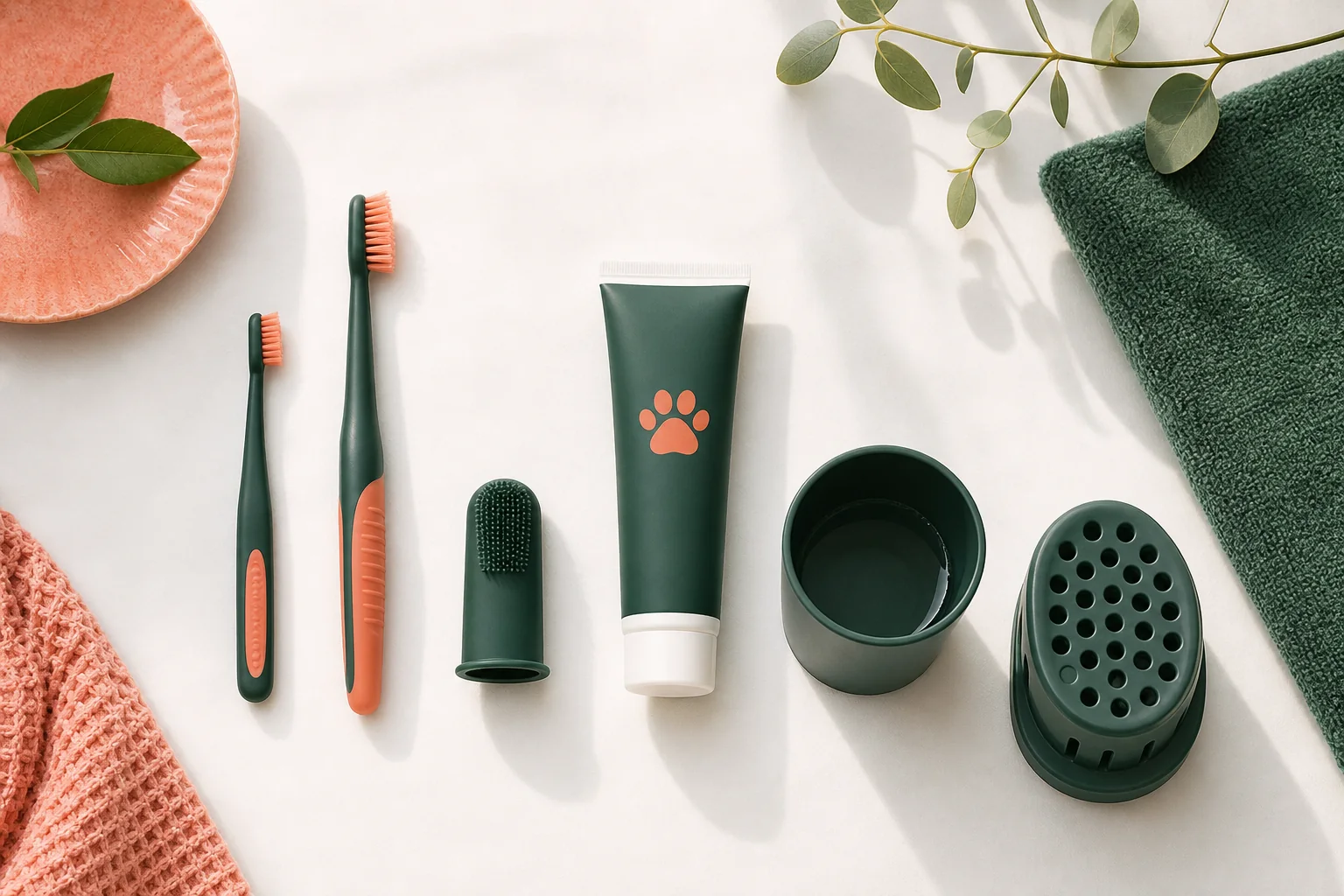
How to compare pet toothbrush bristle types
No bristle material is automatically best for every dog and cat. Comfort depends on softness, brush-head size, handle control, mouth shape, and the pressure you use. A good pet toothbrush should reach the accessible outer surfaces without crowding the cheek or scraping the gum line.
- Soft multi-tuft bristles: broader coverage for a regular routine.
- Single-tuft bristles: focused contact in a small or crowded area.
- Silicone textures: close tactile feedback, but usually a wider profile.
The brush must remain intact and easy to control with light pressure. Bristles that splay during use may signal too much pressure, a poor angle, or a worn tool.
Soft multi-tuft bristles
A small multi-tuft head contacts several tooth surfaces during each short stroke. It can make routine tooth brushing quicker when it fits beside the cheek. Look for soft, evenly cut bristles that return to shape after rinsing.
“Soft” does not make scrubbing safe. Use gentle strokes on the reachable outer teeth and gums. Replace the brush if bristles spread, bend permanently, or become rough. An oversized head can reduce control even when the bristles feel soft.
Single-tuft brush heads
A single-tuft brush places a compact group of bristles in a focused area. It may help around a small mouth, crowded teeth, or a spot that a broader head cannot approach comfortably. The tradeoff is slower coverage and a greater need for steady aim.
Do not use the narrow tuft to poke beneath the gum line. Home brushing helps disrupt soft plaque on visible, reachable surfaces. It cannot diagnose periodontal disease or replace a professional dental cleaning.
Silicone finger brushes and textured sleeves
A silicone finger brush can provide close feedback and may feel less like a traditional toothbrush. However, the sleeve can be wider than a small brush head, rotate if it fits loosely, and place fingers close to the teeth.
Use a sleeve only when it fits securely and the pet does not bite or chew it. Stop if the tool twists, tears, or moves unexpectedly. Silicone texture does not remove the need for light pressure and calm handling.
Match the head size and handle to the pet
Head size and handle control often matter more than the marketing name of the bristles. A small dog or cat usually needs a compact head. A larger dog may accept a slightly broader head if it still moves easily beside the cheek. Compare our dog toothbrush sizing guide and cat toothbrush sizing guide.
Choose a handle that keeps your wrist stable and lets you see the bristle angle. A tiny head is not helpful if the handle slips or forces an awkward grip.
Use, clean, and replace the brush safely
- Check that the mouth appears comfortable enough for home care.
- Select a soft, intact head that fits the available space.
- Practice the angle before touching the teeth.
- Brush reachable outer surfaces with light pressure.
- Stop if the pet shows pain or increasing distress.
- Rinse, air-dry, and inspect the tool after use.
- Replace frayed, chewed, split, or unstable brushes.
Keep a separate brush for each pet and store heads apart. See our guide to cleaning and storing a pet toothbrush. Regular brushing supports dental health and early detection of changes, but it does not remove hardened calculus.
Frequently asked questions
Are silicone bristles always gentler?
No. Texture, fit, pressure, stability, and the pet’s response all affect comfort.
Why do toothbrush bristles bend quickly?
Common causes include heavy pressure, chewing, poor storage, an awkward angle, or normal wear.
Can I trim or reshape a brush head?
No. Altering bristles or silicone may create rough or loose edges. Choose a purpose-built size instead.
When to stop and call a veterinarian
Pause brushing and arrange a dental exam if a pet has pain, swelling, persistent bleeding, a loose or broken tooth, strong ongoing bad breath, or difficulty eating. Ask the veterinary team which brush to use after dental treatment. The AAHA dental care guidelines explain why home care and professional dental services have different roles.
Sources
This educational guide uses the linked AAHA guidance and the Veterinary Oral Health Council accepted-products directory. It does not replace individual veterinary care.