
An electric toothbrush for dogs may be worth considering if your dog accepts the device and you can guide its head comfortably. A soft manual brush is a practical starting point when you are learning together. If your current brush fits and your dog accepts it, you do not need to upgrade just to add a motor.
Before buying, check the head size, the sound and movement your dog will experience, and the instructions for that exact model. A powered brush still needs careful handling. It cannot replace a veterinary dental exam or make a painful mouth ready for brushing.
Electric or manual: which fits your routine?
Start with the problem you want to solve. If a brush head crowds your dog’s cheek, look for a smaller head. If your dog avoids mouth handling, work on that skill first. Extra brush movement does not solve either problem.
- If your dog calmly accepts a manual brush, keep using it while it fits and remains in good condition.
- If your dog pulls away from unfamiliar sounds, begin with a quiet manual tool and gradual handling practice.
- Before trying a powered model, check dog-specific directions, head fit, replacement heads, and whether your dog accepts it.
- For a small mouth, compare the actual head and neck with the space beside the cheek.
- If brushing has suddenly become painful, pause and contact your veterinarian before changing tools.
A manual brush lets you set the movement directly with your hand. A powered model adds movement or a device-specific cleaning method that you must learn to use. Neither choice removes the need to see where the head is going.
Do electric toothbrushes work better for dogs?
The research discussed here does not establish that every electric toothbrush cleans dogs’ teeth better than a manual brush.
In a 2021 study of dental home care in dogs, researchers compared manual and ultrasonic brushing in ten beagles over five weeks. Both methods reduced plaque and gum inflammation. The study used specific equipment and a small group of dogs, so it does not rank today’s products.
One detail matters when reading the findings: the researchers had planned to test an oscillating electric brush. Several dogs showed too much fear, anxiety, or stress during the introduction, so that brush was used with its power switched off. The study therefore did not measure the cleaning effect of the powered oscillating brush.
This finding supports a practical question before purchase: will your dog accept the tool? It does not prove that all dogs reject electric brushes or that longer training could never help.
Are sonic and ultrasonic brushes the same?
Do not treat those labels as interchangeable. Check how the specific device works and how its instructions say to position it. A brush with moving bristles may require a different technique from a device held still against the teeth.
The ultrasonic brush in the study was held in place with its specified toothpaste. That procedure should not be copied onto a different model. Avoid choosing a brush solely by a large frequency number or a claim that it cleans without effort.
An ultrasonic toothbrush also differs from the metal-tipped ultrasonic scaler used in veterinary dentistry. A home device is not a substitute for professional cleaning below the gumline.
What to check before buying an electric toothbrush for dogs
Head fit and control
Look for a head you can place beside the outer teeth without stretching the cheek. You should be able to see the contact point and remove the brush promptly. A bulky handle or neck can make a small head harder to guide.
Use the dog toothbrush sizing guide to compare access. A breed label or body weight alone cannot tell you whether a brush fits your dog’s mouth.
Instructions and ongoing supplies
Read the directions before ordering a dog electric toothbrush. Check whether the brush is intended for dogs, which toothpaste it requires, and how the head should move. Review the cleaning directions and check that replacement heads are available. For a rechargeable model, check the charging and storage instructions too.
Ask the seller for missing dimensions or directions rather than estimating them from a photo. If you cannot confirm how to use the device, choose a tool with clear instructions or ask your veterinary team to assess it.
Your dog’s response
A return policy can matter when you cannot know whether your dog will accept a device. Check the seller’s current terms, including any restrictions on opened oral-care products. Do not assume a trial period is included.
If your dog already fears brushing, begin with gradual teeth-brushing practice. Buying another brush may leave you with the same handling problem.
Start brushing your dog gradually
For any brush, begin in a quiet place and let your dog inspect it before you try to clean teeth. Practice a brief lip lift, then a small amount of contact your dog accepts. Reward cooperation and end the session if your dog becomes upset. VCA’s brushing guidance recommends a gradual introduction and stopping when a pet becomes agitated.
With a powered model, follow its instructions and your veterinary team’s advice for introducing sound or movement. Do not switch it on unexpectedly inside the mouth. Keep it out of reach between sessions, and never leave your dog to chew it as a toy.
Use toothpaste labeled for dogs and follow the amount on the label. Human toothpaste and baking soda are unsuitable substitutes. Once your dog accepts the tool, the dog teeth-brushing guide explains gentle manual technique; powered models may need different movements.
When a manual brush is a sensible choice
A manual pet toothbrush is quiet, gives you direct control of each stroke, and needs no charging. Keep one that already fits and works comfortably. Extra features alone are not a reason to replace it.
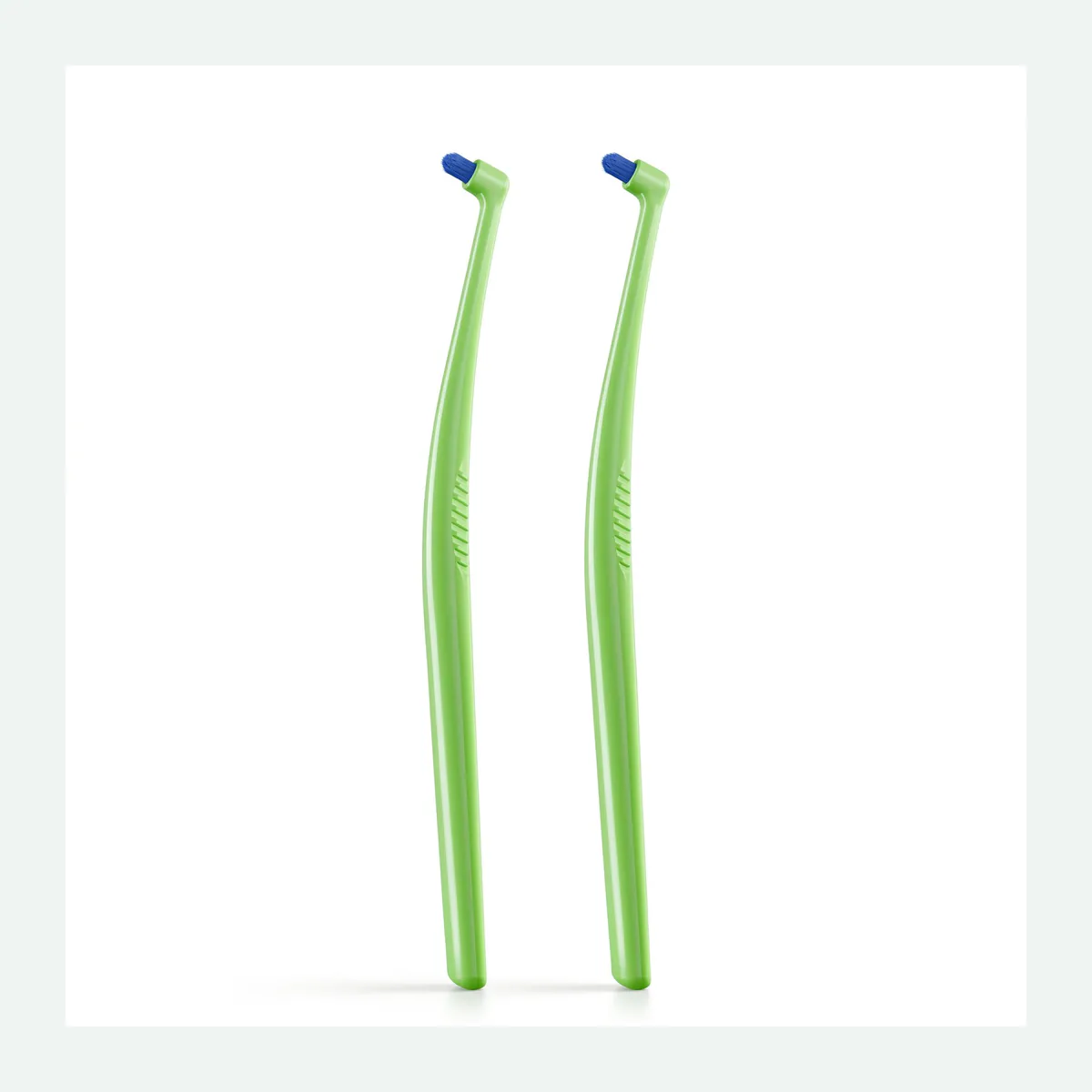
For focused access in a small mouth, Pet Gentleman’s Angled Single-Tuft Toothbrush for Small Dogs and Puppies is one manual option. Its compact tuft is intended for one reachable area at a time. This brush has no motor. Its design does not establish better cleaning than other brushes.
Compare it with your current tool before buying. If you need broader coverage or a different grip, review the handled toothbrush and finger brush comparison.
Keep veterinary care in your dog dental health plan
Contact your veterinarian for bleeding from the mouth, persistent bad breath, drooling, swelling, or difficulty eating. Cornell’s dental-care guidance lists these as signs that need attention. Pause brushing if it causes pain.
Professional teeth cleanings include examination and care that a home toothbrush cannot provide. Your veterinary team assesses the teeth and gums, including problems you may not see at home. Do not try to scrape hardened deposits away with a brush or a home scaling tool. After dental treatment, follow your veterinarian’s instructions about when and how to restart home care.
Common questions
Can I use my own electric toothbrush on my dog?
Choose a separate tool for your dog. Do not assume a human powered brush is suitable because its head looks small. Ask your veterinarian about the exact model, its movement, and fit before using it.
Is an electric toothbrush better for a small dog?
Small dogs still need a head and neck that fit comfortably beside the cheek. Added power does not make an oversized brush fit. A compact manual brush may be easier for you to position.
Can an ultrasonic toothbrush replace a dental cleaning?
No. Home brushing cannot provide the complete examination, dental X-rays, or treatment available through veterinary care. Discuss visible buildup or a change in comfort with your veterinarian before buying a device to address it.
This oral health guide explains purchasing considerations and home-care limits. It does not replace advice for your dog’s mouth or claim that Pet Gentleman has tested electric toothbrushes.