
Quick answer: Senior dog teeth brushing should feel gentle, brief and predictable. Ask a veterinarian to assess a new pain response or major behavior change before continuing. Use a small soft-bristle brush, pet toothpaste and light strokes on reachable outer tooth surfaces; never try to scrub through discomfort.
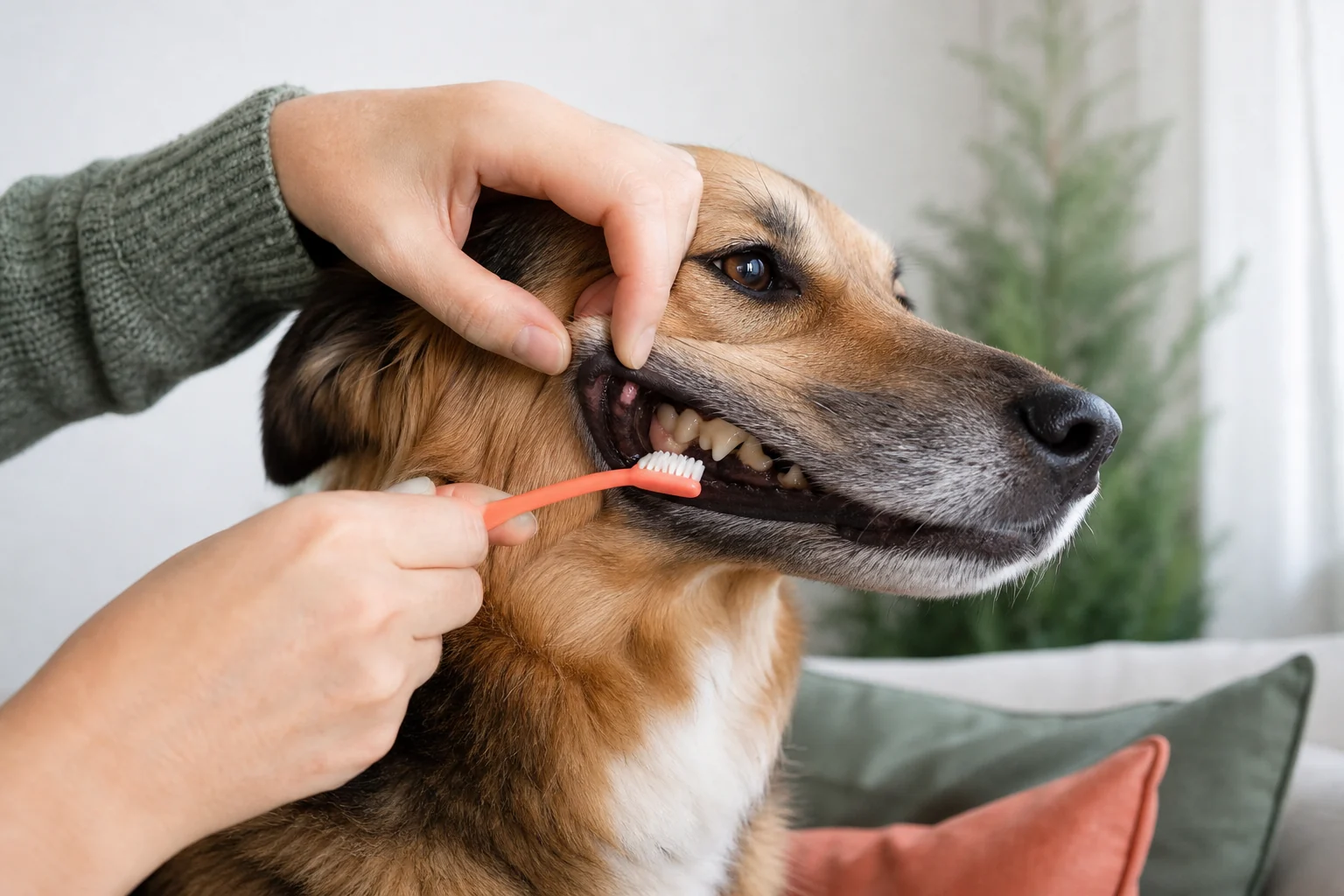
Check your senior dog’s mouth before brushing
Older dogs can develop dental disease even when they still eat normally. Before starting or restarting home care, ask when the mouth was last examined and whether any area should be avoided. This is especially important after a dental procedure, oral surgery or a sudden change in appetite or handling tolerance.
At home, observe without forcing the jaw open. Look for facial swelling, drooling, repeated bleeding, a loose or broken tooth, strong persistent odor, or a new reluctance to chew. These signs need veterinary attention rather than a firmer brushing technique.
Notice small behavior changes
As dogs age, a health problem may first appear as a change in routine. Dropping food, chewing on one side, avoiding hard treats, pawing at the mouth, pulling away from one cheek, or refusing a familiar brush can be meaningful. Record when the change began and which side appears sensitive.
Do not assume resistance is stubbornness. Arthritis, reduced vision or hearing, cognitive changes and dental issues can affect posture and predictability. Share the full pattern with the veterinary team so they can separate training needs from possible discomfort.
Choose comfortable tools and pet toothpaste
Use a compact head with soft, intact bristles and a handle you can control. A smaller head may improve access, but it should not scrape tissue or require the cheek to be pulled tight. A finger brush can feel broad and places your hand close to the teeth, so use it only when fit and handling are safe.
Choose toothpaste labeled for dogs and follow the product directions. Human toothpaste is designed to be spat out and is not appropriate for a dog. Introduce a new flavor separately from a longer brushing lesson.
Adjust position before changing pressure
Give the dog stable footing on a non-slip surface. Support a comfortable head and neck position instead of lifting the muzzle high. Approach from the side, lift the lip briefly and keep the mouth mostly closed. If standing is difficult, ask the veterinary team to demonstrate a safe position for that dog’s mobility.
Brush reachable outer surfaces gently
Begin at an easy front tooth and use one or two light strokes where the tooth meets the gum line. Build toward the outer surfaces of the teeth only while the body remains loose. You do not need to force the mouth open or reach every tooth in one session.
- Prepare the brush and reward before handling.
- Use a familiar cue and approach slowly.
- Keep the first contact under a few seconds.
- Pause when the dog turns away or becomes tense.
- End before restraint becomes necessary.
Use shorter sessions and track comfort
A useful session may involve only a lip lift and one small area. Consistency matters more than duration. Note the area reached, the tool used and whether the dog stayed relaxed, uncertain or needed to stop. A long-term record helps pet owners identify a developing pattern.
If tolerance decreases, shorten the next attempt and review the mouth and equipment. Do not compensate for missed sessions with extra pressure or an unusually long session.
Follow instructions after dental treatment
After professional cleanings, tooth extractions or another dental procedure, follow the written recovery plan. Ask when tooth brushing can resume, whether the pet’s teeth need a different brush, and which areas must remain untouched. Do not restart simply because the dog appears eager to eat.
Understand what home care can and cannot do
Regular brushing helps disrupt soft plaque on accessible tooth surfaces. It does not remove hardened tartar below the gum line, diagnose dental disease or replace professional assessment. Dental chews may complement a plan when they suit the dog, but they do not automatically replace brushing.
The Veterinary Oral Health Council lists products that earned its Seal for a specific plaque or tartar claim. Our home brushing and professional cleaning guide explains the different roles.
Frequently asked questions
Is an old dog too old to start?
Age alone does not decide. Ask a veterinarian whether the mouth is comfortable enough, then introduce handling gradually.
How long should each session last?
Use the shortest session that allows calm, useful contact. Several seconds can be enough while rebuilding tolerance.
When to call a veterinarian
Stop brushing and arrange an exam for pain, swelling, repeated bleeding, loose or broken teeth, facial changes, weight loss, strong ongoing odor, or trouble taking, chewing or swallowing food. The AAHA dental care guidelines describe the roles of home dental hygiene and veterinary treatment.
Sources
This educational guide uses linked guidance from AAHA and the Veterinary Oral Health Council. The American Veterinary Medical Association pet dental care resource provides additional background. Individual veterinary instructions take priority.