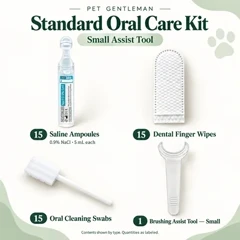
 Standard Oral Care Kit
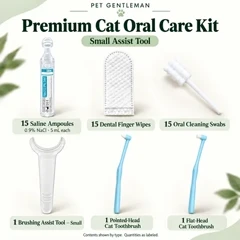 Premium Cat Oral Care Kit
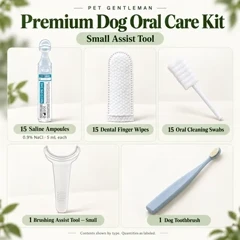 Premium Dog Oral Care Kit
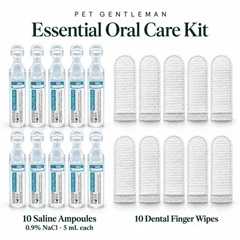 Essential Oral Care Kit
If your dog’s breath smells like fish, the usual cause is anal gland fluid your dog licked up, gum disease, or fish in their food. Less often, it comes from a mouth infection, something your dog ate, or an illness such as kidney disease. A fishy smell that lasts more than a few days needs a vet visit.
- Fishy smell plus scooting or licking under the tail points to the anal glands.
- Fishy smell plus red gums or brown tartar points to the mouth.
- Fishy smell only after meals or a fish oil dose is usually diet.
Is fishy dog breath normal?
A whiff of fish after a salmon dinner fades within hours. Fishy dog breath that lasts all day is a sign worth checking, because persistent bad breath in dogs usually has a cause. VCA Animal Hospitals reports that over 80% of dogs older than three have active dental disease. Few show other signs.
6 causes of fishy dog breath
When dog breath smells like fish, one of these six causes is usually behind it.
1. Anal gland fluid your dog licked up
Dogs have two small scent sacs beside the anus, called anal glands. A veterinarian quoted by the American Kennel Club says they are the most common source of a strong fishy odor in dogs. That’s especially true when the glands are full or impacted. When a dog licks the area, the smell reaches the mouth.
Both male and female dogs have these sacs, and scooting or licking the rear is often the first sign of trouble, VCA notes. The Merck Veterinary Manual adds that small breeds and overweight dogs are more prone. Quick test: if the smell is stronger near the tail than the mouth, the glands are the likely source.
2. Gum disease and plaque
Periodontal disease is the most common cause of bad breath in dogs, according to VCA’s guide to halitosis. Bacteria in plaque create foul-smelling sulfur compounds, and Merck lists hydrogen sulfide and ammonia among their waste products. Cornell’s Riney Canine Health Center says plaque can start hardening into tartar within 24 hours. A red gumline, yellow-brown tartar on your dog’s teeth or bleeding means it’s time for a dental exam.
3. Fish-based food, treats or fish oil
Salmon recipes, fish skin chews and fish oil can all leave a fishy smell that peaks after meals. VCA lists a fishy odor among the side effects of fish oil. If your vet prescribed it, don’t stop on your own; ask whether the dose or form can change.
4. Something your dog ate
Eating poop, raiding the trash or finding a dead fish on a walk can lead to bad breath for a while. This smell comes and goes, so watch where your dog has been.
5. A mouth infection or stuck object
Merck’s guide to mouth disorders lists bad breath and drooling as common signs of mouth inflammation. Dogs with drooping lips, such as spaniels, can get infected lip folds, and grass awns or even fishhooks can lodge in the lips. Merck also advises having any broken tooth checked.
6. Kidney disease or other health problems
Less often, health issues outside the mouth are to blame. Merck notes that chronic kidney failure can cause sores in the mouth. Breath changes plus extra thirst, more urination, vomiting or weight loss call for a prompt vet visit.
Fishy dog breath self-check
Smell alone can’t confirm a diagnosis, but these clues help you decide how fast to act.
| What you notice | Likely cause | What to do |
|---|---|---|
| Smell stronger at the tail; scooting or licking | Anal glands | See your vet. Same day if swollen, bleeding or painful. |
| Smell at the mouth all day; red gums or tartar | Gum disease | Book a dental exam. |
| Smell only after meals or fish oil | Diet or supplement | Ask your vet about the food or dose. |
| Smell comes and goes after walks | Something eaten | Block access to trash and poop. |
| Drooling, pawing at the mouth or swelling | Infection or stuck object | See your vet soon. |
| More thirst, urination or vomiting | Illness elsewhere | Call your vet promptly. |
How to fix fishy dog breath
Treat the cause first. Your vet empties impacted anal glands by hand. VCA notes this can hurt enough to need sedation, so it isn’t a home job. Gum disease needs a professional cleaning under anesthesia, which VCA describes as cleaning above and below the gumline plus dental X-rays.
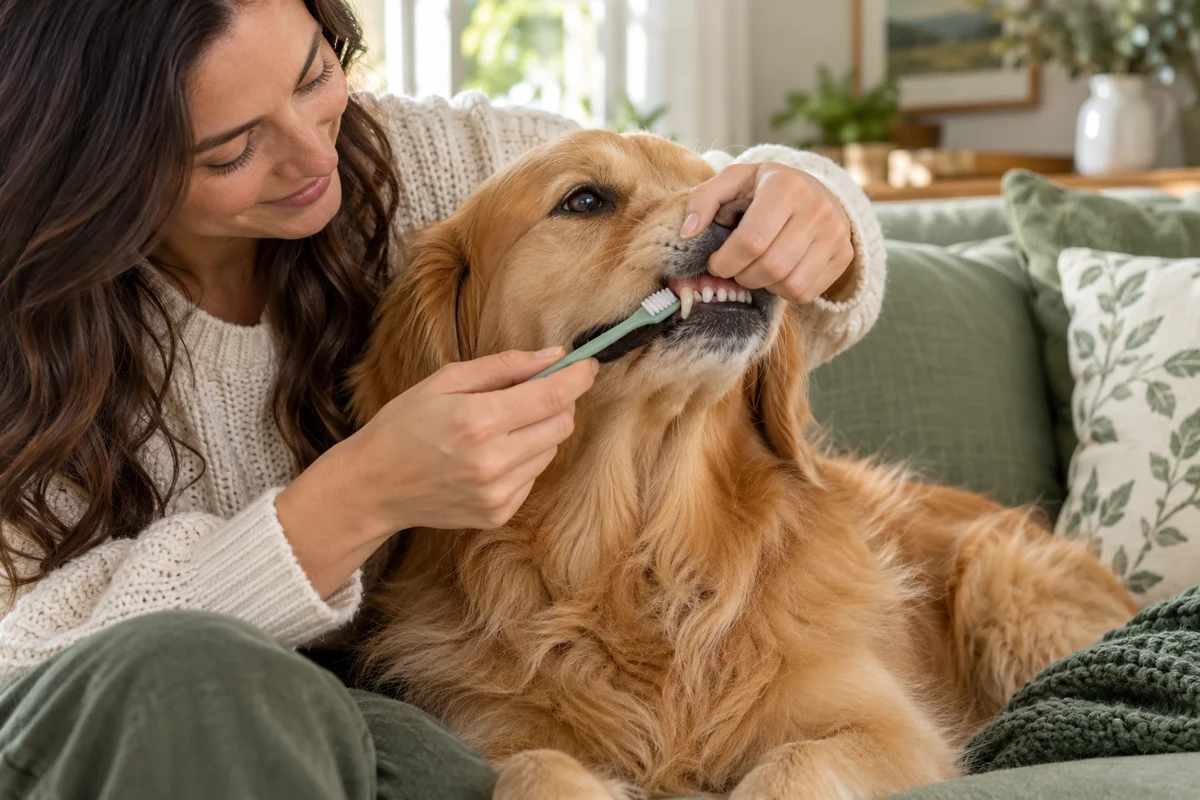
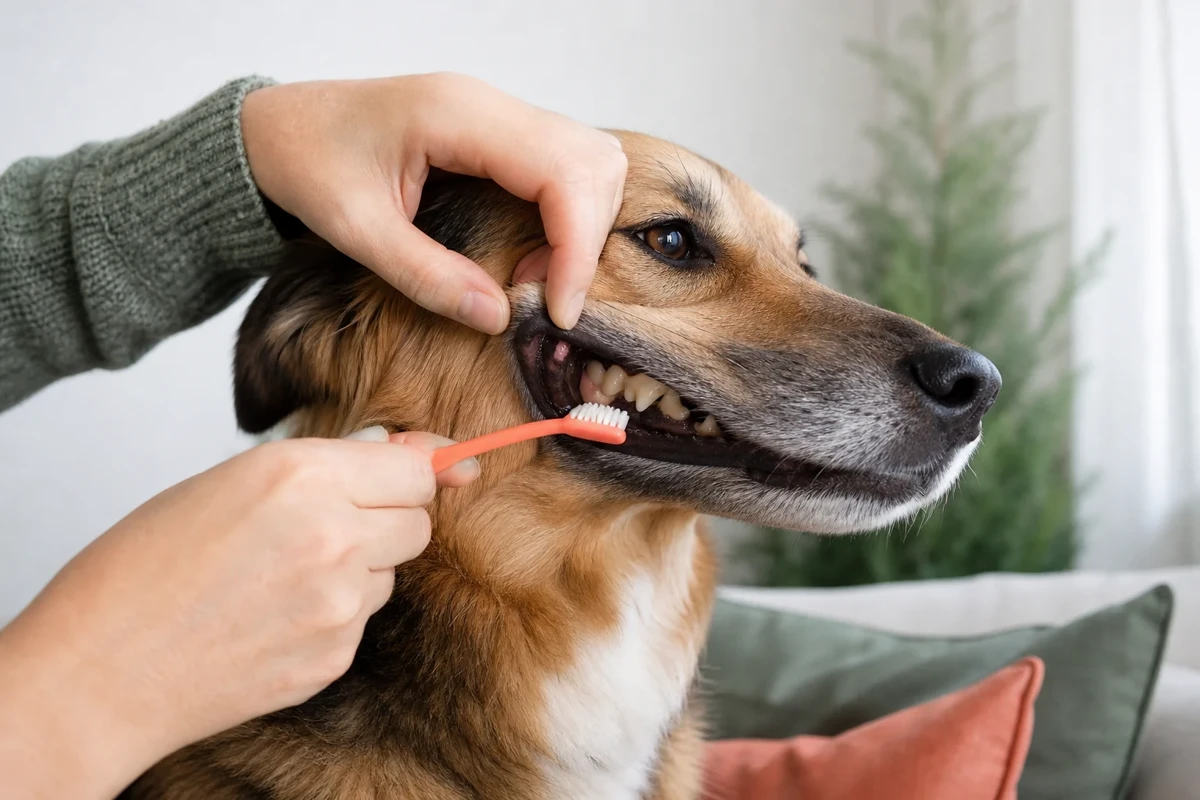
Clean your dog’s teeth every day. The AAHA dental care guidelines say brushing helps only when done daily, and that it removes plaque, not tartar. Start with a finger or soft cloth along the gumline, as VCA suggests. Our guide to brushing dog teeth covers technique.
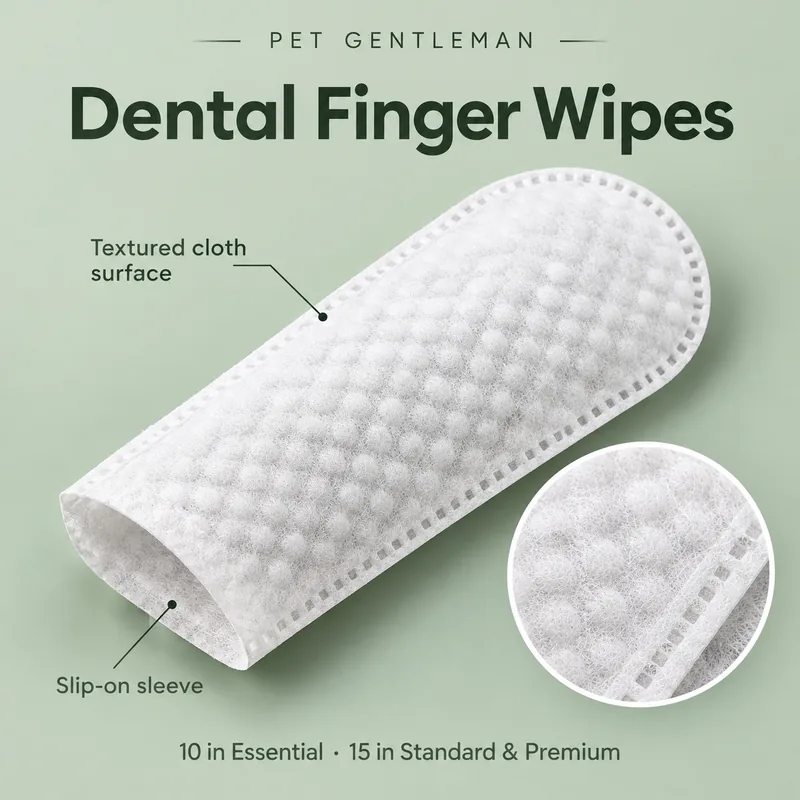
A dog toothpaste works, and so does plain sterile saline if your dog dislikes paste; see brushing without toothpaste. Our Essential Oral Care Kit pairs ten single-use ampoules of sterile 0.9% saline with ten textured finger wipes for daily oral health care. It doesn’t treat gum disease or remove tartar.
Help the anal glands empty. The AKC’s vet source says a high-fiber diet makes firmer stools that press the glands empty, and a healthy weight lowers the risk. Some dogs still need their glands emptied every four to six weeks. Ask your vet before changing the diet.
Skip the shortcuts. Breath sprays and mints only cover odor, and dental treats or chew toys can’t replace a vet visit or daily cleaning. Never use human toothpaste or baking soda; VCA warns some toothpastes contain xylitol, which is toxic to dogs (here’s why). If your dog resists mouth handling, our free 28-day adaptation plan builds the habit step by step.
When fishy breath needs a vet
An emergency vet quoted by the AKC says mild cases, with occasional scooting and no pain, can usually wait a few days for an appointment, but anal gland problems can worsen within 24 to 48 hours. Based on AKC and VCA guidance, go the same day for:
- painful swelling near the anus, or bleeding or oozing
- fever, lethargy or loss of appetite
- pawing at the mouth, facial swelling or blood in the saliva
- vomiting, weakness, or a sudden change in thirst or urination
Fishy dog breath FAQs
Why does my dog’s breath suddenly smell like fish?
Sudden fishy breath often follows an anal gland release (VCA notes nervous dogs may release fluid when frightened), a new fish food or something eaten outside. If it lasts more than two or three days, call your vet.
Why does my puppy’s breath smell like fish?
Puppies lick everything and often eat fish-based food. Merck notes they start losing baby teeth at about 14 weeks, and a baby tooth that doesn’t fall out needs a vet check. See our puppy toothbrush guide for early care.
Why does my female dog’s breath smell like fish?
The same causes apply, since both sexes have anal glands. The AKC’s vet source also lists urinary tract infections among less common causes of unusual odors, so mention frequent licking or urination to your vet.
The bottom line
Fishy breath is a clue, not a diagnosis. Check the rear, the gums and the food bowl, then let your vet confirm the cause. For other breath smells, see our guide to dog bad breath, and for daily routines, our complete guide to dog dental care.
Sources: VCA Animal Hospitals, the Merck Veterinary Manual, Cornell University’s Riney Canine Health Center, the 2019 AAHA Dental Care Guidelines and the American Kennel Club, as linked above. This article is for general education; if your dog may be ill or in pain, contact a veterinarian.