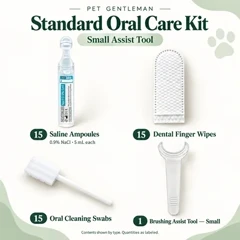
 Standard Oral Care Kit
 Premium Cat Oral Care Kit
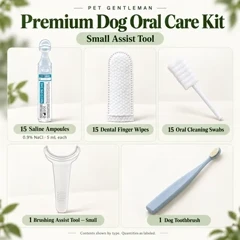 Premium Dog Oral Care Kit
 Essential Oral Care Kit

Yes, dogs can get cavities, but far less often than people do. A cavity is tooth decay, and in dogs it usually appears as a dark pit on the chewing surface of a back molar. Once a hole forms, it can’t heal on its own, so a dog cavity needs a vet.
- How common: about 5% of adult dogs in one veterinarian’s patient records. Gum disease is far more common.
- What to look for: a dark spot on a back tooth, drooling, dropping food or a poor appetite. Many dogs show no signs.
- How vets fix it: a filling, a root canal or an extraction, all under anesthesia.
Can dogs get cavities as often as people?
No. “Cavities” is the everyday word for dental caries. Mouth bacteria ferment carbohydrates on a tooth, and the acid they release dissolves the enamel, the tooth’s outer layer. In a review of his own patient records, veterinarian Fraser Hale found that 5.25% of adult dogs had at least one cavity. That is one practice; PetMD notes the true rate of cavities in dogs is unknown.
VCA Animal Hospitals puts tooth decay at under 10% of dental problems in dogs and names periodontal disease and broken teeth as the most common. So a canine cavity usually isn’t the first suspect.
Why dogs get fewer cavities
Hale lists four likely reasons dogs develop cavities less often:
- Cone-shaped teeth with wide gaps trap less food.
- Dogs typically eat less fermentable carbohydrate than people.
- Dog saliva averages pH 7.5, compared with 6.5 in people, which helps buffer acid.
- Dogs have relatively little salivary amylase, the enzyme that breaks down starch on teeth.
Which dogs are more likely to get cavities?
Any dog can get one, and sources differ on breed. PetMD lists breeds prone to dental disease in general, such as Chihuahuas, pugs, poodles and dachshunds. Hale saw cavities in the upper first molars more often in large breeds such as Labradors and German shepherds. Deep pits in the molars, carbohydrate-rich food, frequent table scraps and no routine dental care all raise the risk.
What do dog cavities look like?
The Merck Veterinary Manual says decay in dogs usually forms pits on the biting surfaces of the molars, and PetMD describes a dark spot. These surfaces are hard to see at home. Don’t wait on a spot you can see: Hale explains that decay spreads under the enamel, so a cavity that’s easy to spot has usually reached the inside of the tooth, and extraction may be the only option.
Other signs: PetMD lists drooling, poor appetite and dropping food. VCA adds pawing at the mouth, chewing with discomfort and bad breath as general signs of dental disease. Merck warns that most dogs mask pain, so a dog who eats normally can still have a bad tooth.
Is it a cavity or something else?
Other oral health issues can look similar. Only a vet can tell them apart, usually with a probe and X-rays.
| What you see | Could be | What to do |
|---|---|---|
| Dark pit on the chewing surface of a back molar | Cavity | Book a dental exam. |
| Yellow-brown crust near the gumline | Tartar | Book a dental exam and cleaning. |
| Chipped tooth, or a red or black hole in the crown | Broken tooth or exposed pulp | See your vet soon. |
| Whole tooth turning reddish-brown, purple or gray | Damage inside the tooth | See your vet soon. |
Merck lists the color changes and the hole among signs of disease inside the tooth, and VCA says most fractured teeth need treatment.
The 5 stages of tooth decay in dogs
PetMD describes five stages, based on how deep the damage goes. The treatment column is a general guide; your vet decides after X-rays.
| Stage | What’s damaged | Usual treatment |
|---|---|---|
| 1 | Enamel only | Filling |
| 2 | Enamel and dentin, the layer beneath | Filling |
| 3 | Reaches the pulp, with nerves and blood vessels | Root canal and filling |
| 4 | Crown structure damaged | Usually extraction |
| 5 | Most of the crown lost; roots may show | Usually extraction |
Dog cavities treatment: what your vet may do
Your vet may spot a cavity while your dog is awake, but PetMD explains that a full assessment needs anesthesia, plus X-rays to show whether the pulp is exposed. Options include:
- A filling. Your vet removes the decay and fills the hole, much as a dentist does for people.
- A root canal and filling. This can save a tooth when decay has reached the pulp.
- An extraction. Hale recommends this when the pulp is exposed and too much of the crown is gone.
- A sealant. If deep pits have no decay yet, a sealant can keep food out.
PetMD says many of these treatments are offered only by a veterinary dentist, so ask for a referral to save the tooth. Dogs usually recover from anesthesia within hours and regain their appetite and energy in one to two days. Our dental aftercare guide covers when to restart cleaning.
Cost: Prices vary widely. PetMD says a visit with cleaning, fillings and possibly extractions may reach $600 to $1,200, and more if several teeth are affected.
Can you treat a dog cavity at home?
No. PetMD is direct on this: a cavity needs veterinary treatment. Hale notes that the earliest enamel changes can reverse, but you can’t judge that stage at home, and no dog cavity home remedy can rebuild a tooth.
Until your appointment with your vet, don’t scrape the spot, and ask whether softer food would help. Don’t give human pain relievers; the FDA warns that medicines such as ibuprofen, naproxen and acetaminophen may harm your dog.
How to prevent cavities in dogs
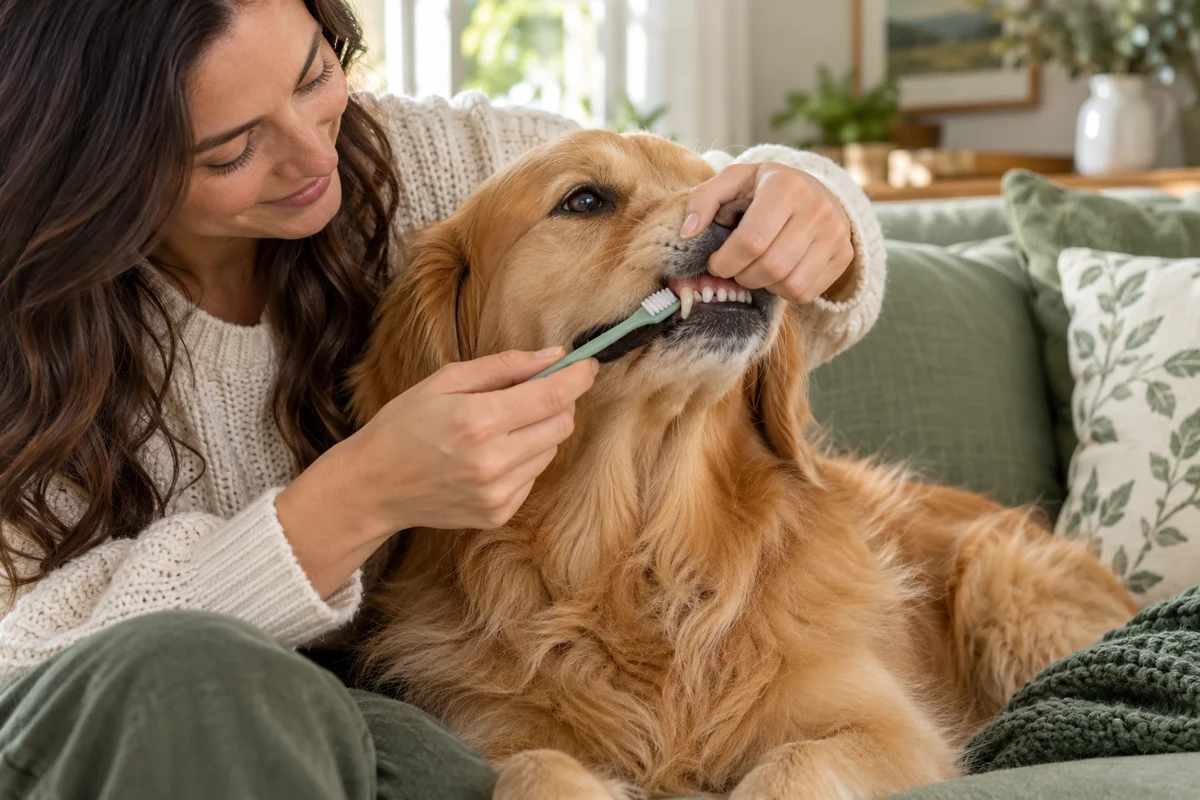
- Clean your dog’s teeth often. PetMD calls regular brushing the most effective step, with daily brushing the gold standard. VCA sets three times a week as the minimum. Here’s how to brush dog teeth step by step.
- Limit sugary treats and table scraps. Hale explains that refined, easily fermented carbohydrates favor decay.
- Ask about pits at the spay or neuter visit. Hale recommends checking newly erupted adult teeth then, when a sealant can still help.
- Keep up with dental checkups. A vet can catch what you can’t see, and home brushing and professional cleaning work together.
- Treat chews and water additives as extras. PetMD says none is as effective as brushing. If your dog won’t accept a brush yet, see how to clean dog teeth without brushing.
- Never use human toothpaste. VCA warns that some contain xylitol, which is toxic to dogs (here’s why).

If handling your dog’s mouth is the hard part, our Standard Oral Care Kit helps you find the tool they accept: 15 ampoules of sterile 0.9% saline with no sugar or sweeteners, 15 finger wipes, 15 oral swabs and a brushing aid, plus the free 28-day adaptation plan. It supports daily oral care but can’t treat or fill a cavity.
Dog cavity FAQs
Do cavities hurt dogs?
They can. PetMD describes cavities as painful, and VCA says dogs are experts at hiding pain, so normal eating doesn’t rule one out.
Is a dog cavity an emergency?
Usually not, but PetMD advises contacting your vet for a dental evaluation. Call the same day for facial swelling, blood in the saliva or a refusal to eat.
The bottom line
Dogs can get cavities, but gum disease and broken teeth are the bigger risks. A dark spot on a back tooth deserves a vet visit soon, and regular cleaning protects all your dog’s teeth. If your dog also has bad breath, mention it at the exam. For routines and tools in one place, see our complete guide to dog dental care.
Sources: Fraser Hale in the Canadian Veterinary Journal, the Merck Veterinary Manual, PetMD, VCA Animal Hospitals and the FDA, as linked above. This article is for general education; if your dog may be ill or in pain, contact a veterinarian.