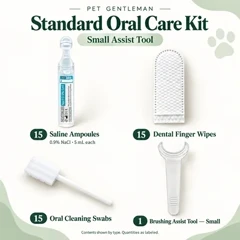
 Standard Oral Care Kit
 Premium Cat Oral Care Kit
 Premium Dog Oral Care Kit
 Essential Oral Care Kit
Cat bad breath is usually caused by dental disease: plaque, tartar and inflamed gums. Less often, a foul odor comes from something stuck between the teeth, mouth sores, or health issues such as kidney disease or diabetes. Healthy cat breath shouldn’t smell offensive, so odor lasting several days needs a vet check.
- A brief fishy smell right after tuna or wet cat food is usually harmless.
- Bad breath that lingers for days means it’s time to book a dental exam.
- Bad breath with drooling, dropped food, pawing at the mouth, vomiting, low energy or appetite loss needs a prompt call to your vet.
Is bad breath in cats normal?
Not when it sticks around. A veterinary dentist quoted by the Cornell Feline Health Center notes that a healthy cat’s breath should not be offensive.
Food can change the smell briefly. After canned tuna or fish-flavored cat food, your cat’s breath may smell pungent for a while. When a cat has bad breath day after day, Cornell advises having a veterinarian check the cause.
The medical term for bad breath is halitosis. Feline halitosis is common because dental disease is common: Cornell’s guide to feline dental disease cites studies finding some form of dental disease in 50 to 90% of cats older than four.
Why does my cat’s breath smell so bad?
Most cat breath odor starts inside the mouth. A smaller share comes from health issues elsewhere in the body. Here are the main causes to discuss with your vet.
Dental and gum disease
Periodontal disease is by far the most common cause of bad breath in cats, according to Cornell. It begins with plaque, a sticky film of bacteria on your cat’s teeth. Without regular care, plaque hardens into tartar, and ongoing plaque and tartar buildup traps more bacteria along the gum line. Plaque starts forming again within days of a cleaning.
Next, the gums turn red, swollen and sore. This stage is gingivitis, and it is usually reversible with timely care. Left untreated, it can progress to periodontitis, which damages the tissue and bone holding teeth in place. That structural damage can’t be undone.
Oral bacteria and breaking-down tissue release sulfur compounds. That is why gum disease produces foul cat breath that doesn’t fade between meals.
Tooth resorption
In tooth resorption, a tooth breaks down from the inside out. Cornell reports that 30 to 70% of cats show some sign of this painful process, and its exact cause remains unknown.
It often first appears as a small pink defect right where the tooth meets the gum. A cat can have a painful resorptive lesion even when breath odor seems mild.
Something stuck in the mouth
Food particles, hair, string or other foreign objects can lodge between teeth or under the gums inside your cat’s mouth. As trapped material decomposes, it can infect the surrounding gum tissue. Cornell highlights this as another common cause of bad breath.
Mouth sores, stomatitis and tumors
Ulcers, oral injuries and tumors can all cause terrible breath. Some cats develop stomatitis, a painful inflammation spreading across the pink lining of the mouth. Cornell notes that gum and mouth inflammation can accompany feline calicivirus, feline leukemia or immunodeficiency virus, severe kidney disease or diabetes.
Health problems beyond the mouth
Cornell lists kidney disease, diabetes, liver disease, respiratory disease, skin disease around the lips and intestinal blockage among conditions that can change a cat’s breath. Several of these are more common in middle-aged and senior cats. They usually bring other signs too, such as shifts in thirst, appetite, weight or energy.
What your cat’s breath odor can mean
The type of smell gives your vet a useful clue, though smell alone cannot confirm a diagnosis. Use this table to decide how quickly to act.
| What the breath smells like | What it can point to | What to do |
|---|---|---|
| Fishy or “cat food” smell only after meals | Recent food, especially fish or tuna | Check again between meals. If it lingers for days, book an exam. |
| Persistent bad smell, like unbrushed teeth | Plaque, tartar and gum disease | Book a veterinary dental exam. |
| Rotten, or what owners call “smells like death” | Advanced gum infection, tooth decay/resorption, trapped debris, a sore or a mass | See your vet soon, and sooner if your cat drools or eats less. |
| Sweet or fruity | Possible diabetes | Call your vet promptly. Mention any change in thirst, urination or weight. |
| Urine- or ammonia-like | Possible kidney disease | Call your vet promptly. Mention any change in thirst, urination or appetite. |
| Foul odor together with vomiting | Possible liver disorder or intestinal blockage | Call your vet the same day. |
These odor clues follow Cornell’s feline health guidance and veterinary clinical reviews. Two cats with the same odor can have different problems, so a physical exam matters more than the smell.
When to call the vet about cat bad breath
Book an appointment if bad breath lasts more than a few days, or if you spot any warning signs that the American Veterinary Medical Association (AVMA) lists for an earlier dental checkup:
- Teeth that look discolored or covered in tartar
- Broken, mobile or missing teeth
- Abnormal chewing, drooling or dropping food
- Reduced appetite, or signs of pain around the mouth
- Bleeding gums, blood in saliva, or swelling around the mouth or jaw
Call promptly, the same day if you can, when your cat also stops eating, vomits, seems lethargic or develops facial swelling. Bad breath alone is rarely an emergency, as veterinary guidance notes, but those symptoms mean your cat should be seen right away.
Before the appointment, write down when the odor started, what your cat eats and any shifts in chewing or behavior. Don’t pry your cat’s mouth open at home, because a cat in oral pain may bite.
Bad breath in cats treatment: what to expect
Treatment depends on the cause, so it starts with a veterinary exam. Your vet inspects your cat’s mouth, sometimes using gentle sedation, and may run blood or urine tests if kidney disease, diabetes or liver disease is suspected.
The AVMA explains that a full dental evaluation requires general anesthesia because most dental disease hides below the gum line. Under anesthesia, your vet can probe each tooth pocket and take dental X-rays. Depending on what they find, treatment may include:
- Professional dental cleaning. Scaling plaque and tartar above and below the gum line, followed by polishing. Cornell notes this can remedy early periodontal disease, and the AVMA states that most pets go home the same day.
- Tooth extraction. VCA notes that teeth with advanced periodontal loss or painful tooth resorption often need to be removed so the mouth can heal comfortably.
- Medication. Pain relief, plus antibiotics when bacterial infection requires them. Cornell notes there is little or no evidence that antibiotics alone resolve feline gingivitis, so they are paired with dental care.
- Stomatitis management. Often tooth extractions alongside medical therapy. VCA reports that up to 60% of cats improve markedly or resolve, while roughly 40% need ongoing inflammation control.
- Treating systemic illness. When kidney disease, diabetes or liver disease causes the odor, managing that primary condition comes first.
“Anesthesia-free” cleanings cannot replace veterinary dentistry. The American Veterinary Dental College advises against them because awake scaling cannot clean or inspect below the gum line. VCA Animal Hospitals notes that awake cleaning is cosmetic only. Breath sprays and mints can mask odor, but they don’t treat its cause.
How to prevent bad breath in cats
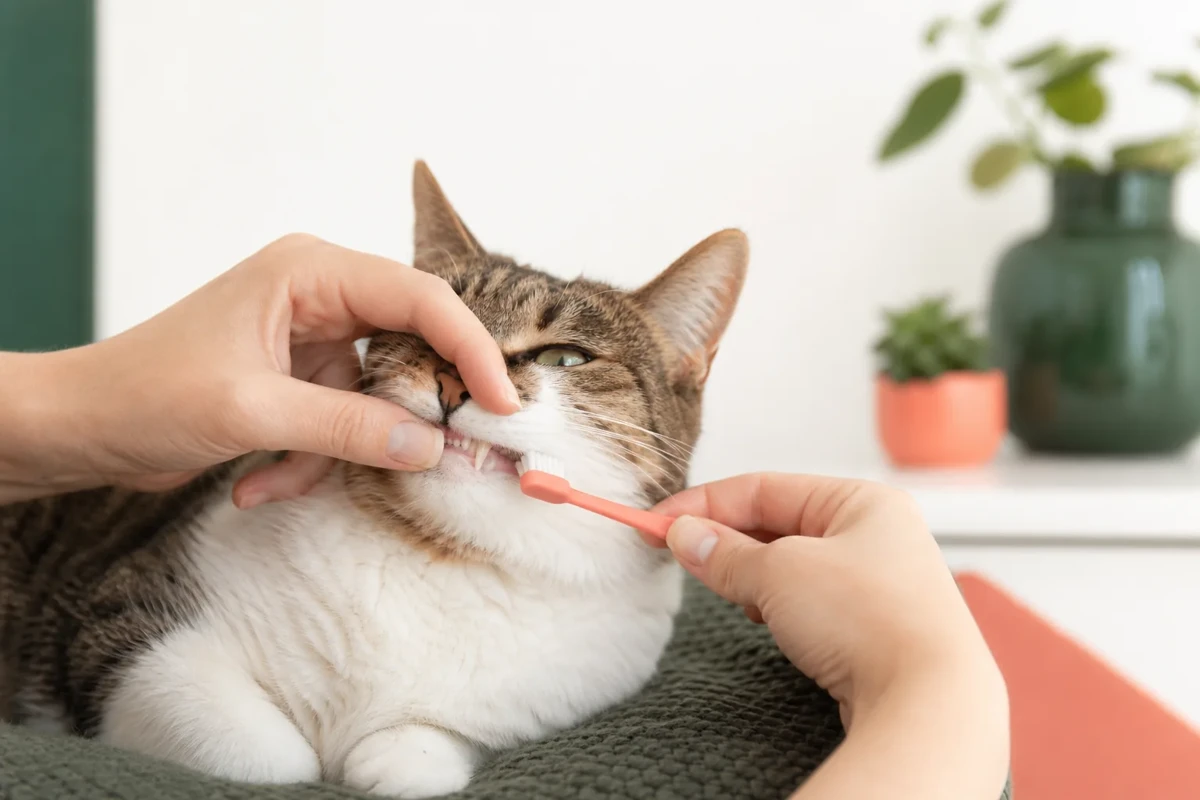
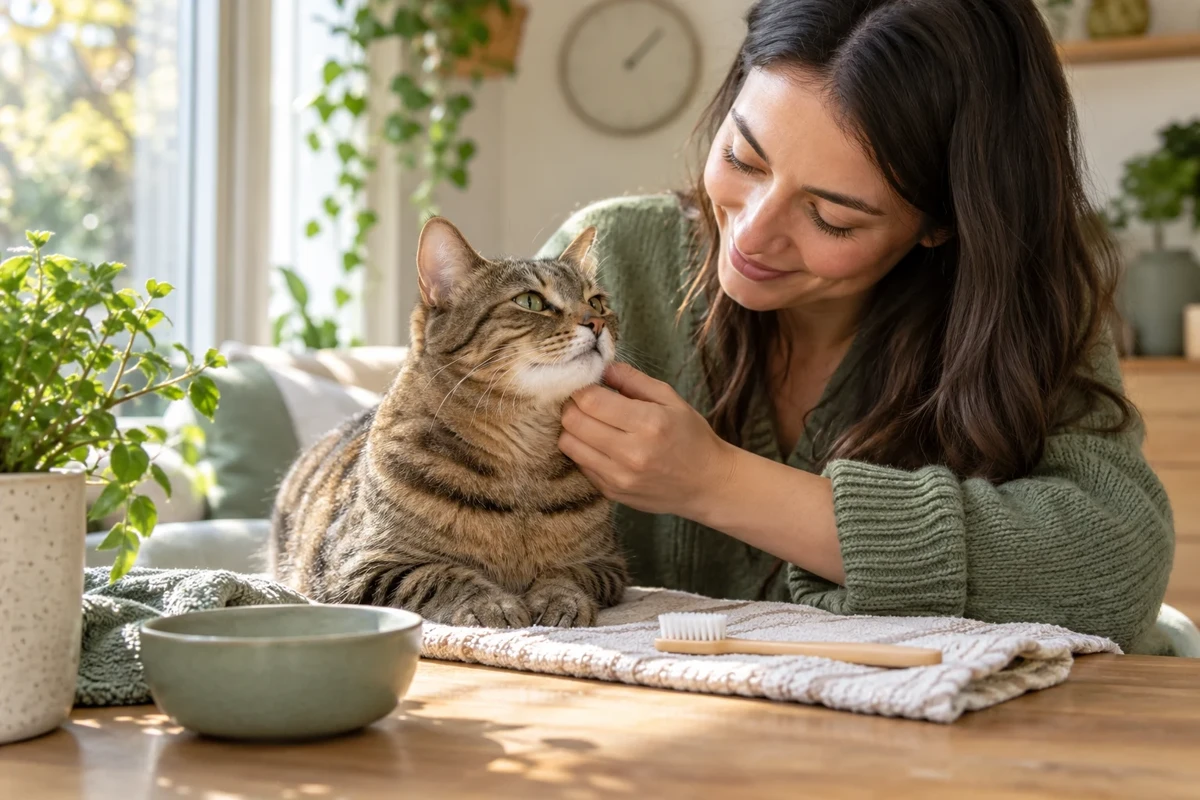
Consistent cat dental care at home keeps teeth and gums cleaner and helps prevent bad breath from coming back. Home routines can’t remove hardened tartar or cure an active infection, so start only after your vet confirms the mouth is comfortable. Cornell warns that brushing over severe gingivitis can hurt.
Brush little and often. The AVMA calls brushing your cat’s teeth the single most effective way to keep teeth healthy between professional cleanings. Daily brushing is ideal, though brushing several times a week still helps.
Stretch the lip back gently without forcing the mouth open, and sweep along the outer gum line for just a few seconds at first. Follow with a favorite reward and stop while your cat is still calm. Our step-by-step guide to brushing cat teeth walks through training, and our guide on how often to brush a cat’s teeth covers realistic weekly schedules.
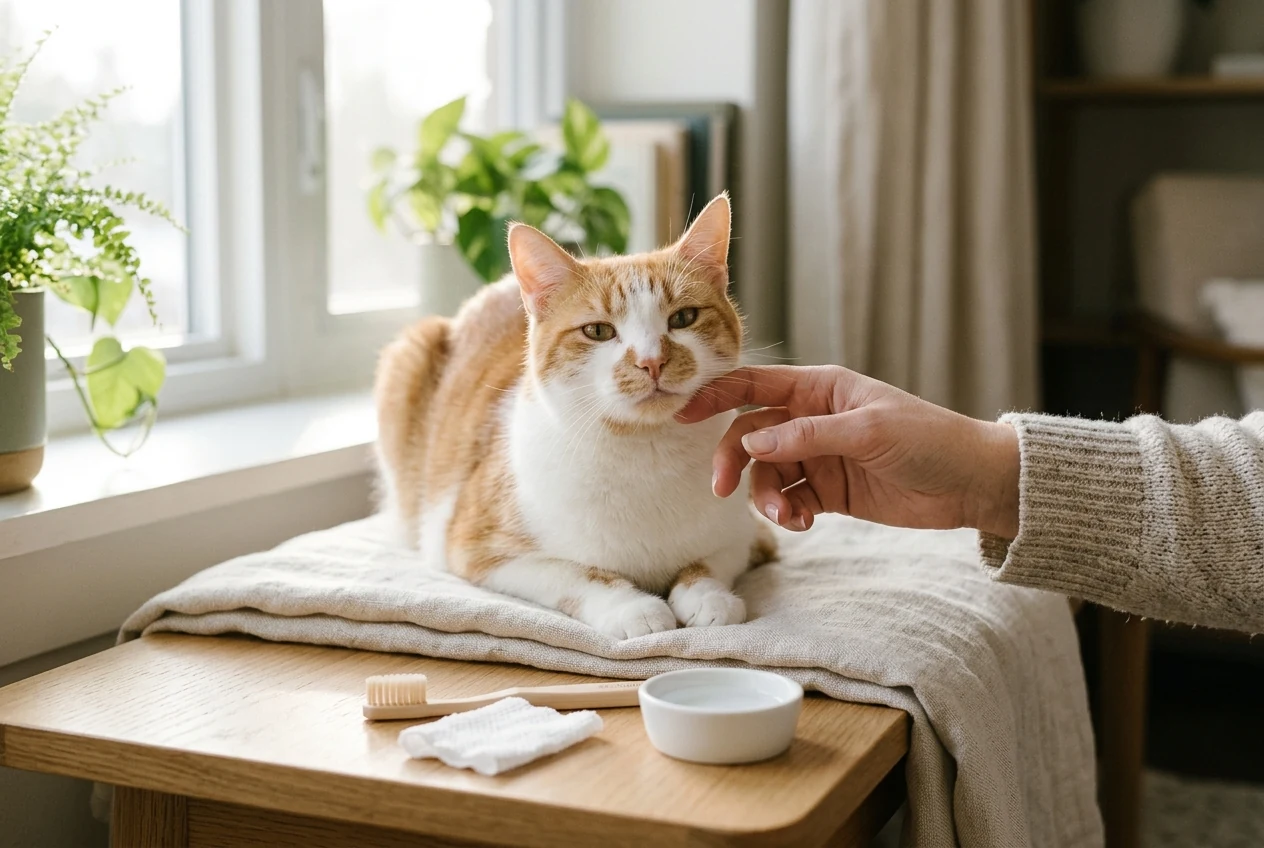
Use cat-safe products. Never use human toothpaste: Cornell warns its ingredients can upset a cat’s stomach because cats swallow what goes on the brush. Many vets recommend a toothpaste or tooth gel formulated for cats.
The plaque disruption itself comes from gentle motion along the gum margin. If your cat dislikes flavored gels, a few drops of sterile saline can moisten the brush or finger wipe instead, as explained on our saline and ingredient safety page.
Our Premium Cat Oral Care Kit pairs single-use saline ampoules with textured finger wipes, oral swabs, a gentle lip aid and two soft cat toothbrushes, alongside a free 28-day adaptation plan. The kit supports daily home hygiene in a comfortable mouth; it does not treat dental disease.
Consider dental aids. When brushing isn’t possible yet, select dental treats, diets or water additives can help with reducing plaque and tartar. VCA recommends looking for the Veterinary Oral Health Council (VOHC) seal, and our guide to cleaning cat teeth without brushing compares non-brushing options.
Skip risky shortcuts. Never scrape tartar off at home; VCA warns that metal scalers scratch tooth enamel and speed up new plaque buildup. Stop brushing if you spot bleeding and check our guide on cat gums that bleed when brushing.
Keep up with annual exams. The AVMA recommends a veterinary oral check at least once a year, and VCA notes that cats prone to dental buildup may need cleanings every six to 12 months.
Bad breath in kittens and senior cats
Kittens. Healthy kitten breath smells mild, though brief odor can appear during teething. Strong or lingering kitten bad breath warrants a vet check for retained baby teeth or early gum inflammation, which veterinary reviews note is more common in breeds such as Siamese, Maine Coon and Somali cats.
Cornell adds that cats accept tooth brushing much more easily when introduced young. Our kitten teeth brushing guide explains when and how to begin.
Senior cats. Older cats face a higher risk of both advanced dental disease and systemic conditions such as kidney disease or diabetes. New or worsening breath odor in a senior cat deserves a prompt exam, often paired with routine blood work.
Cat bad breath FAQs
Why does my cat’s breath suddenly smell bad?
A sudden foul smell often points to something new in the mouth, such as food or string wedged between teeth, a broken tooth or an oral sore. Sudden odor with vomiting or low energy can also signal internal illness, so call your vet and share when it started.
Is cat bad breath an emergency?
Usually not by itself, though a vet should still check persistent odor. Call your clinic the same day if bad breath comes with appetite loss, repeated vomiting, lethargy, bleeding from the mouth or facial swelling.
Can bad breath in cats go away on its own?
Mild food odor fades within hours after a meal. Bad breath caused by dental disease will not clear up on its own because hardened tartar cannot be brushed away. It takes a veterinary cleaning first, followed by gentle home care to slow new plaque.
Can I give my cat human toothpaste, mouthwash or mints?
No. Human dental products aren’t meant to be swallowed and can irritate or harm cats. Stick to cat-safe oral care products, and skip breath mints that only cover up a symptom your vet should evaluate.
The bottom line
Persistent cat bad breath is a health clue, not just an unpleasant smell to mask. Have your veterinarian check the cause, follow through on any dental treatment your cat needs, and then build a calm daily routine to keep plaque under control.