
Quick answer: Kitten teeth brushing can begin as calm mouth-handling practice after a veterinarian confirms that the mouth is healthy enough. The first goal is familiarity, not a complete cleaning. Use brief sessions, a small soft brush and toothpaste made for cats, and adjust the routine during teething.
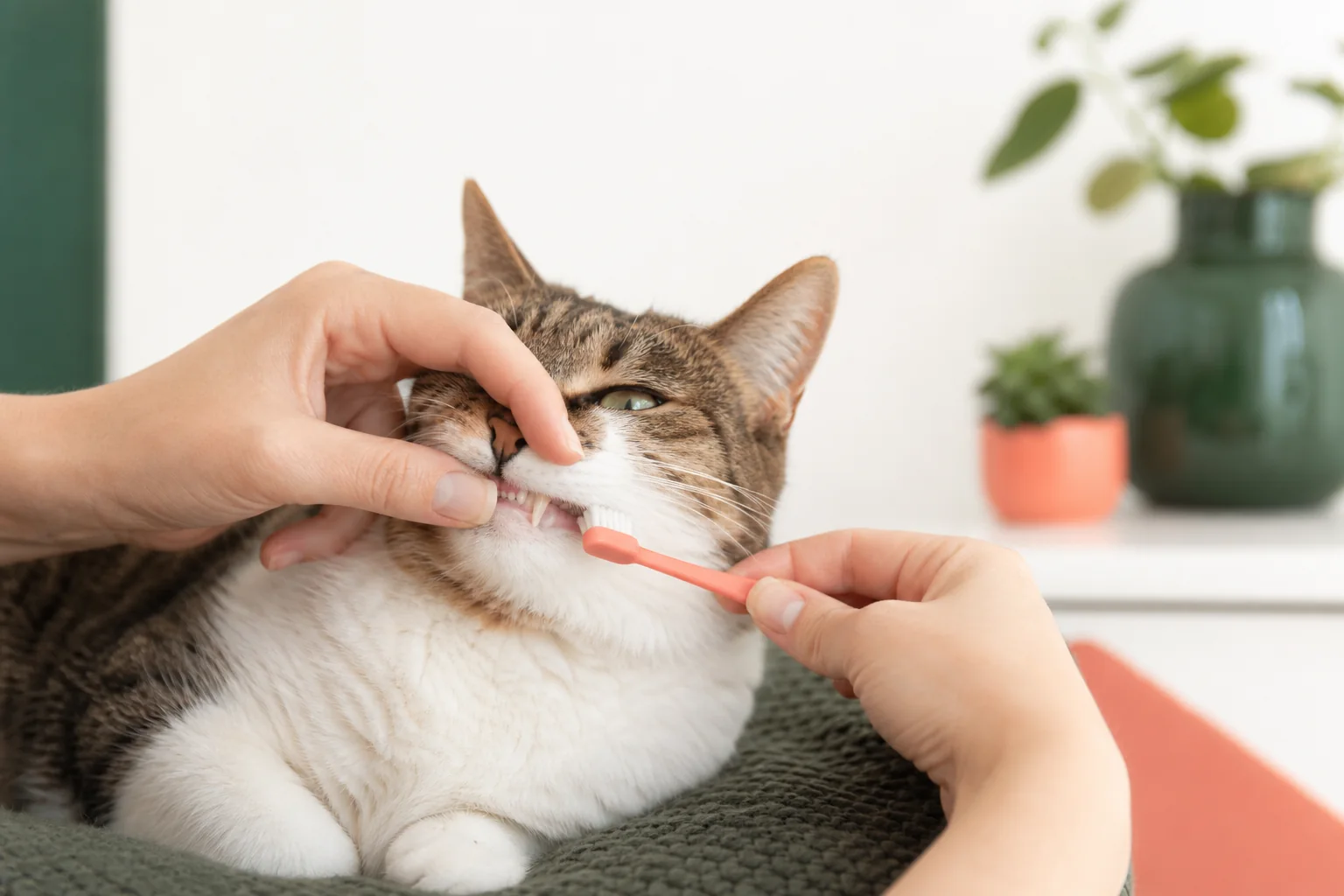
When to start kitten teeth brushing
There is no single starting date for every kitten. Ask the veterinary team to check the teeth and gums during a routine visit and demonstrate safe handling. Begin only when the mouth appears comfortable and the kitten is otherwise well.
Early practice can make later home dental care more familiar. During teething, comfort and chewing behavior may change. Pause any area that is painful, swollen or bleeding and ask the veterinarian when to continue.
Start with handling, not a toothbrush
- Touch the cheek for one second, reward and stop.
- Lift the lip briefly from the side without opening the jaw.
- Touch one easy outer tooth with a clean finger wrapped in damp gauze only if the veterinary team approves.
- Introduce the toothbrush away from the mouth.
- End while the kitten remains calm.
Repeat only the step the kitten accepts. Do not chase, pin or force the mouth open. A successful lesson may last only a few seconds.
Choose a kitten-sized toothbrush
Use a compact head with soft, intact bristles and a handle you can stabilize. A finger brush is not automatically safer; it may feel broad in a small mouth and places your hand close to sharp teeth. Our cat toothbrush size guide explains fit and access.
The brush should slide beside the cheek without scraping gum tissue or stretching the mouth. Replace it if the bristles bend, split or become rough.
Use toothpaste made for cats
Choose cat toothpaste and follow its label. Human toothpaste is not appropriate because cats swallow rather than rinse and spit. Introduce the flavor separately so a new taste and a new brush do not arrive in the same lesson.
Do not add extra toothpaste to make brushing more effective. Mechanical contact from soft bristles is the main purpose of the brushing step.
How to brush a kitten’s teeth
Approach from the side, lift the lip gently and keep the mouth mostly closed. Place the brush where the tooth meets the gum line and make one or two light strokes on an easy outer surface. You do not need to reach every tooth.
Build from one tooth to several only after repeated calm sessions. Follow the detailed steps in our how to brush cat teeth guide.
How often to practice
Short, frequent practice is usually easier to learn than occasional long sessions. Ask the veterinarian for the appropriate brushing schedule and work toward it gradually. If a session is missed, resume with the last comfortable step instead of adding pressure or time.
Keep a simple record of the tool used, the area reached and the kitten’s response. This makes changes in tolerance easier to discuss at the next visit.
Stop for warning signs
Stop brushing and arrange veterinary care for repeated bleeding, pain, swelling, strong bad breath, loose or broken teeth, drooling, facial changes or trouble eating. These signs are not training problems.
The American Veterinary Medical Association pet dental care resource describes common signs of dental disease. Tooth brushing cannot remove hardened tartar, diagnose periodontal disease or replace a professional dental cleaning when treatment is needed.
Build a long-term home dental care routine
Regular tooth brushing can help disrupt soft plaque before plaque and tartar buildup develops on reachable surfaces. It cannot clean below the gums. Other products, including water additives, should be chosen for evidence and individual fit rather than used as automatic substitutes.
The Veterinary Oral Health Council accepted-products directory lists products that earned its Seal for a specific plaque or tartar claim. Ask the veterinary team which options suit the kitten’s age, health problems and current teeth.
Frequently asked questions
Can I brush during teething?
Comfort can vary. Keep handling gentle, avoid painful or bleeding areas and ask the veterinarian when active brushing is appropriate.
Is a finger brush safer for kittens?
Not always. Fit, texture, pressure and handler control matter more than the style name.
What if my kitten bites the brush?
End the session without punishment. Return to cheek touches and tool introduction, then progress more slowly.
Sources
This educational guide uses linked guidance from the American Veterinary Medical Association and the Veterinary Oral Health Council. Individual veterinary instructions take priority.