
Quick answer: To learn how to get a cat used to teeth brushing, separate the routine into small skills. Start with a calm location and one-second cheek touches. Add lip lifting, cat toothpaste and a small brush only after the previous step feels easy. End before the cat needs to struggle, swat or hide.
Check the mouth before training
Ask a veterinarian to examine the cat’s teeth and gums before starting, especially after a long break or a sudden change in behavior. Pain, inflamed gums, a broken tooth or dental disease can look like a training problem.
Stop and arrange veterinary care for repeated bleeding, swelling, strong bad breath, drooling, loose teeth, facial changes or trouble eating. Training should not be used to test a painful area.
Set up a low-pressure session
Choose a familiar, non-slip surface with an open route away. Prepare the reward, brush and pet toothpaste before inviting the cat over. Keep the first lessons under ten seconds, including the reward.
Use the same short cue each time. Avoid chasing, pinning or opening the jaw. The cat should be able to pause or leave.
Step 1: Teach cheek contact
Touch the side of the cheek for one second, reward and stop. Repeat on another day or after a relaxed pause. Increase duration only when the cat continues eating, exploring or resting normally.
If the ears flatten, tail lashes, skin twitches or the head turns away, shorten the next attempt. Those signals mean the current step is difficult, not that the cat should be held more firmly.
Step 2: Add a brief lip lift
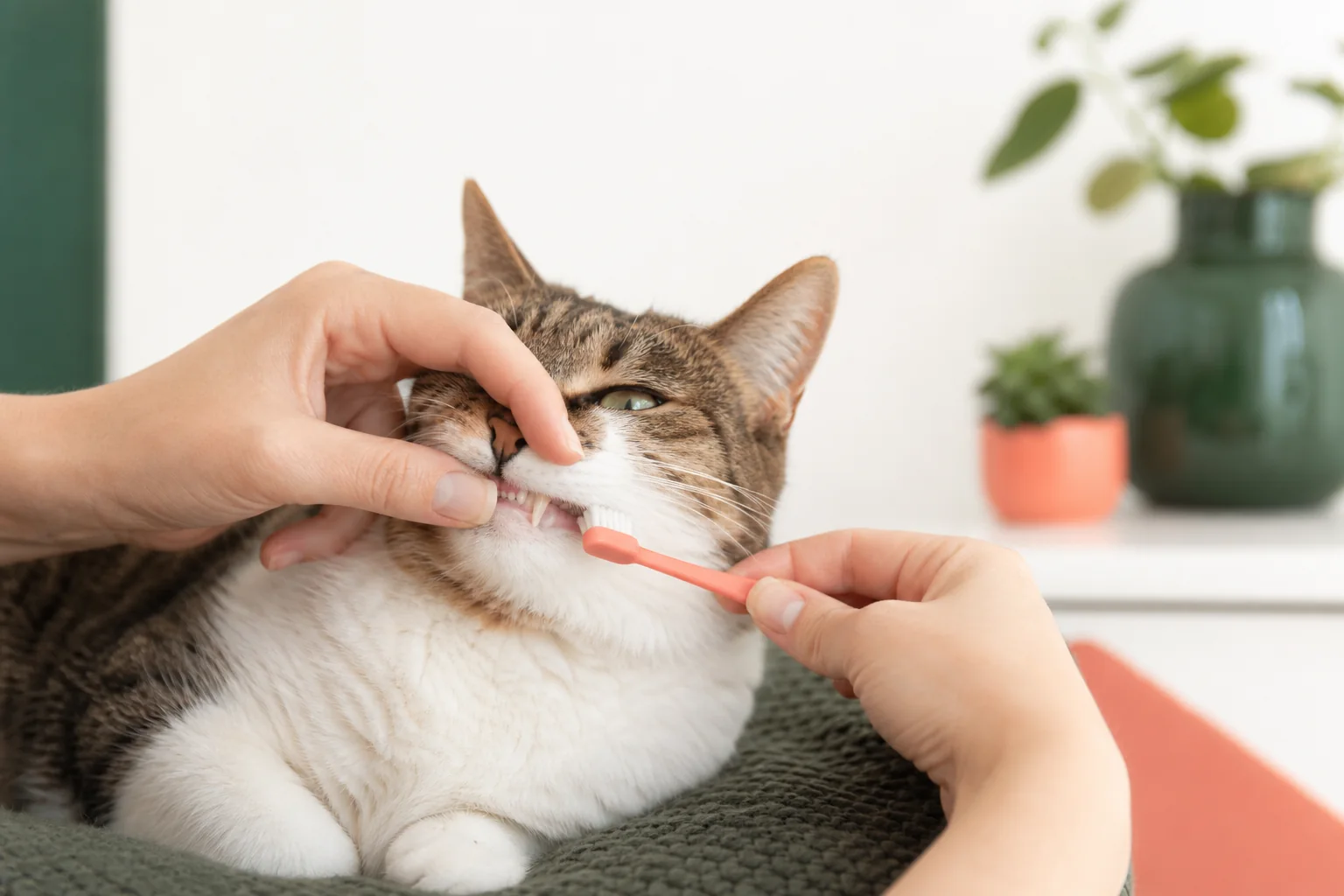
Slide a finger along the cheek and lift the lip just enough to see one outer tooth. Keep the mouth closed and release immediately. Reward calm contact.
Practice on an easy side before moving toward other areas. Do not pull the cheek tight or pry the jaws apart.
Step 3: Introduce cat toothpaste separately
Use toothpaste labeled for cats and follow its directions. Human toothpaste is not appropriate because cats swallow rather than rinse and spit. Offer a tiny taste away from the toothbrush so flavor acceptance remains a separate skill.
If the cat dislikes the flavor, stop and choose another pet toothpaste with veterinary guidance. Do not hide a disliked product in food.
Step 4: Introduce the toothbrush
Let the cat inspect the clean, dry brush away from the mouth. Touch the handle to the cheek, reward and stop. Next, place the soft bristles against one easy outer tooth for a second without scrubbing.
Use a compact head that fits beside the cheek. Our cat toothbrush size guide explains fit. A finger brush is not automatically safer if it feels broad or places the hand too close to the teeth.
Step 5: Build light brushing strokes
Approach from the side and use one or two light strokes where the tooth meets the gum line. Focus on comfortable outer surfaces. You do not need to brush every tooth or force the mouth open.
Add only a few strokes after several calm repetitions. The complete cat tooth brushing guide explains positioning and technique.
Know when to move forward or back
Move forward when the cat approaches willingly, accepts the current step and returns to normal behavior afterward. Move back when the cat avoids the setup, freezes, swats, tries to bite or needs restraint.
A short record can help: note the tool, area reached and response. If one side becomes suddenly sensitive, pause and arrange an oral examination.
Troubleshoot common setbacks
If the cat accepts the brush one day and avoids it the next, return to cheek contact and shorten the session. Check for rough bristles, a changed toothpaste flavor, a noisy location or a different handler position. A setback does not need to be corrected in one lesson.
If the cat licks toothpaste but will not accept bristles, practice the dry brush near the cheek without adding flavor. If the cat accepts front teeth but not the back, keep the successful front-tooth step and ask the veterinary team to demonstrate safer access. Never trade restraint for more coverage.
After a dental procedure, extraction or professional cleaning, follow the written recovery plan. Ask when brushing may resume and which areas must remain untouched. A cat that previously brushed well may need to restart at an easier step after treatment.
Build a regular brushing routine
Ask the veterinarian for the appropriate schedule and work toward regular brushing gradually. If a day is missed, resume with the last comfortable step rather than making the next session longer.
Clean and air-dry the brush after use, store it separately and replace damaged bristles. Do not share a toothbrush between pets.
Understand what brushing can do
Brushing can help remove plaque from reachable tooth surfaces before plaque and tartar buildup develops. It cannot clean below the gums, diagnose periodontal disease or replace professional dental cleanings when treatment is needed.
The American Veterinary Medical Association pet dental care resource describes warning signs and veterinary care. The Veterinary Oral Health Council directory lists products that earned its Seal for a specific plaque or tartar claim. Dental treats and water additives should be selected for evidence and individual fit.
Frequently asked questions
How long should the first session be?
Five to ten seconds, including the reward, may be enough. End while the cat remains comfortable.
Should I wrap my cat in a towel?
Routine training should prioritize voluntary participation. Ask the veterinary team for handling guidance when medical care is necessary.
What if my cat likes toothpaste but not the brush?
Keep flavor practice separate and return to brush sight, cheek-touch and one-tooth steps.
Sources
This training guide uses linked guidance from the American Veterinary Medical Association and the Veterinary Oral Health Council. Individual veterinary instructions take priority.