
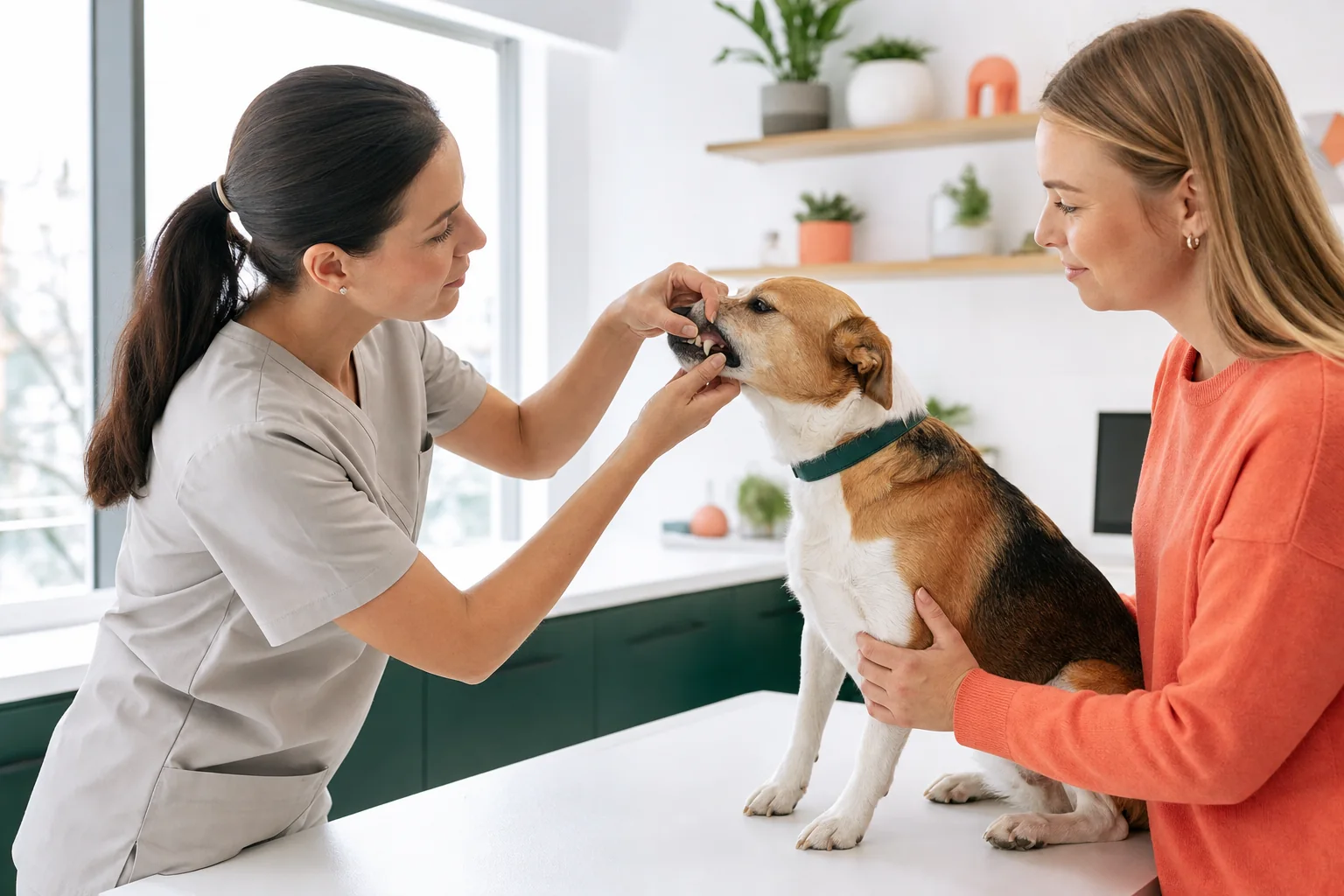
Quick answer: If your dog’s gums bleed when brushing teeth, stop the session. Do not scrub the area or keep lifting the lip to investigate. Record where the blood appeared, how much you saw and whether your dog shows pain, swelling, bad breath or eating changes. Repeated or unexplained bleeding needs veterinary evaluation.
What to do immediately
- Remove the dog toothbrush and let the dog move away.
- Do not probe, press or apply human oral-care products to the gum line.
- Record the location, amount and duration of bleeding.
- Check the brush later for bent, sharp or damaged bristles.
- Contact a veterinarian if bleeding continues, returns or comes with other warning signs.
Seek urgent veterinary care for heavy bleeding, breathing difficulty, collapse, facial trauma or severe pain.
Why dog gums may bleed
An isolated scrape can follow a slipped brush, a rough brush head or excess pressure. However, gums that bleed easily may already be inflamed. Gingivitis, periodontal disease, a broken tooth, oral infection and other dental disease can affect the teeth and gums.
A caregiver cannot diagnose the cause from gum color or a photograph. Bad breath, drooling, pawing at the mouth, chewing on one side, dropping food or avoiding the bowl can indicate discomfort.
When to schedule an appointment
Arrange an examination for bleeding that is repeated, spontaneous or accompanied by red, swollen or painful gum tissue. Loose teeth, facial swelling, appetite changes and a sudden refusal to be brushed also need professional care.
The veterinarian may recommend an oral examination, dental X-rays, dental treatment or a professional teeth cleaning based on the findings. Disease below the gum line is not visible during a home check.
Do not brush through active bleeding
Regular brushing can support good oral hygiene when the mouth is comfortable. It should not be used to “toughen” bleeding gums or remove hardened tartar. Brushing inflamed tissue can increase pain and create long-term fear of handling.
Pause the routine until the veterinary team explains whether brushing can resume. After an extraction or another dental procedure, follow the written recovery plan and ask which areas must remain untouched.
Check the toothbrush and technique
When brushing is cleared to restart, use a head that fits the mouth with soft, intact bristles. A brush that is too large can rub the gums or require the cheek to be pulled tight. Our dog toothbrush size guide explains fit and access.
Approach from the side, lift the lip briefly and keep the mouth mostly closed. Use light strokes on comfortable outer tooth surfaces. Do not force the jaw open or reach every tooth in one session. Follow a gentle dog teeth brushing routine.
Restart only after the mouth is comfortable
Begin with a brief lip lift or one light stroke on an unaffected area. End while the dog stays relaxed. Increase contact gradually across several sessions; do not compensate for missed days with extra pressure.
Use toothpaste made for dogs and follow its directions. Human toothpaste is not appropriate because dogs swallow rather than rinse and spit. Keep a short record of tolerance, bleeding and eating behavior.
Prepare useful notes for the veterinarian
Note when the bleeding began, which side was affected and whether it stopped immediately. Include the brush type, toothpaste, recent dental treatment, medications and any other health problems. Bring product labels or the brush if the clinic asks.
This context helps the veterinary team distinguish accidental trauma from a pattern that needs diagnostic testing. Do not recreate a painful brushing event for a video.
What home care cannot do
Tooth brushing helps disrupt soft plaque on reachable surfaces before plaque and tartar buildup develops. It cannot diagnose periodontal disease, clean below the gums or replace treatment. Dental chews may complement a plan only when they suit the dog and have an appropriate evidence-based claim.
The American Veterinary Medical Association pet dental care resource describes warning signs and the role of veterinary care. The AAHA dental care guidelines explain the boundary between home hygiene and professional treatment.
Frequently asked questions
Should I keep brushing lightly?
Not through an actively bleeding or painful area. Stop and ask whether veterinary evaluation is needed.
Will a softer brush solve the problem?
It may reduce accidental trauma, but it cannot treat inflamed gums or dental disease.
Can I use antiseptic mouthwash?
Do not use human oral products. Ask the veterinarian which pet-specific products, if any, are appropriate.
Sources
This educational guide uses linked guidance from the American Veterinary Medical Association and the American Animal Hospital Association. Individual veterinary instructions take priority.