
Quick answer: Home brushing and professional pet dental cleaning do different jobs. Brushing helps control soft plaque on reachable tooth surfaces. A professional dental cleaning lets a veterinary team examine the whole mouth, take dental X-rays when needed, clean above and below the gum line, and treat dental issues that home care cannot reach.
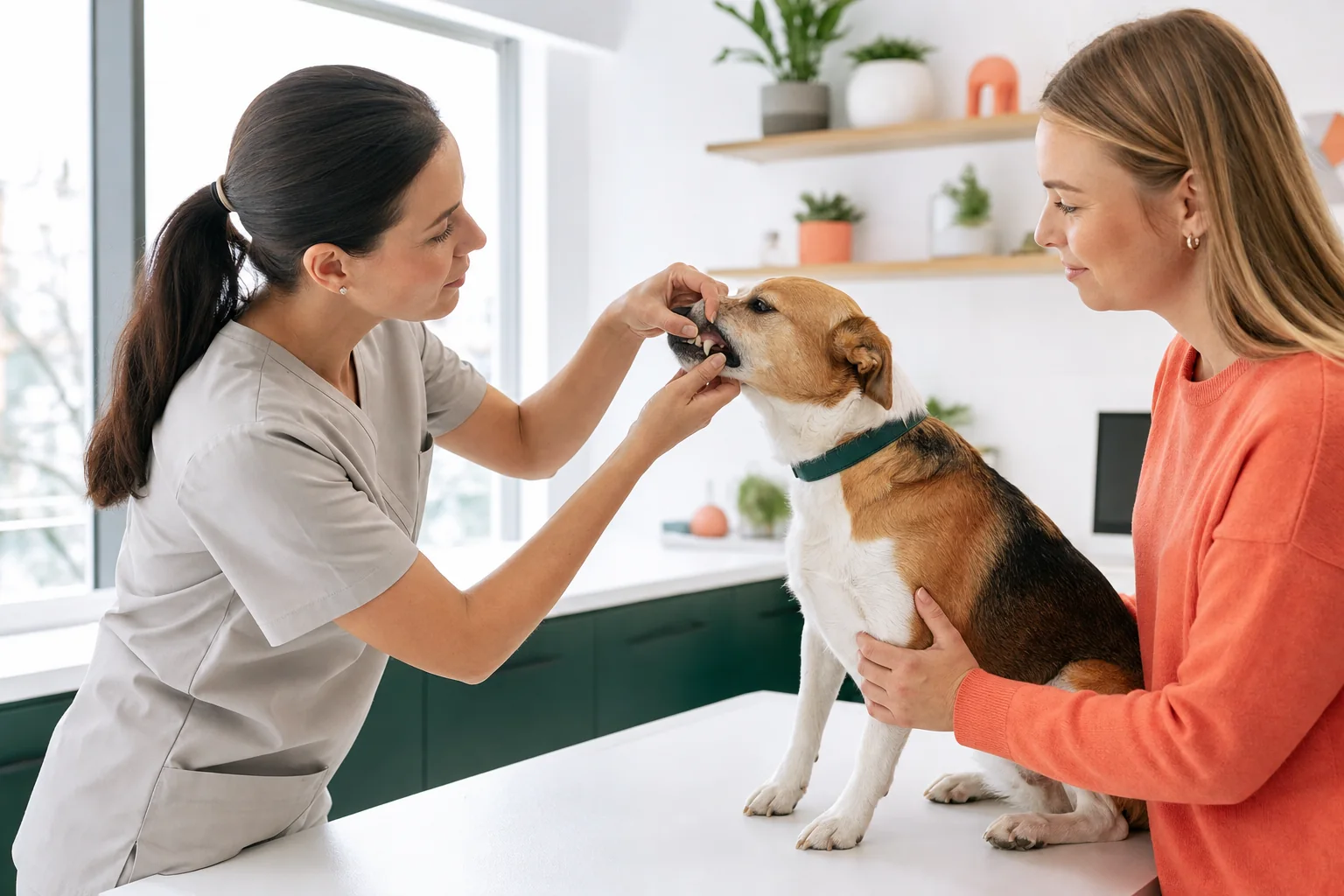
Home brushing vs professional pet dental cleaning
Think of home brushing as routine prevention and professional care as diagnosis and treatment. A pet owner can brush accessible outer surfaces, notice bad breath, and track changes in comfort. Only a veterinary team can assess tooth roots, take dental X-rays, perform scaling and polishing below the gum line, or plan tooth extractions when disease has damaged a tooth.
- Home brushing: frequent plaque control and early detection of visible changes.
- Professional cleanings: a complete dental procedure based on the individual animal’s needs.
- Both: important parts of a long-term pet dental care plan.
One does not cancel the need for the other. Professional treatment does not stop new plaque from forming, while a regular brush cannot reveal every hidden problem. A practical plan uses daily or veterinarian-recommended home care, scheduled examinations, and earlier assessment when symptoms appear. Age, anatomy, medical history, existing disease, and brushing tolerance all affect the right schedule.
What home brushing can do
A calm, regular brush routine disrupts soft plaque before it hardens. Focus on the outer surfaces that you can reach without forcing the mouth open. Use pet-specific toothpaste and a soft brush that fits the mouth. Brushing also gives pet parents a regular chance to notice redness, bleeding, chipped teeth, new sensitivity, or persistent bad breath.
Home dental care works best when the mouth is comfortable. It cannot remove hard calculus, diagnose gum disease, or show what is happening beneath the gum line. Never scrape a pet’s teeth with human dental tools.
What a professional dental cleaning can do
Professional veterinary dental care starts with an oral assessment. Depending on the patient, the plan may include anesthesia, pain control, dental X-rays, scaling and polishing, and treatment of tooth decay, fractures, or periodontal disease. The AAHA dental care guidelines explain why a complete examination is different from cosmetic cleaning of visible surfaces.
The veterinary team can inspect areas a caregiver cannot see and recommend the next step. That may be monitoring, professional cleaning, medication, or treatment of painful teeth. Follow the written preparation and aftercare instructions for your animal.
When to pause brushing and arrange a dental exam
Stop home brushing and contact a veterinary clinic if you see pain, swelling, persistent bleeding, loose or broken teeth, facial changes, trouble eating, or strong ongoing odor. These signs can point to dental problems that need an examination. Trauma, uncontrolled bleeding, collapse, or breathing difficulty requires urgent care.
Do not try to “brush through” pain. If a pet has recently had a dental procedure, ask when brushing can restart and which areas should be avoided while the mouth heals.
How home and professional care work together
Regular examinations provide the foundation. Between visits, brushing helps maintain accessible surfaces and makes changes easier to spot. Keep a short record of odor, bleeding, eating changes, and brushing tolerance. Bring it to the next dental exam so the veterinary team has specific information.
- Ask the clinic whether the mouth is comfortable enough for brushing.
- Use the brush, toothpaste amount, and schedule recommended for your pet.
- Keep sessions brief and stop before your pet struggles.
- Arrange professional care at the interval advised for the individual animal.
- Restart home care only on the veterinary timeline after treatment.
Where dental chews and water additives fit
Dental chews, diets, and water additives may support a broader routine, but they do not replace brushing or a professional dental cleaning. Choose products for the correct species and size. The Veterinary Oral Health Council accepted-products directory identifies products that earned its Seal for a specific plaque or calculus claim.
Use every product according to its label. Human toothpaste is not suitable for pets, and xylitol exposure is dangerous for dogs; review the FDA xylitol safety guidance if exposure is possible.
Questions to ask your veterinary team
- Does my pet need dental X-rays or professional cleaning now?
- Are any teeth painful, loose, fractured, or affected by tooth decay?
- When is it safe to start or resume brushing?
- Which brush, toothpaste, or dental chews fit this animal?
- What changes should prompt an earlier appointment?
For the wider routine, see our dog dental care guide and gentle dog-brushing steps. The American Veterinary Medical Association pet dental care resource also explains why prevention and veterinary assessment belong together.
Bottom line: Home brushing controls plaque where the brush can reach. Professional care examines and treats the full mouth. Use both rather than treating one as a substitute for the other, and seek veterinary help promptly when comfort, eating, gums, teeth, or breath changes.
Sources
The medical references used for this guide are linked in the relevant sections above. They include guidance from AAHA, AVMA, VOHC, and the FDA.