
Quick answer: Use the amount printed on the pet-toothpaste label or recommended by your veterinary team. There is no universal pea-sized rule for every product, dog, cat, or toothbrush. Start with the smallest labeled amount that lets you complete a calm session; more toothpaste does not clean better.
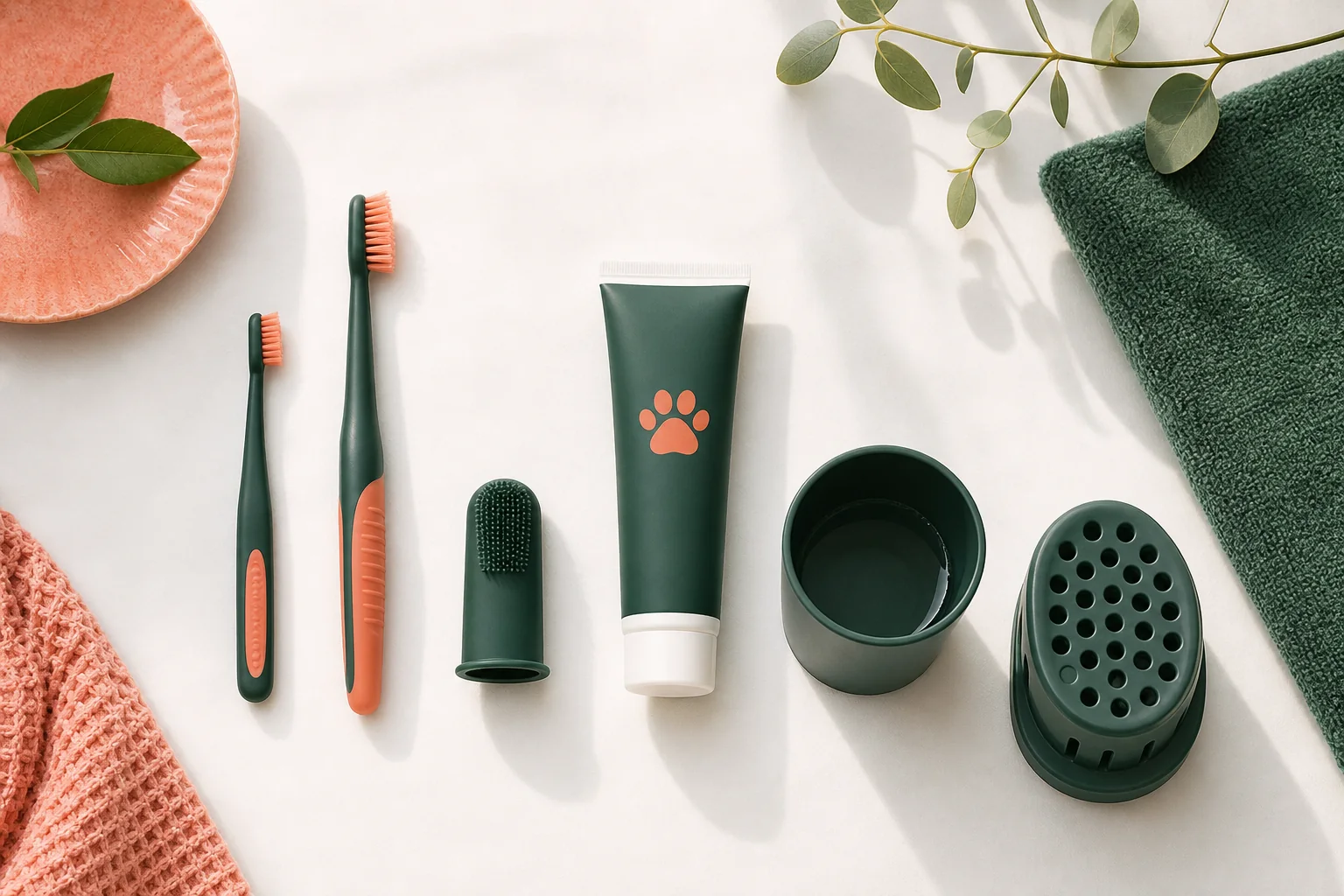
Start with the pet-toothpaste label
Pet toothpastes vary in concentration, texture, ingredients, applicator, and intended frequency. The label should identify the correct species, amount, and method. Follow those directions even if another brand uses a different visual measure.
If the label is missing, unclear, or not written for your dog or cat, do not guess. Ask the manufacturer or a veterinary professional. A pet owner should also follow any individual instructions given after dental treatment or for a painful mouth.
Why more pet toothpaste is not better
Mechanical contact from a suitable brush helps disrupt soft plaque on reachable surfaces of the teeth. A larger amount of paste does not remove hardened calculus, reach below the gum line, or treat periodontal disease. Too much product can make the session messy, increase swallowing, or cause a pet to lick and chew instead of accepting gentle brushing.
Use only enough product to meet the label directions. Home pet dental care supports oral hygiene and early detection of changes. It does not replace a dental exam or professional cleaning when dental disease is present.
Introduce flavor before a full brushing session
A new flavor can distract a pet from the handling lesson. Begin with the label-approved amount during a short introduction. Let the pet investigate without forcing the mouth open. Stop if the animal turns away repeatedly, paws at the mouth, coughs, gags, or becomes distressed.
- Read the species, amount, and frequency on the product label.
- Choose a quiet location and prepare the toothbrush first.
- Dispense the labeled amount without touching a used brush to the tube.
- Keep the first contact brief and reward calm behavior.
- Build toward gentle brushing only when the mouth appears comfortable.
Match the amount to the applicator
A small brush head, finger brush, pad, or gel applicator holds product differently. Do not increase the dose just because a broad tool looks less covered. Follow the instructions for that toothpaste and applicator combination.
Place the product where it will stay on the tool during the approach. Keep the tube opening clean. In a multi-pet home, dispense without touching used bristles to the opening and use a separate toothbrush for each animal.
Dogs and cats may need different products
Do not assume a toothpaste intended for a dog is appropriate for a cat, or the reverse. Check the species statement and ingredient list. Some dental products have different directions by body size or age. For cat-specific considerations, see can cats use toothpaste?
Products listed by the Veterinary Oral Health Council earned its Seal for a specific plaque or calculus claim. Confirm the species, product form, and claim shown in the directory; the Seal does not create one amount for every item.
Never substitute human toothpaste
Human toothpaste is designed to be spit out, while pets usually swallow what is used during brushing. Do not use it on a pet’s teeth. Some human products contain xylitol, which is dangerous to dogs. The FDA xylitol safety guidance explains the risk.
Store every toothpaste tube where pets cannot chew it. Keep the original label and packaging so the ingredients and directions remain available if an exposure occurs.
If a pet licks extra paste or eats the tube
Check the product name, ingredients, species label, and estimated amount. Contact a veterinarian, emergency clinic, or animal poison-control service for advice. Do not induce vomiting unless a qualified professional tells you to do so.
Suspected xylitol exposure in a dog is urgent. Seek immediate help for collapse, weakness, tremors, repeated vomiting, or seizures. Bring the package or a clear photograph of the label.
Make toothpaste part of the full routine
Toothpaste is one part of a calm routine. Use a soft, correctly sized brush, work on accessible outer surfaces, and keep sessions short. Dental chews or other products may support the plan, but they do not automatically replace tooth brushing or professional dental services.
Track odor, redness, bleeding, eating changes, and brushing tolerance. These observations help a veterinary team evaluate the teeth and gums. Continue with our xylitol-free pet-toothpaste guide.
Frequently asked questions
Is a pea-sized amount always correct?
No. Use the exact amount on the product label instead of a universal visual measure.
Can pets swallow pet toothpaste?
Pet products are designed with pet use in mind, but the species, amount, and frequency directions still matter.
Can toothpaste replace brushing?
No. Follow the product directions, but remember that flavor exposure alone is not the same as controlled mechanical brushing.
When to call a veterinarian
Pause home brushing and arrange a dental exam if a pet has pain, swelling, persistent bleeding, a loose or broken tooth, strong ongoing bad breath, or difficulty eating. The AAHA dental care guidelines explain the different roles of home care, dental treatment, and professional cleaning.
Sources
This educational guide uses the linked guidance from AAHA, the Veterinary Oral Health Council, and the FDA. It does not replace individual veterinary care or product-specific instructions.