
Quick answer: Choose toothpaste labeled for your pet’s species, read the complete ingredients list and check every label for xylitol. For dogs, also look for the names birch sugar and wood sugar. Never substitute human toothpaste, and contact a veterinarian immediately if a dog swallows a product containing xylitol.
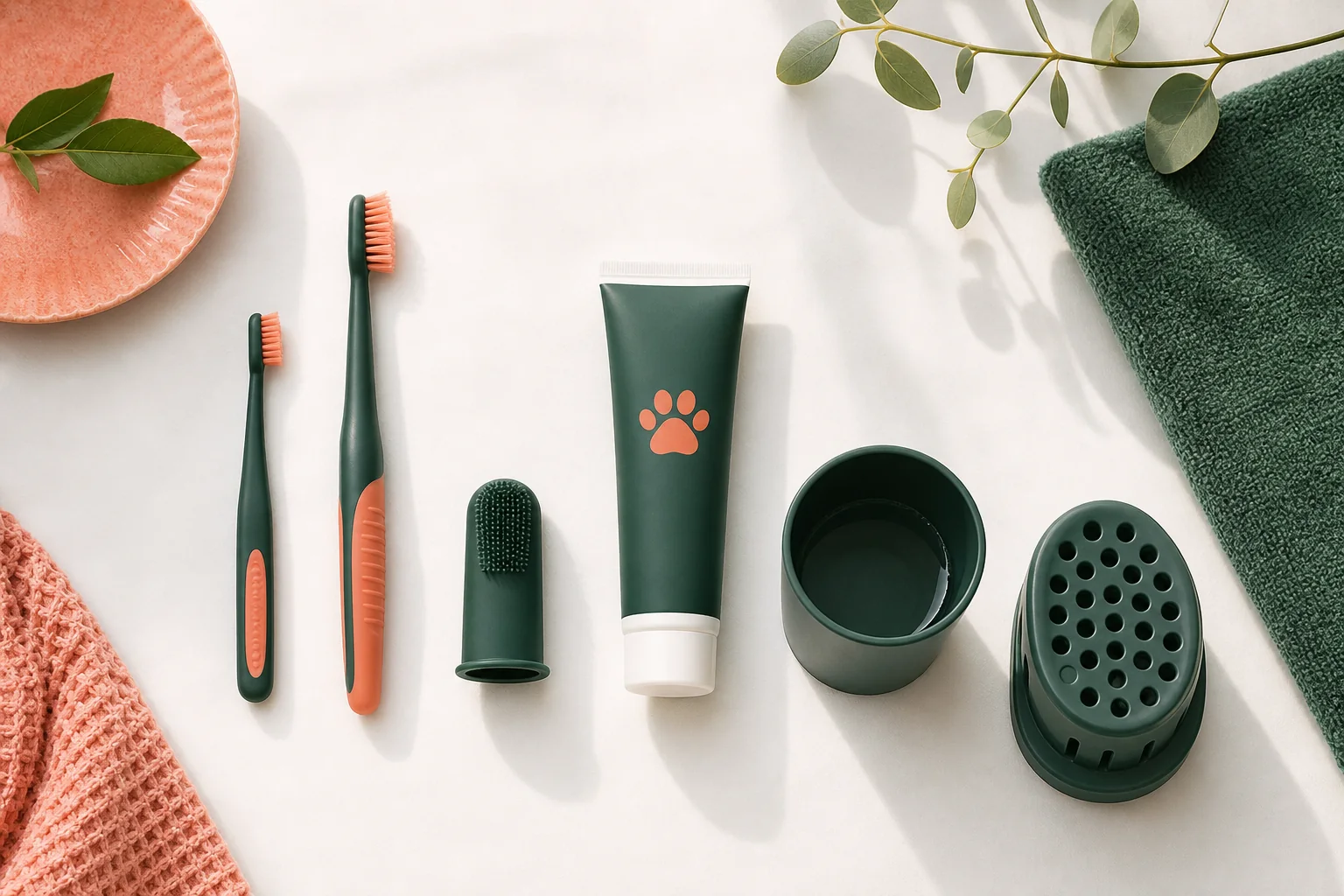
Why xylitol matters for dogs
Xylitol is a sugar substitute and sugar alcohol used in some human products. The U.S. Food and Drug Administration warns that xylitol is toxic to dogs. Even small amounts can trigger a rapid insulin release, causing a dangerous drop in blood sugar levels. Larger exposures may contribute to liver failure.
The ingredient may appear in toothpaste, sugar-free gum, candy, baked goods, supplements and some peanut butter. A product that seems unrelated to dental care can therefore create the same emergency. The FDA warning concerns dogs; do not assume the same effect or dose for another species. Ask a veterinarian about species-specific risks.
Use a four-part label check
- Species: confirm that the pet toothpaste is labeled for dogs, cats or both.
- Ingredients: read the full list, not only the flavor or front label.
- Directions: check the amount, frequency, age limits and whether rinsing is required.
- Warnings: note storage instructions, allergy advice and when to stop use.
For a dog, scan the ingredients list for xylitol, birch sugar and wood sugar. If the label is incomplete or hard to read, do not guess. Contact the manufacturer or choose a clearly labeled alternative.
Do not rely on sugar-free claims
Sugar-free, no added sugar and xylitol-free describe different things. A product with no added sugar may still contain sugar alcohols or other artificial sweeteners. A sugar-free claim also does not tell you which sweetener replaced regular sugars. Read the ingredient panel even when the front package sounds reassuring.
Compare two products by species label, full ingredients, directions and warnings rather than by a single marketing phrase. Check the label again when the package changes, because a familiar brand can reformulate a flavor or size. If a manufacturer confirms that a product contains no xylitol, keep the written answer with the product details for future reference.
Do not taste-test a pet product or use sweetness as a safety check. Human senses cannot identify every ingredient or establish a safe amount for an animal.
Before buying another formula
- Take a photo of the complete ingredients panel before discarding the box.
- Confirm the species and age directions still match your pet.
- Check whether the product is toothpaste, a gel, a wipe or a treat; directions differ.
- Compare the amount recommended on the label, not the amount used for another animal.
- Keep the lot number and manufacturer contact details for questions or a product alert.
- Ask your veterinary team to review a formula when your pet takes medication or follows a prescription diet.
A careful label check takes less time than correcting a preventable exposure. It also keeps your pet’s oral care products consistent when more than one person helps with brushing.
Choose pet toothpaste, not human toothpaste
Pets usually swallow toothpaste instead of spitting and rinsing. Human toothpaste is formulated for human use and may contain ingredients or concentrations that are unsuitable when swallowed by an animal. Baking soda, fluoride, detergents and flavor systems also vary by product, so a single front-label claim cannot establish safety.
Select an oral care product made for the correct species. A cat toothpaste should state that it is intended for cats; a dog toothpaste should state that it is intended for dogs. Follow the product label even when another toothpaste has similar packaging.
Evaluate claims in context
Words such as natural, premium, sugar-free, enzymatic or freshens breath do not prove that a product fits an individual pet. A fresh breath claim also does not treat the cause of persistent bad breath. Dental disease, oral pain or other health issues require veterinary assessment.
Ask a veterinarian before using a new formula when a pet has food allergies, digestive disease, a prescription diet, recent dental treatment or a history of reactions. Product labels and individual medical guidance take priority over online comparisons.
Introduce toothpaste gradually
Offer a tiny taste only after the label review is complete. If the pet remains comfortable, place a small labeled amount on a soft brush and touch one reachable outer tooth. Stop for vomiting, diarrhea, swelling, coughing, unusual drooling or sudden distress.
Toothpaste supports a brushing routine, but it cannot remove hardened tartar or treat dental disease. Use light pressure and follow veterinary advice for painful, bleeding or recently treated mouths.
Store products safely
Keep toothpaste, gum, candy, supplements and other xylitol-containing products in closed storage outside a dog’s reach. Do not leave a tube beside the pet’s brush or rely on a cap to prevent chewing. Keep each product in its original package so the ingredients and contact details remain available.
If a dog may have swallowed xylitol, contact a veterinarian, emergency clinic or animal poison service immediately. Provide the package, product name, estimated amount, time, species and weight. Do not wait for symptoms, and do not induce vomiting or give food unless a veterinary professional instructs you.
Frequently asked questions
Is toothpaste without xylitol automatically safe for every pet?
No. Species, age, health history, other ingredients and label directions still matter.
Can pet toothpaste fix bad breath?
It may freshen breath temporarily, but persistent odor can signal dental health problems that need an examination.
What should I do if the ingredients are missing?
Do not use the product until the manufacturer provides a complete list and confirms the intended species.
Sources
Read the FDA warning about xylitol and dogs, the FDA’s potentially dangerous items for pets and the AVMA pet dental care resource. Labels and urgent veterinary instructions take priority.