
Quick answer: The best puppy toothbrush has a small, soft brush head, a secure grip and enough control to stop before a puppy becomes worried or starts chewing. Choose the tool by fit and behavior rather than breed or age alone. Begin with seconds of calm handling before you expect real teeth cleaning.
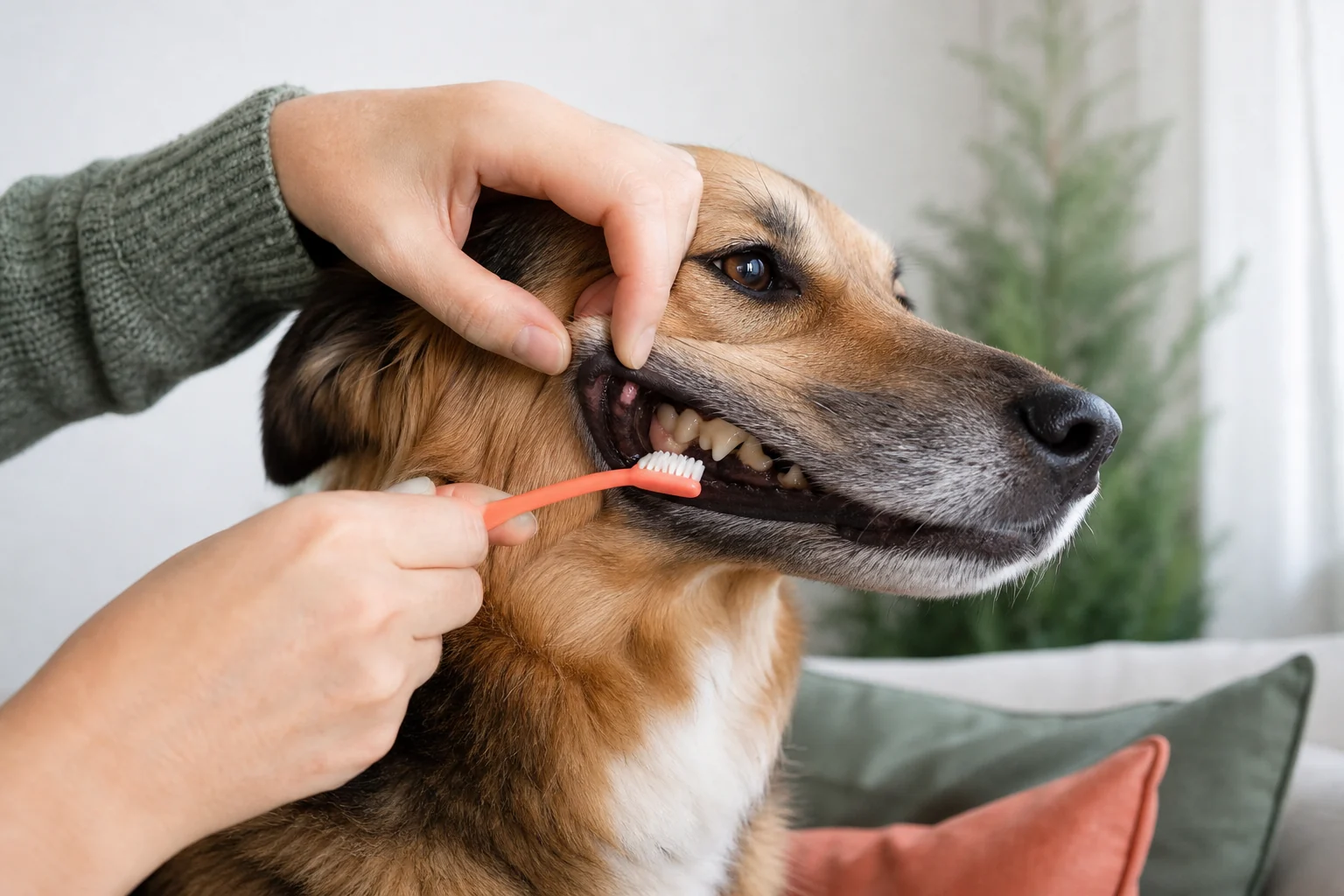
Choose a safe brush head
Look at the space between the teeth and the inside of the cheek. The brush head should move beside the outer tooth surfaces without stretching the corner of the mouth or forcing the jaw open. A compact head often suits puppies and small dogs, but the label alone does not prove that it fits.
Use soft, even bristles. Reject a brush with sharp edges, bent bristles, torn silicone or a cracked handle. Hold it at the side of the head and check that you can guide it without blocking your view. A large or unstable brush can make light pressure difficult.
Finger brush or handled puppy toothbrush?
A compact handled brush keeps fingers farther from the chewing surface. It is often the safer first choice for a puppy that mouths hands or grabs objects. A finger brush gives close control when it fits tightly and the puppy already accepts fingers near the mouth.
A finger toothbrush for puppies must not slide, rotate or pull loose. The same rule applies to a finger toothbrush for dogs of any age. Stop using it if the puppy bites down, guards the mouth or turns the session into play. Neither style is automatically the best puppy toothbrush; the right choice is the one you can control calmly.
Start with a seven-day first routine
- Days 1–2: Touch the cheek for one second, reward calm behavior and release. Add a brief lip lift only when the puppy stays relaxed.
- Days 3–4: Let the puppy inspect a dry brush. Touch the smooth back of the brush head to the cheek, then stop.
- Day 5: Lift the lip and touch one easy outer tooth with almost no pressure. Reward and finish.
- Day 6: Add two or three light strokes. Do not chase the puppy or hold the jaw shut.
- Day 7 and beyond: Increase the number of teeth brushed only after the previous step feels easy.
Several calm five-second sessions build a stronger habit than one forced full-mouth attempt. Use the complete dog brushing guide when your puppy is ready for a repeatable routine.
Add dog-safe toothpaste and gentle technique
Use only toothpaste labeled for dogs or pets and follow its directions. Do not substitute human toothpaste. Let the puppy taste the label-directed amount in a separate session before combining it with the brush.
Most home tooth brushing can focus on reachable outer surfaces. Lift the lip from the side and use short, light strokes where each tooth meets the gum line. Do not scrape plaque buildup or probe the teeth and gums. Home oral care can support cleaner teeth and overall health, but it cannot diagnose dental issues or treat periodontal disease.
Manage chewing, cleaning and replacement
A toothbrush is not a chew toy. If the puppy closes the mouth around it, release pressure and end calmly. Trade the brush for a reward instead of pulling against the teeth. Return to one-second contact at the next session.
Rinse the brush after each use, remove visible debris and let it air-dry in a ventilated place. Store each pet’s brush separately and outside the puppy’s reach. Replace it when bristles bend, silicone tears or the handle is damaged. Never leave a loose finger brush where a puppy can swallow it.
Know when to pause and call a veterinarian
Stop brushing and contact a veterinarian for persistent bleeding, swelling, bad breath that changes suddenly, reduced appetite, difficulty chewing, pawing at the mouth or a loose or broken tooth. Sudden resistance may reflect pain rather than poor training. A dental professional may need to examine the mouth and recommend treatment before home care resumes.
Do not try to remove hardened tartar at home. The American Veterinary Medical Association pet dental care resource explains why home care and regular veterinary examinations work together.
Frequently asked questions
What type of toothbrush is best for a puppy?
Choose a soft brush you can control, with a head that fits beside the outer teeth while the mouth stays comfortably closed.
Can I use a finger toothbrush for a puppy?
Yes, if it fits securely and the puppy calmly accepts hand contact. Use a handled brush when chewing puts fingers at risk.
How often should I practice?
Practice briefly and consistently. Build toward frequent brushing without forcing a longer session than the puppy can handle calmly.
Sources
This guide uses pet dental-care information from the AVMA and the Veterinary Oral Health Council accepted-products directory. Product labels and advice from your veterinary team take priority for an individual puppy.