
Quick answer: Common dog teeth brushing mistakes include moving too fast, using the wrong products and applying too much pressure. Other problems are forcing the mouth open or brushing when the dog shows pain. Correct one issue at a time and keep each session calm, short and predictable.
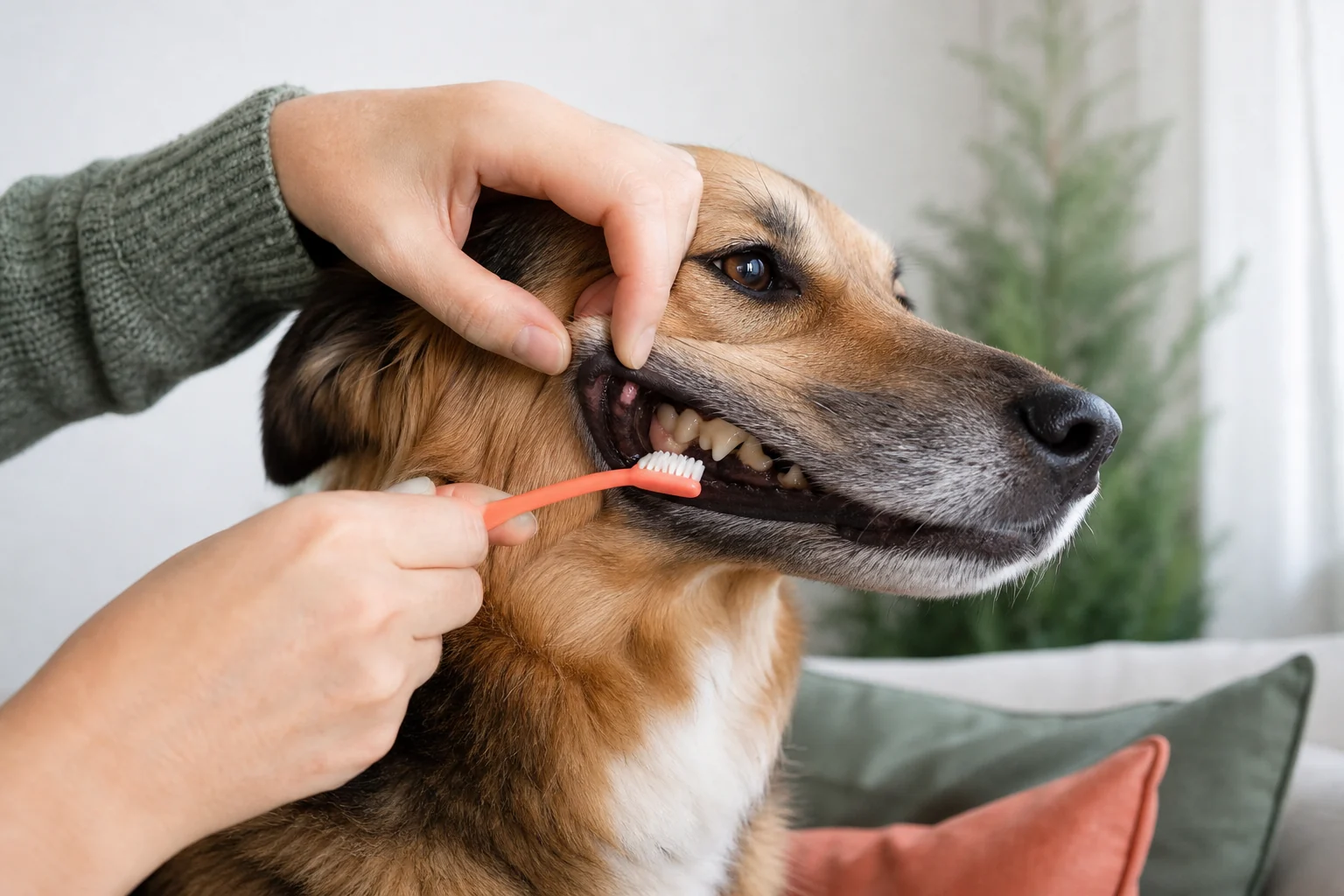
Dog teeth brushing mistakes at a glance
- Starting with a full-mouth session before the dog accepts touch.
- Using human toothpaste or an unsuitable brush head.
- Scrubbing hard instead of making light strokes at the gum line.
- Holding the jaw open or continuing after a clear stop signal.
- Ignoring bleeding, bad breath, swelling or sudden resistance.
- Expecting chews or occasional brushing to replace regular dental care.
Mistake 1: moving too fast
Many dogs need several short introductions before they accept brushing. Begin with a calm approach, a brief lip lift and one easy outer tooth. Stop while the dog is still comfortable. Add another tooth only after the previous step feels routine.
A missed day is not a reason to double the next session. Resume the normal plan. Forcing progress can create a behavior change that makes future handling harder.
Mistake 2: using the wrong products
Use a toothbrush and toothpaste intended or recommended for dogs. Human fluoride toothpaste is made for people who rinse and spit, while dogs usually swallow what is placed in the mouth. Some human products may also contain xylitol, which the US Food and Drug Administration warns is dangerous to dogs.
Choose a soft-bristled head that fits beside the cheek without scraping gum tissue. A finger brush can offer close control, but it may feel too wide and places fingers near the teeth. Product labels and individual veterinary instructions take priority.
Mistake 3: brushing too hard
Removing plaque does not require force. Place the bristles where the tooth meets the gum line and make small, light strokes on reachable outer surfaces. If the bristles spread flat, the pressure is too strong.
Do not push below painful tissue or scrape hardened tartar at home. Professional cleaning and dental treatment address problems that a home brush cannot safely remove.
Mistake 4: forcing the mouth open
You can brush many useful outer surfaces while the mouth remains closed. Lift the lip from the side and keep the movement brief. Holding the muzzle, chasing the dog or repeatedly restarting after the dog leaves can turn oral care into restraint.
Pause when the dog turns away, stiffens, paws at the face, growls or tries to escape. Return to an easier step at another session. The full dog teeth brushing guide explains a gradual routine.
Mistake 5: brushing painful teeth and gums
Sudden resistance may signal discomfort rather than poor cooperation. Stop for persistent bleeding, swelling, a loose or fractured tooth, facial changes, difficulty eating, tooth loss or strong bad breath. Contact a veterinarian for advice.
Periodontal disease can require examination and professional care. The American Veterinary Medical Association dental care resource describes common warning signs and why home care does not replace veterinary assessment.
Mistake 6: treating products as a complete plan
Dental chews, diets or water additives may complement brushing when they suit the individual dog, but they do not copy the direct contact and observation provided when you brush your dog’s teeth. Look for the exact plaque or tartar claim rather than assuming every dental product has the same evidence.
The Veterinary Oral Health Council accepted-products directory lists products that earned its Seal for a specific claim. A seal does not confirm that a product fits every dog or replaces an examination.
Use a five-step correction routine
- Check the mouth for pain or a new problem before brushing.
- Prepare the correct dog toothpaste, brush and reward.
- Choose one reachable outer tooth as the session goal.
- Make a few light strokes and watch the dog’s response.
- Stop calmly, clean the brush and record any concern.
Progress means the same useful action becomes easier and more predictable. It does not mean every session must become longer.
Build a lasting dental health routine
Good teeth cleaning depends on repeatable habits, not one perfect session. Keep the brush, dog toothpaste and rewards in one clean place. Check the bristles before use, rinse the brush afterward and let it air-dry away from other pets’ brushes. Replace it when the bristles bend, split or feel rough.
Track only details that help: the area reached, the dog’s comfort and any change in the teeth and gums. This short record can reveal a worn tool, a difficult angle or a gradual change in tolerance. It also gives the veterinary team useful information during regular dental visits.
Home brushing helps manage fresh plaque on reachable surfaces. It cannot remove hardened tartar or confirm whether gum disease is present. Keep professional examinations in the plan even when the mouth looks clean. Ask the veterinary team how often your dog needs an examination and whether a professional cleaning is appropriate.
If the routine becomes difficult, reduce the goal to one comfortable tooth instead of stopping all care. Rebuild from the last easy step and review the product fit. A short, calm repetition protects the handling habit while you investigate the problem.
Frequently asked questions
Should I wet the brush?
Follow the product directions. A wet brush is not automatically gentler; head size, bristle softness and pressure matter more.
Can dental chews replace tooth brushing?
No single product replaces every part of a home-care and veterinary plan. Ask which combination fits your dog.
Why does my dog suddenly refuse brushing?
Check for a worn tool, a rushed technique or oral pain. Persistent sudden resistance deserves veterinary assessment.
Sources
This guide uses linked safety and dental-care information from the FDA, AVMA and Veterinary Oral Health Council. It is educational and does not diagnose disease or replace care from your veterinarian.