
Quick answer: To learn how to get a dog used to teeth brushing, teach one small step at a time. Reward calm cheek touches, introduce dog toothpaste separately, show the brush without using it and then make one gentle stroke. Stop before the dog struggles.
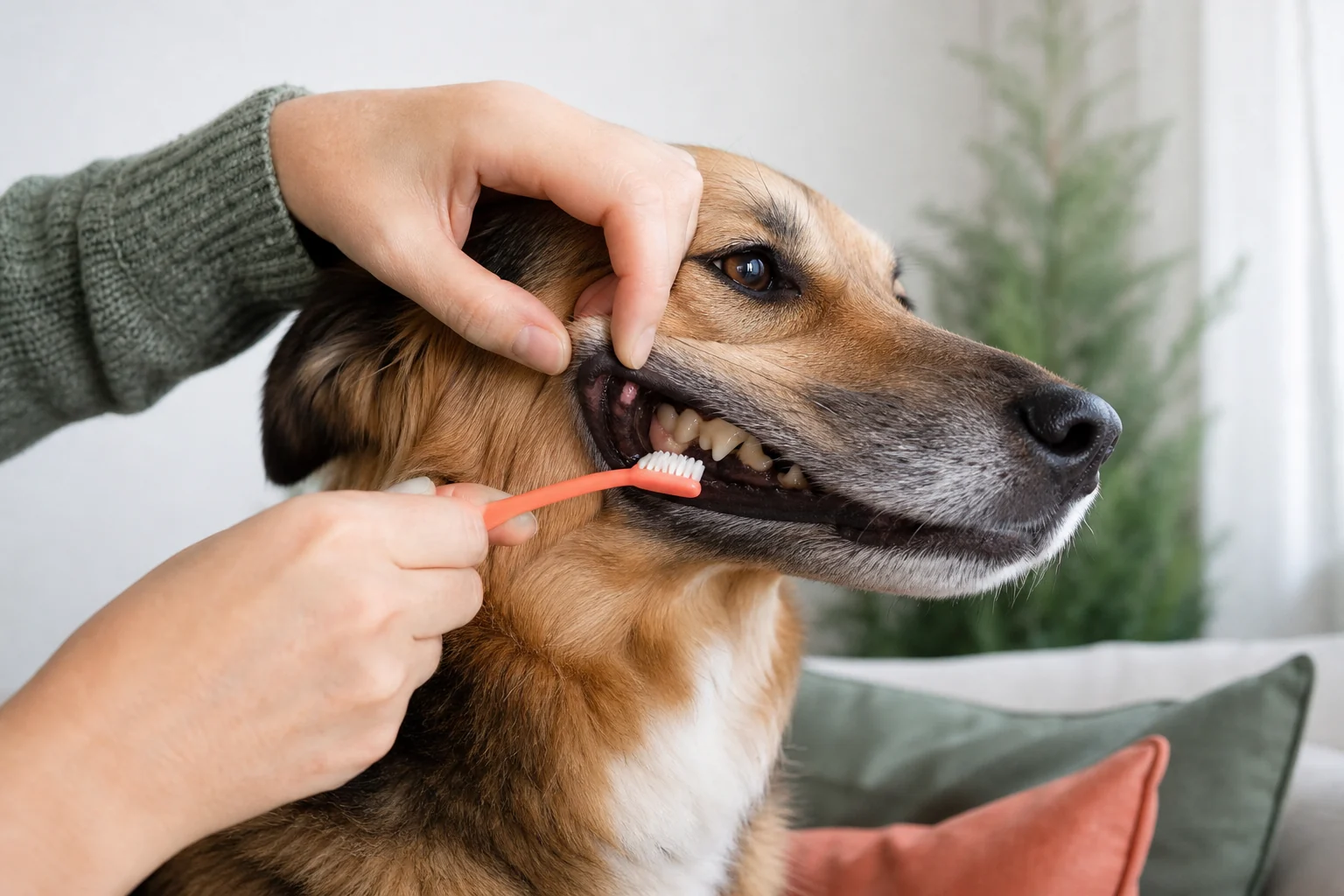
Check the mouth before training
Training cannot solve oral pain. Arrange a veterinary assessment before brushing if the mouth has persistent bleeding, swelling, a loose or broken tooth, difficulty eating, strong bad breath or sudden one-sided resistance. Gum disease and other dental problems may require professional care.
Home dental care helps manage fresh plaque on reachable surfaces. It cannot remove hardened tartar or replace a veterinary examination.
Prepare the right tools
- Choose pet toothpaste labeled for dogs; do not use human toothpaste.
- Use a soft-bristled brush head that fits beside the cheek.
- Prepare small rewards before handling begins.
- Train in a quiet area with good light and a non-slip surface.
A finger brush may suit a dog that accepts close hand contact. A handled brush creates more distance and may offer better control. The product label and individual veterinary advice take priority.
Step 1: reward cheek touches
Touch the outside of the cheek for one second, release and reward. When the dog stays loose, briefly lift the lip without opening the jaw. Practice both sides in separate repetitions.
Watch for head turning, freezing, pawing or leaving. These signals mean the step is too difficult. Shorten the touch instead of holding the dog in place.
Step 2: introduce dog toothpaste
Offer a small amount according to the toothpaste label without adding the brush. Let the dog investigate at a comfortable distance. Do not smear paste into the mouth or chase the dog with it.
The US Food and Drug Administration warns that xylitol is dangerous to dogs, which is one reason to keep human products out of the routine.
Step 3: introduce the clean brush
Show the clean brush, reward calm interest and put it away. Next, touch the brush handle to the cheek. Then let the dry brush head contact one easy outer tooth for a moment.
Keep the jaw closed. Most useful outer surfaces can be reached by lifting the lip from the side. Avoid clamping the muzzle or pinning the head.
Step 4: add one gentle stroke
Add the dog toothpaste and make one light stroke where the tooth meets the gum line. Reward and finish. When this feels routine, add another stroke or nearby tooth.
Light, repeated teeth cleaning can support oral health and help prevent tartar buildup. It should not cause pain or require force. Follow the complete dog teeth brushing instructions after these foundation steps are comfortable.
Use body language to set the pace
Advance when the dog remains relaxed, accepts rewards and returns willingly. Repeat or reduce the step when the dog turns away, closes the lips tightly or avoids the training area. End immediately for growling, snapping, pain or escape attempts.
Dog owners often progress faster when they define a minimum session: one calm touch or one comfortable tooth. Consistency matters more than a long session.
Troubleshoot slow progress
If progress stops, check the training setup before asking for more cooperation. The brush may be too large, the room may be distracting or the reward may arrive too late. Return to the last step the dog completed with a loose body and repeat it for several short sessions.
Also inspect the equipment. A rough brush edge, bent bristles or a strong toothpaste flavor can change the dog’s response. Use a clean brush and confirm that every product is suitable for dogs. Do not switch tools during the same attempt unless the current tool is unsafe.
A sudden setback after previously comfortable oral care deserves extra attention. Pain from periodontal disease, a damaged tooth or another mouth problem can look like a training issue. Pause the routine and ask the veterinary team what to do next. If the dog recently had dental treatment, follow the written recovery instructions before restarting.
Keep a simple record of the step, tool and response. The goal is not a perfect daily score. The notes help you notice patterns and explain changes accurately during an appointment.
Keep dental care safe over time
Rinse the brush after use, let it air-dry and store it separately from other pets’ brushes. Replace it when the bristles bend, split or feel rough. Continue regular dental examinations even when brushing goes well.
The American Veterinary Medical Association dental care resource explains warning signs and professional treatment. The Veterinary Oral Health Council directory lists products that earned its Seal for a specific plaque or tartar claim.
Frequently asked questions
How long does training take?
Some dogs progress in days; others need several weeks. Follow body language rather than a fixed calendar.
Should I hold my dog’s mouth shut?
No. Work from the outer cheek with voluntary participation. Restraint can increase avoidance.
What if my dog accepts only one side?
Keep the easy side comfortable and train the other side in smaller steps. Sudden resistance needs a veterinary check.
Sources
This guide uses linked safety and dental-care information from the FDA, AVMA and Veterinary Oral Health Council. It is educational and does not replace individual veterinary care.