
Quick answer: Dog bad breath is not something to cover up with a mint or flavored chew. A brief odor after eating may pass, but persistent bad breath, pain, bleeding, swelling or eating changes need a veterinary dental examination. If the mouth is comfortable and your dog has no warning signs, gentle tooth brushing can support a regular oral hygiene routine.
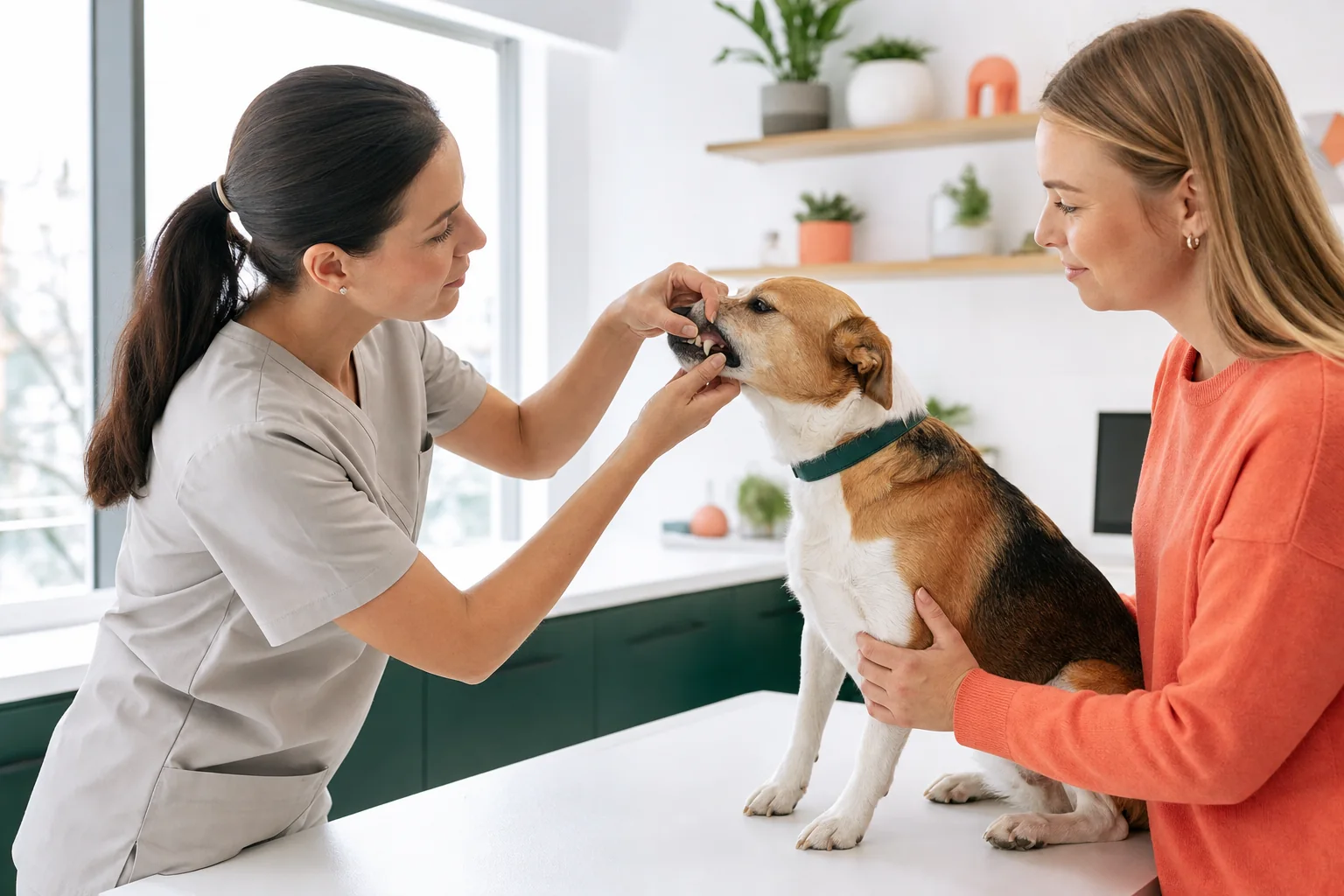
Bad breath is a sign, not a diagnosis
Odor can come from food, plaque, gum disease, tooth decay or periodontal disease below the gumline. It can also accompany a broken tooth, an oral infection, a swallowed object or another health problem. Smell alone cannot identify the cause, and a toothpaste that freshens breath does not treat the underlying dental issue.
Notice the timing, strength and change from your dog’s usual breath. Write down whether the odor follows meals, a new product or a change in chewing. This simple history helps a veterinarian decide whether your dog needs an oral examination, dental X-rays, blood work or another test.
When to call a veterinarian
Arrange a prompt examination for persistent odor or any of these signs:
- red, swollen or bleeding gums;
- brown or yellow hardened deposits, a loose tooth or a broken tooth;
- drooling, pawing at the mouth or dropping food;
- chewing on one side, reduced appetite or trouble swallowing;
- facial swelling, fever, lethargy or a sudden change in behavior;
- pain or a new refusal to let you touch the mouth.
Stop home tooth brushing when the mouth appears painful. More pressure cannot remove hardened tartar, close a gum pocket or treat infection. A painful or inflamed mouth should be examined before brushing resumes.
When gentle brushing may be appropriate
If your dog is comfortable, eating normally and has no visible bleeding, swelling, loose teeth or signs of pain, you can build a calm routine with a soft dog toothbrush and dog toothpaste.
- Let your dog sniff the brush and taste a toothpaste labeled for dogs.
- Lift the lip from the side while the mouth stays mostly closed.
- Place soft bristles where a tooth meets the gum line.
- Use light strokes on the outer surfaces of a few teeth.
- Stop before your dog struggles, then reward and try again later.
Begin with a few seconds every day or several times per week. Build toward daily brushing only when the dog remains relaxed. Never use human toothpaste, scrape tartar or hold the jaw shut. The dog tooth-brushing guide provides a gradual handling sequence.
What home care can and cannot do
Tooth brushing disrupts fresh plaque on reachable surfaces of the teeth. It supports dental health and lets you notice changes early. It cannot clean below the gumline, remove hardened deposits or provide a diagnosis and treatment plan.
Dental chews, diets, wipes or water additives may complement brushing when they suit the individual dog. They do not replace an examination or a professional cleaning when disease is present. Choose products with clear directions and ask your veterinary team about size, texture and safety.
Other causes and health context
Some dogs have crowded teeth, a short muzzle, a history of periodontal disease or health conditions that change their dental-care needs. Persistent odor can also occur with oral masses or systemic illness, although bad breath alone does not prove a serious disease. A veterinarian can examine the mouth and choose the right tests instead of relying on a breath product.
Do not give xylitol-containing breath mints, sugar-free gum or human oral-care products to a dog. The FDA warns that xylitol is toxic to dogs. If ingestion may have occurred, contact an emergency veterinarian immediately and provide the package, estimated amount, time, species and weight.
Plan regular veterinary dental care
Schedule dental examinations at the interval your veterinarian recommends. Veterinary care may include an awake oral examination, anesthesia, dental X-rays, cleaning and treatment of painful teeth. Ask when to pause food, brushing or dental chews around a procedure.
The American Veterinary Medical Association pet dental care resource explains why home care works alongside veterinary examinations. Regular cleaning is not a failure of home brushing; it addresses areas that a toothbrush cannot reach.
A practical dog bad breath dental care plan pairs daily home checks with the veterinary team’s schedule. Ask whether your dog needs a professional dental cleaning, how often follow-up teeth cleanings are appropriate and which home products support the treatment plan. Keep the examination date, warning signs and product directions together so every caregiver follows the same advice.
Frequently asked questions
Can I brush away persistent bad breath?
Brushing may reduce fresh plaque, but persistent odor needs a veterinary assessment rather than stronger brushing.
Should I use breath mints for my dog?
No. Human mints and sugar-free gum may contain xylitol or other unsafe ingredients. Use only products labeled for dogs.
How often should I brush?
Daily is an ideal goal for a comfortable mouth. Start with short, successful sessions and increase gradually.
Sources
This guide uses the AVMA pet dental-care resource and FDA xylitol warning linked above. They are educational sources; individual veterinary instructions take priority.