
Quick answer: A first-week pet oral care routine builds the foundation for calm pet dental care. Move from handling to a lip lift, pet toothpaste and, only when your pet stays relaxed, a few light strokes on the outer teeth.
Updated: July 25, 2026 · By: Pet Gentleman Editorial Team
Editorial note: This behavior-first plan follows veterinary guidance that home oral care supports plaque control while regular examinations and professional dental care remain necessary.
Key Takeaways
- End every session before fear, pain or struggling escalates.
- Use toothpaste labeled for your pet’s species, never human toothpaste.
- Measure progress by calm cooperation, not by how many teeth you reach.
- Pause and call a veterinarian for bleeding gums, swelling, loose teeth, eating changes or other signs of dental problems.
Before Day One: Check Comfort and Choose the Tools
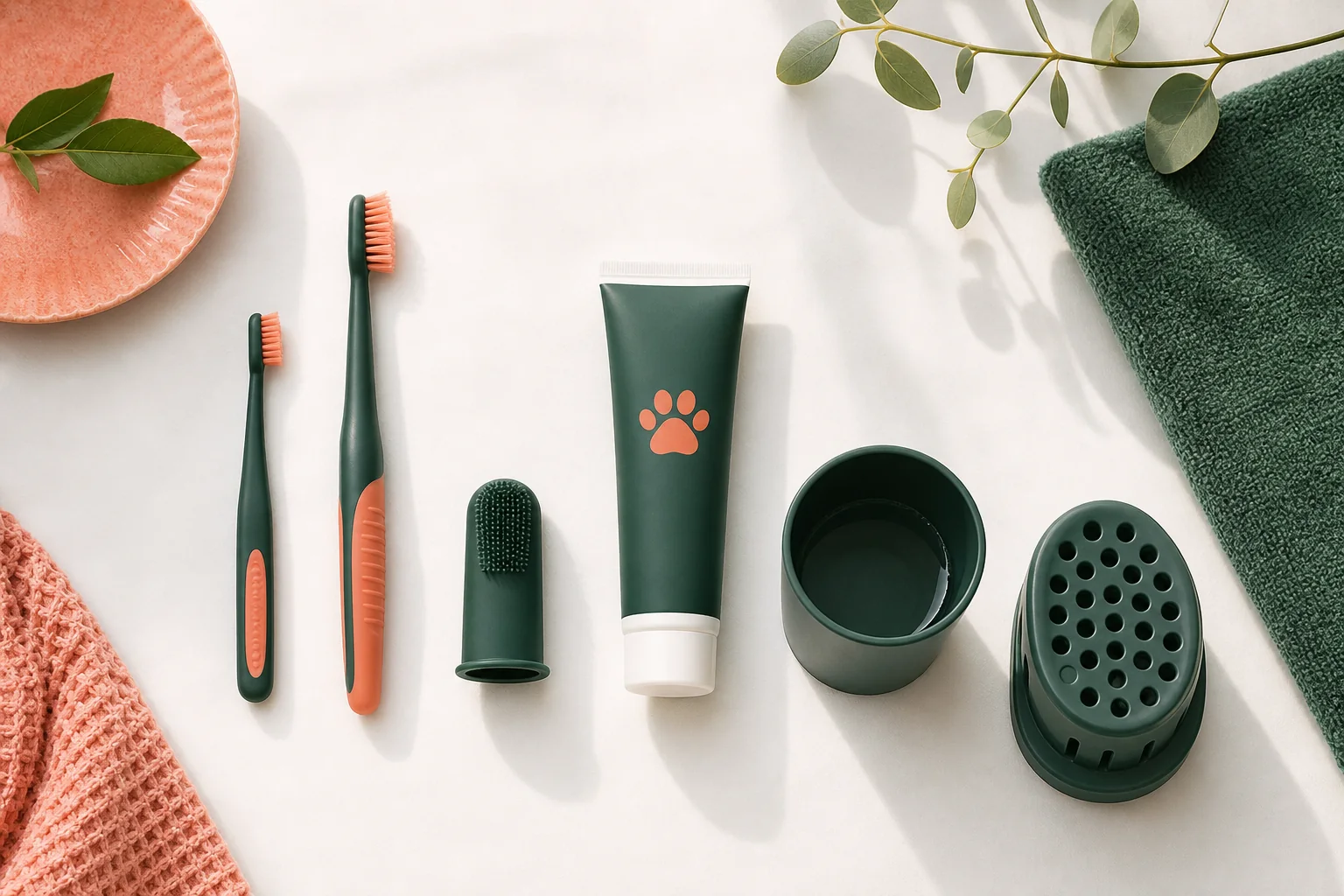
Choose a quiet place, a soft right-sized toothbrush, species-appropriate pet toothpaste and a familiar reward. The brush head should reach the outer teeth without scraping the gum line. Before you begin, look for swelling, active bleeding, a loose or broken tooth, facial asymmetry, heavy calculus or pain. These signs can accompany periodontal disease and need a veterinary examination. Home brushing removes soft plaque; it cannot remove hardened deposits or replace a professional dental cleaning.
Day 1: Create a Predictable Setup
Sit beside your pet for 10 to 20 seconds with the toothbrush nearby. Do not open the mouth. Reward calm behavior and put the tools away. A predictable time and place make the setup easier to recognize.
Day 2: Practice a Brief Muzzle Touch
Touch the side of the muzzle for one second, release and reward. Continue only while the body remains relaxed. Turning away, freezing, growling, hiding, swatting or tail lashing means the step is too difficult.
Day 3: Lift One Side of the Lip
Lift one side of the lip just enough to see the outer teeth, then release. Do not force the jaws apart. Dogs and cats often accept brushing more readily when the mouth stays mostly closed. Stop if the lip lift appears painful.
Day 4: Introduce Pet Toothpaste
Offer the label-directed amount on a clean finger or spoon. Never use human toothpaste. The FDA advises using pet toothpaste for pets, and dog owners should check ingredient labels for xylitol. Ask your veterinarian if you are unsure whether a product suits a dog or cat.
Day 5: Touch One Tooth With the Brush
Let your pet inspect the toothbrush. Lift the lip and touch the bristles to one comfortable outer tooth, then reward and stop. The goal is a calm response, not getting every tooth cleaned.
Day 6: Brush a Few Outer Teeth
Use two or three gentle strokes on easy outer surfaces. Angle the bristles toward the gum line without scrubbing it. Brushing can reduce plaque before it hardens, but it should not scrape calculus. Pulling away or pawing at the face may signal discomfort.
Day 7: Build a Repeatable Mini-Routine
Brush one small section on each side while your pet remains comfortable. Reward, rinse the brush and let it air-dry. If this is too difficult, return to the last successful day instead of restraining your pet.
When Should You Stop and Call a Veterinarian?
Stop brushing and seek veterinary advice for persistent bad breath, bleeding gums, swelling, tooth loss, a broken tooth, thick deposits, drooling, dropping food or one-sided chewing. A veterinary dental procedure may include an examination, dental X-rays and cleaning below the gum line—areas a home toothbrush cannot assess.
If a dog may have swallowed human toothpaste or xylitol, contact a veterinarian or emergency clinic promptly. Do not wait for symptoms.
What Happens After the First Week?
Increase brushing time and coverage gradually. Daily brushing is a common goal when the mouth is healthy, but a calm routine is better than one forced full-mouth attempt. Your veterinarian can recommend a suitable schedule.
Continue regular dental checks. Periodontal disease can develop below the gum line even when teeth look clean. Home care and professional veterinary dental care have different jobs; one does not replace the other.
Sources
- Cornell University College of Veterinary Medicine: Dental Disease and Home Care
- MSD Veterinary Manual: Dental Disorders and Preventive Care
- FDA: Xylitol and Pet Toothpaste Safety
Veterinary disclaimer: This routine is for cooperative home care. It does not diagnose, prevent or treat dental disease. Stop and seek veterinary advice if a pet shows pain, bleeding, swelling, tooth damage or eating changes.